When Data Met Donald: Inside the Room Where Reality Was Negotiated
When Data met Donald – and died: How US Prez trumped India with fake tariff numbers
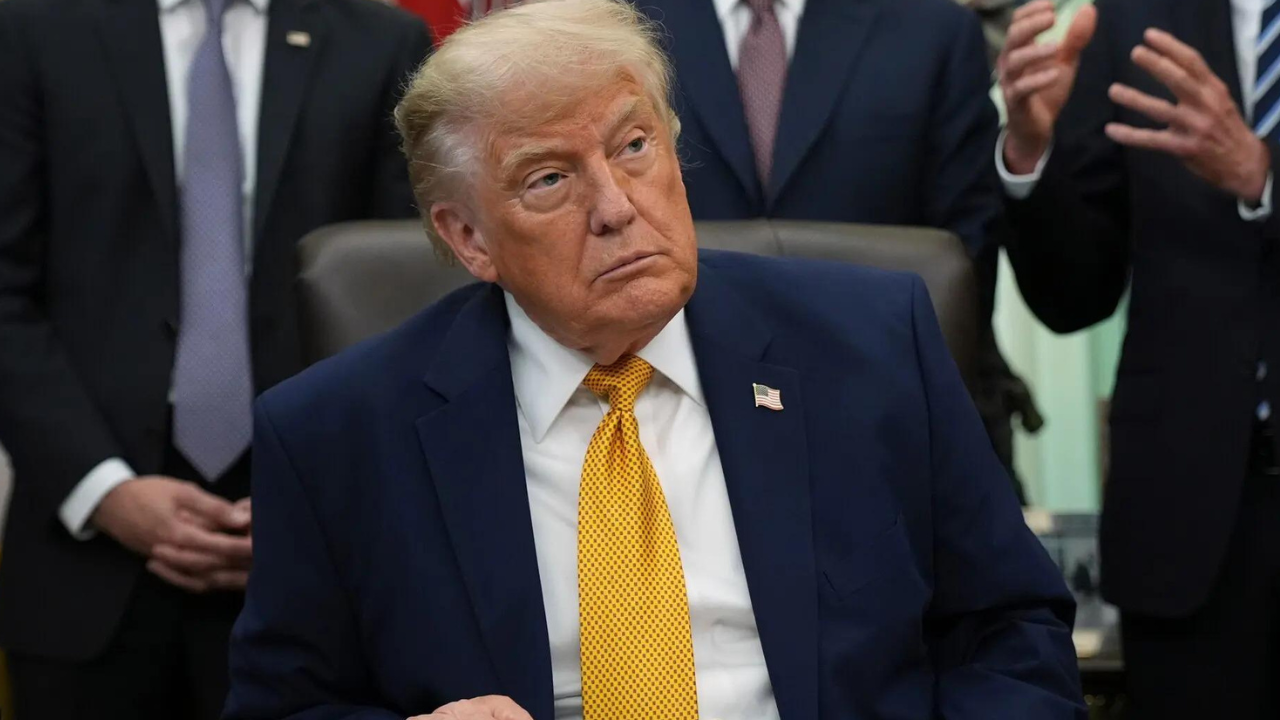
A new book reveals how the former US president discarded official statistics to impose a 50 percent tariff wall on India, prioritizing intuition over the expertise of his own cabinet.
The scene in the White House was less an economic briefing and more a masterclass in the rejection of reality. As Commerce Secretary Howard Lutnick laid out trade data from the Office of the US Trade Representative (USTR), he expected a professional discussion. Instead, he met a wall of disbelief. Donald Trump, long known for treating official numbers like suggestions rather than facts, slammed the evidence provided. To the President, the reality of India’s trade tariffs was secondary to a narrative of being "ripped off." When confronted with the actual numbers, Trump didn’t just disagree; he dismissed them as "bullshit," leaving his team in an impossible bind between statistical integrity and professional survival.
The Death of Data
The account, detailed in the book Regime Change: Inside the Imperial Presidency of Donald Trump by reporters Maggie Haberman and Jonathan Swan, captures a White House where facts had the life expectancy of a snowflake in a microwave. As the tension in the room spiked, Lutnick tried to bring in reinforcements, turning to US Trade Rep Jamieson Greer to validate the data. Greer, perhaps calculating the cost of a career-ending correction, chose silence. The economic advisor Peter Navarro, however, knew which way the wind was blowing and quickly aligned with the President’s intuition.
This wasn't just a minor administrative spat. It was the precursor to a trade policy that saw the US impose a staggering 50 percent tariff on Indian goods. The move—the highest levied against any major trading partner—sent the bilateral relationship into a tailspin. While voices of caution, like Speaker Mike Johnson, warned that such aggressive tariffs would decimate the American automotive sector, the warning went unheeded. Trump owned the policy, regardless of what the USTR or any other agency reported.
Why It Matters
This pattern of ignoring the "how" in favor of the "who" is central to understanding the friction between Washington and New Delhi during that era. When a leader treats economic data as a fungible tool to weave a political story, it creates a dangerous disconnect. For India, this meant navigating a relationship where the "bromance" between leaders was frequently undermined by arbitrary, number-blind protectionism.
The bigger picture reveals the fragility of international trade agreements when they are untethered from objective reality. If the world’s largest economy decides that its own official trade numbers are "bullshit" because they don't fit a pre-ordained narrative, it changes the rules of the game for everyone. It signals that foreign policy can be hijacked by internal political theater, leaving partners like India—who rely on data-backed diplomatic engagement—to deal with the fallout of decisions made in a fact-free vacuum.
Kabir Sharma writes on culture, technology and everyday life for PoliticalPedia.