Tsunami warnings issued as powerful 7.8 magnitude earthquake strikes southern Philippines
Tsunami alert issued after 7.7 magnitude earthquake hits southern Philippines
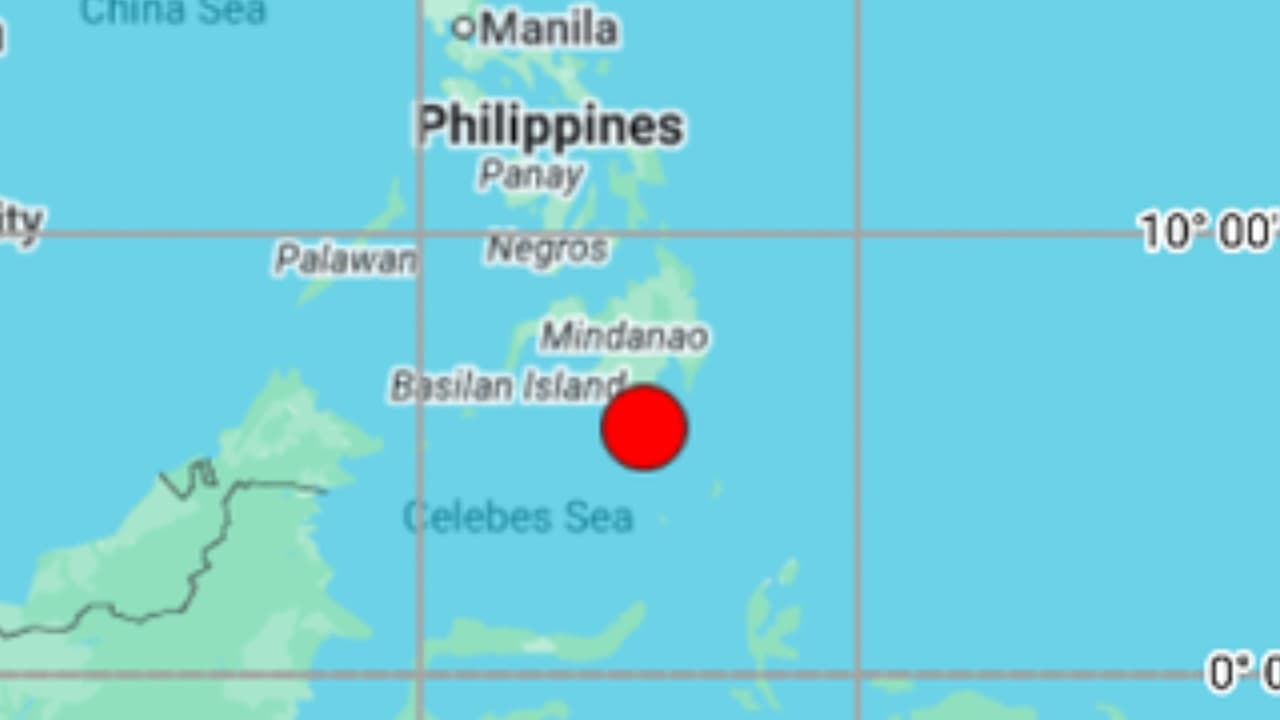
Coastal communities in the Philippines and Indonesia are scrambling to reach higher ground following a major offshore quake that has left at least one person dead.
The morning of June 8 began in terror for residents across the southern Philippines as a massive earthquake, measured at 7.8 magnitude by most international agencies, rocked the island of Mindanao. The tremor, which struck at a shallow depth of roughly 10 kilometres, triggered immediate tsunami warnings across the region. While the Philippine Institute of Volcanology and Seismology (Phivolcs) and various global monitors initially provided differing magnitude readings—ranging from 7.0 to 8.2—the consensus on the severity of the event remains clear.
In General Santos City, located just 15 kilometres from the epicentre, the impact was immediate. Local police reported that the shaking caused buildings to crumble, including a shopping centre, while social media footage captured the harrowing sounds of structures collapsing. Power and telecommunications were knocked out in Sarangani province, where residents were in the middle of their daily routines when the ground began to heave. Police chief Benjie Ancheta described it as the strongest quake he had ever experienced, noting that even the local police station suffered structural cracks.
A region on high alert
The threat of a tsunami has forced neighbouring nations into action. Beyond the Philippines, authorities in Indonesia issued urgent evacuation orders for coastal residents in North Sulawesi and the Sangihe islands. Japan’s meteorological agency also joined the chorus, issuing an advisory for its Pacific coast with projections of waves reaching up to one metre. While the Pacific Tsunami Warning Centre alerted countries as far as Taiwan and Papua New Guinea, the primary focus remains on the immediate safety of the millions living along the Philippine coastline.
President Ferdinand Marcos Jr. has issued a blunt plea to his countrymen: "Move to higher ground now. Do not wait. Your life is more important than anything left behind." With schools suspended and rescue operations underway, the full toll of the disaster is still being assessed. While officials have confirmed at least one death and four injuries, they warn that these numbers are merely initial reports from a scene that is still experiencing frequent aftershocks.
Why it matters: The Ring of Fire reality
This disaster serves as a grim reminder of the volatility inherent in the "Pacific Ring of Fire." The Philippines, Indonesia, and Japan sit atop some of the most complex tectonic fault lines on the planet, making high-magnitude seismic events a near-daily reality. For the millions living in these zones, the infrastructure challenge is immense. While the region has become increasingly adept at issuing timely tsunami warnings, the gap between detecting a quake and ensuring every coastal village can evacuate in time remains a critical vulnerability.
The economic and psychological toll of such frequent instability is significant. As the recovery begins, the focus will shift to building more resilient infrastructure capable of withstanding these consistent shocks. For now, however, the priority remains search and rescue, with the international community watching closely to see if the tsunami threat materialises into further destruction or begins to recede.
Features Desk at PoliticalPedia covers culture, tech & life for an Indian audience in English and Hindi.