‘I Call The Shots’: Trump Tells Netanyahu He Has No Choice But To Accept Iran Deal
‘I call the shots’: Trump warns Netanyahu he has ‘no choice’ but to accept US-Iran peace deal
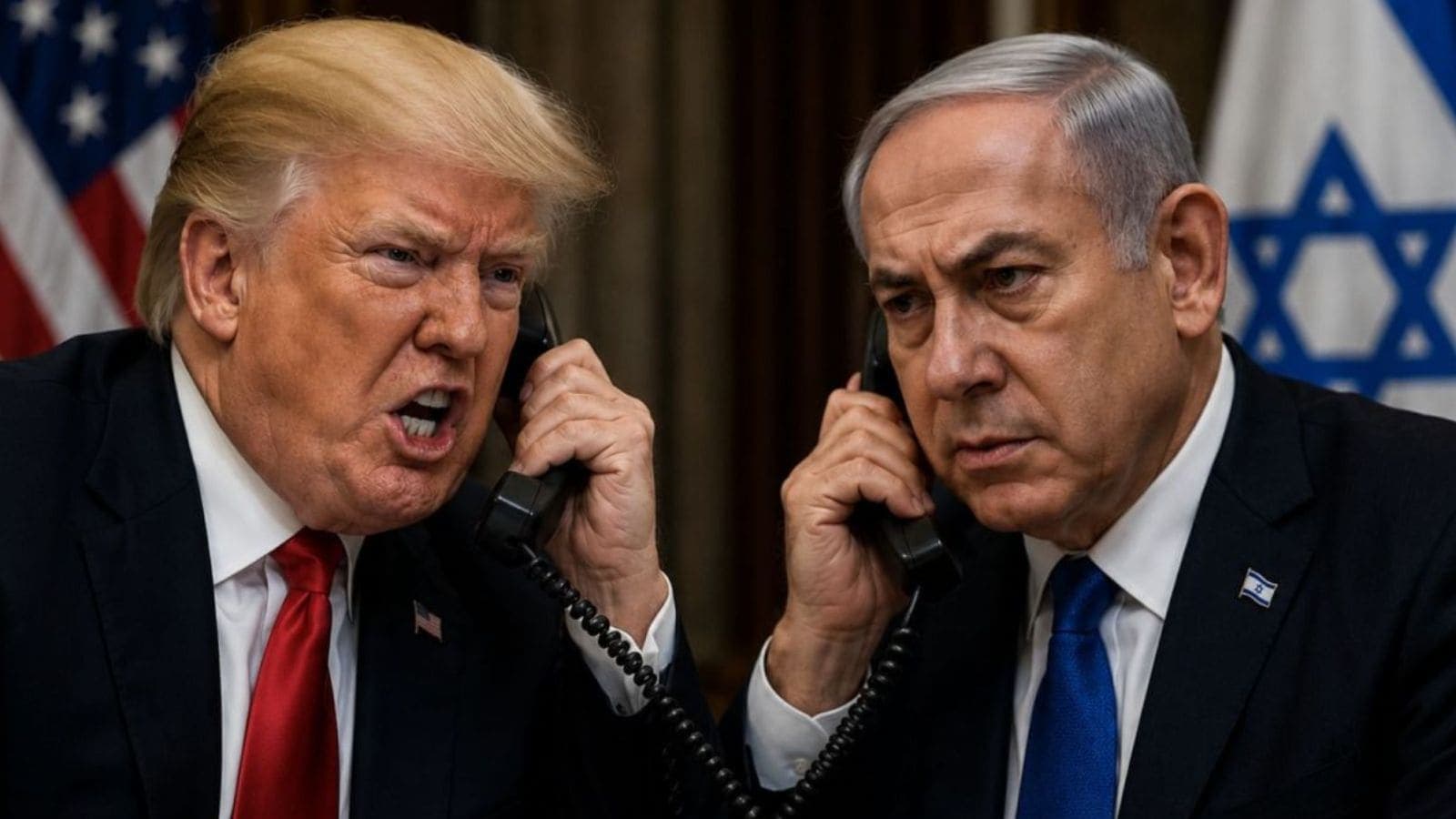
As the Middle East teeters on the edge of a wider conflict, Donald Trump has signaled a firm hand, insisting that Israel’s leadership will have to fall in line with any emerging US-Iran agreement.
The diplomatic corridor between Washington, Tel Aviv, and Tehran is currently the most volatile stretch of geopolitical real estate in the world. With missiles flying and regional tensions hitting a fever pitch following strikes in Beirut, Donald Trump has moved to assert total control over the narrative. In a candid interview, the former President made it clear that Benjamin Netanyahu would have "no choice" but to accept any deal Washington hammers out with Iran, bluntly stating, "I call the shots. I call all the shots. He doesn’t call the shots."
This declaration comes as the region watches a dangerous game of brinkmanship. While Israeli military officials have been signaling their intent to retaliate against Iran for its recent missile barrage, Trump has publicly urged restraint, telling Fox News, "I would tell him not to retaliate." The message is a direct attempt to de-escalate a confrontation that threatens to spiral into a full-scale regional war.
The ultimatum on the table
Trump’s rhetoric suggests a high-stakes ultimatum is being placed before the Israeli Prime Minister. By insisting that Netanyahu will have to accept the terms of a US-brokered arrangement, Trump is effectively stripping the Israeli government of its autonomy in this specific negotiation. While he admitted that the timeline for such an agreement remains fluid, his tone leaves little room for ambiguity regarding the hierarchy of decision-making.
If the diplomatic track fails, however, Trump has outlined a grim set of contingencies. He warned that the US would be forced to reconsider its military posture, noting that this could mean moving in to "take care of the rest of the place" or maintaining a suffocating blockade on Iran. These comments underscore the pressure currently being applied behind the scenes as negotiators attempt to bridge a chasm that has widened significantly in recent days.
Why it matters
For global observers and policymakers in New Delhi, the situation highlights the precarious nature of US-led mediation in the Middle East. The friction between Trump’s insistence on a deal and the Israeli military’s impulse to respond shows a disconnect between US strategic objectives and the immediate security concerns of its allies.
The bigger picture here is the shifting paradigm of American influence. By explicitly claiming he "calls the shots," Trump is signaling a move toward a more transactional and unilateral foreign policy model. For India, which maintains crucial strategic and energy interests in the region, the outcome of this power struggle is far from academic. Should this deal hold, it may stave off an energy crisis; if it collapses, the resulting volatility could impact global trade routes and oil prices, forcing India to navigate the fallout of a conflict where the traditional guardrails of diplomacy are increasingly being cast aside.
World Desk at PoliticalPedia covers global affairs for an Indian audience in English and Hindi.