The Great Shuffle: Why Closing 717 TASMAC Shops Isn’t Changing the Streetscape
Shut but open: closure of TASMAC liquor shops in Tamil Nadu
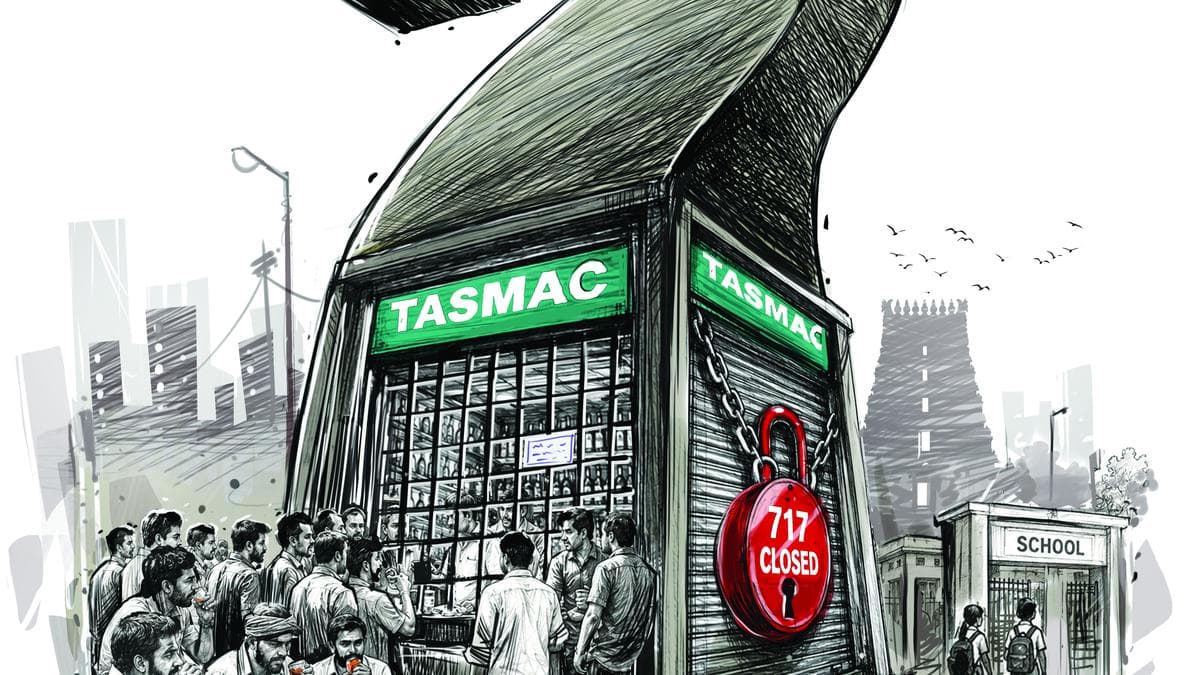
While the government’s latest order to pull down shutters on hundreds of liquor outlets aims to soothe public nerves, the reality on the ground suggests a simple shift in geography rather than a true drying up of supply.
The familiar blue-and-white signage of the Tamil Nadu State Marketing Corporation (TASMAC) has vanished from 717 locations across the state, following an order by Chief Minister C. Joseph Vijay on May 12. Directed at outlets situated dangerously close to schools, places of worship, and bus depots, the directive was swift. Within a month, the physical structures were cleared, marking a significant, if familiar, administrative exercise in a state where liquor policy has long been a political tightrope walk.
The Migration Effect
Yet, visit any bustling neighbourhood, and the "closure" feels less like a reduction and more like a relocation. For the average tippler, the disappearance of a local shop is a minor inconvenience rather than a sobriety mandate; they have simply migrated to the next closest outlet. In towns and villages across Tamil Nadu, the demand remains unchanged, and the revenue stream flows uninterrupted. Industry observers point out that these measures—much like the phased closures promised by predecessors Jayalalithaa and Edappadi K. Palaniswami—tend to be more about optics than curbing consumption.
The disconnect between official policy and local reality is starkest in places like Velachery. Residents of Balakrishna Nagar have spent years petitioning for the removal of Shop No. 928, citing the persistent nuisance near a vital residential artery. While the state-wide mandate has tackled hundreds of locations, residents argue that the surgical removal of shops has not yet reached the deep-rooted outlets that disrupt daily life in high-density areas.
The Bigger Picture
Why does this cycle repeat? The state government finds itself in a classic dilemma: balancing public sentiment against a massive dependence on excise revenue. Historically, every new administration treats liquor reform as a headline-grabbing promise, yet the structural reliance on these sales keeps the machinery running. The current push, while technically fulfilling a campaign pledge, effectively shifts the burden of nuisance from one street corner to another. Meanwhile, labour unions representing TASMAC employees have raised their own concerns, pointing to flawed mapping and the unintended consequence of driving business toward private FL2 bars, complicating the narrative of "reforms" even further.
Ultimately, these closures represent a cosmetic fix to a systemic issue. As long as the state relies on the retail trade to bolster its coffers, the "closure" of an outlet will remain a geographic reshuffle rather than a policy shift. Until the government addresses the underlying demand and the spatial planning of these outlets with more than just a temporary shutdown, the public will likely continue to view these announcements as a recurring political performance rather than a lasting solution to the nuisance on their streets.
Features Desk at PoliticalPedia covers culture, tech & life for an Indian audience in English and Hindi.