Strengthening the Security Shield: Indian Envoy Vinay Mohan Kwatra Meets Top US Counter-Terror Official
Indian Envoy Vinay Mohan Kwatra meets senior U.S. counter-terror official
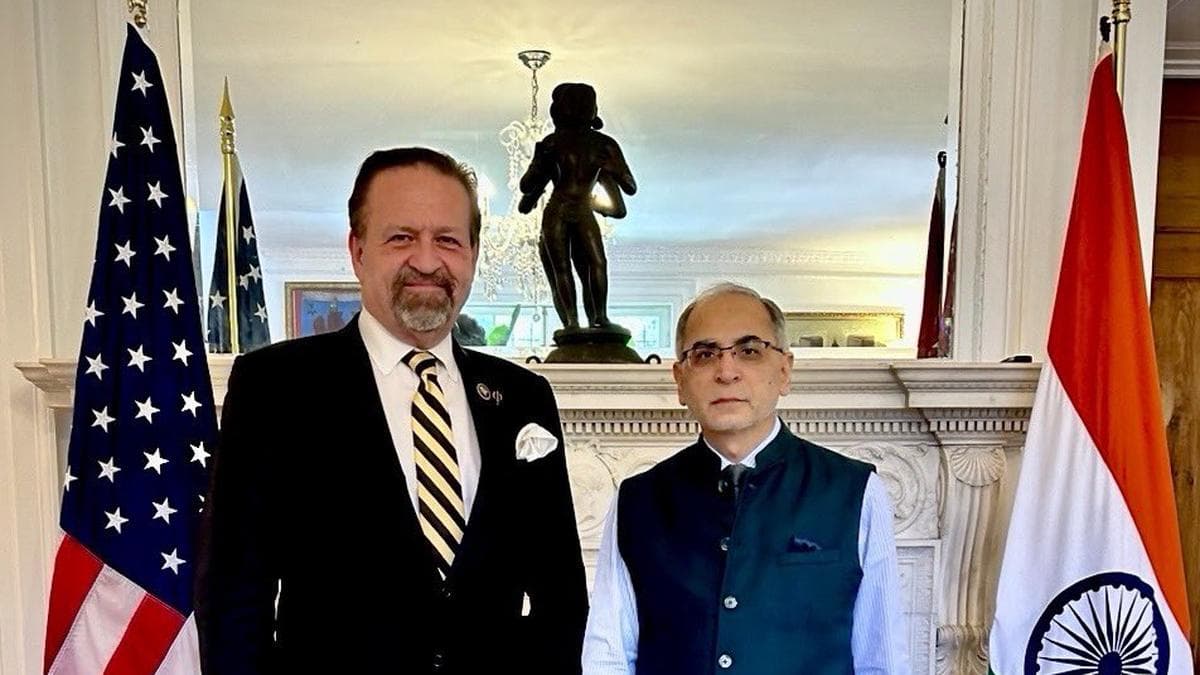
As India and the US tighten their security architecture, the focus remains squarely on dismantling terror networks and holding perpetrators of cross-border violence to account.
Washington is currently a hub of high-level diplomatic activity, with Indian officials fanning out across the capital to consolidate the gains of the recent bilateral summits. Indian envoy Vinay Mohan Kwatra has been at the forefront of this push, recently meeting with Sebastian Gorka, the Deputy Assistant to the President and Senior Director for Counterterrorism at the National Security Council. The conversation, which Kwatra shared on social media this Sunday, signals a renewed urgency in the two nations’ collaborative efforts to neutralize global terror threats.
The meeting serves as a direct follow-up to the roadmap established during Prime Minister Modi’s visit in February 2025. During those discussions, the leaders underscored a shared commitment to rooting out terrorist safe havens and targeting extremist outfits such as Al-Qaida, ISIS, Jaish-e-Mohammad, and Lashkar-e-Tayyiba. The joint statement from that February visit remains the guiding document for this cooperation, specifically aimed at preventing repeats of the horrors seen during the 26/11 Mumbai attacks and the tragic Abbey Gate bombing.
A Targeted Approach to Accountability
For New Delhi, the dialogue is not merely academic; it is focused on tangible justice. A cornerstone of the current engagement is the long-awaited extradition of Tahawwur Rana, the mastermind behind the 2008 Mumbai attacks. By keeping the pressure on this front, Indian officials are ensuring that the promise made by President Trump and PM Modi to bring the perpetrators of the 26/11 and 2016 Pathankot air base attacks to justice remains a priority in the Oval Office.
Beyond the extradition of specific individuals, the security partnership is evolving to address the modern dangers of non-state actors. The joint framework emphasizes the prevention of the proliferation of weapons of mass destruction, ensuring that terrorist groups cannot access advanced delivery systems. As Kwatra and Gorka compare notes on regional threats, the message to Islamabad remains consistent: a demand that its territory no longer be used as a staging ground for cross-border terrorism.
Why it matters
The frequency of these meetings suggests that the India-US security umbrella is moving from broad declarations toward technical and intelligence-led integration. With Foreign Secretary Vikram Misri also holding discussions with senior American counterparts ahead of External Affairs Minister S. Jaishankar’s upcoming visit, it is clear that India is not just seeking a diplomatic alliance, but a granular, operational partnership. By aligning their counter-terror apparatuses, both nations are attempting to raise the cost for groups that seek to destabilize South Asia, effectively signaling that the strategic partnership is now deep enough to handle the most sensitive security challenges of the decade.
World Desk at PoliticalPedia covers global affairs for an Indian audience in English and Hindi.