Noorani Mosque Razed in Jaipur as Authorities Clear Path for Road Expansion
Jaipur Anti-Encroachment Drive: Noorani Mosque Fully Razed, Debris Being Cleared; Committee Says Notice Came Too Late
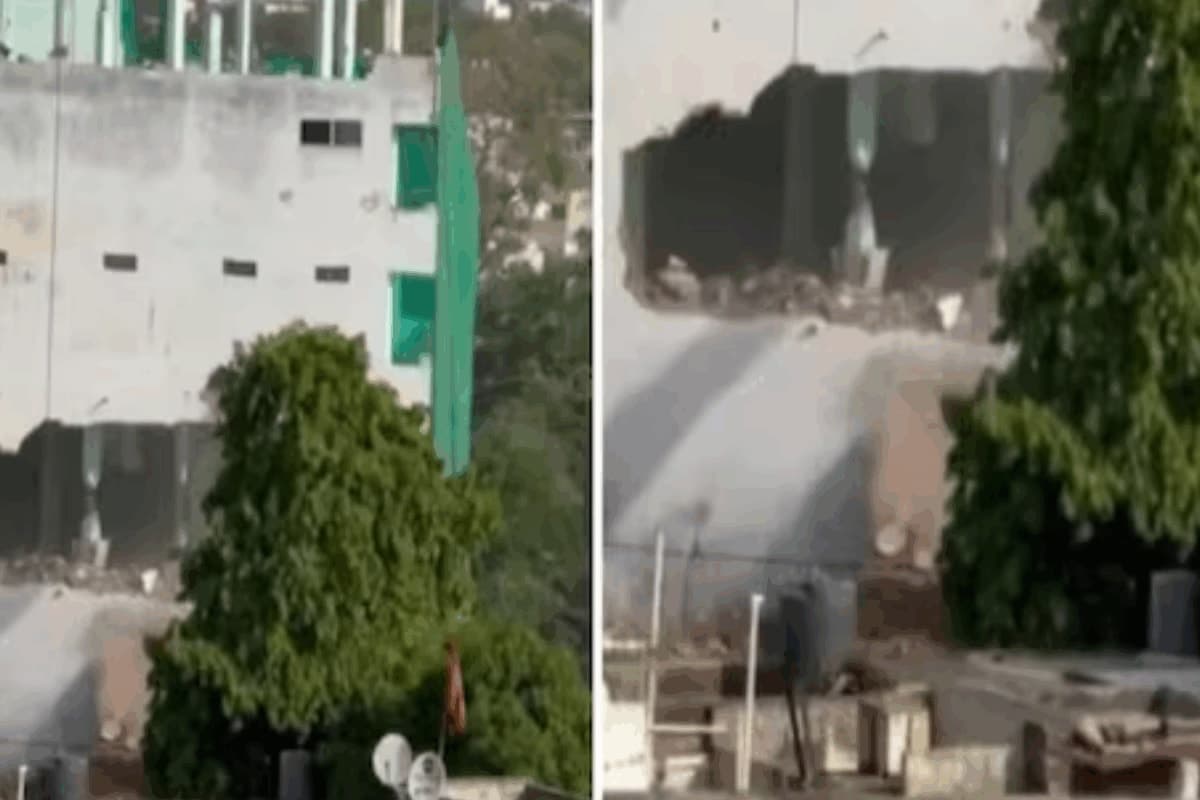
A massive security operation saw the demolition of the Noorani mosque in the city's Nandpuri area, leaving the committee crying foul over a truncated notice period.
The quiet of Monday morning in Malviya Nagar was shattered by the roar of heavy machinery as the Jaipur Development Authority (JDA) moved to execute a long-planned road widening project. By midday, the Noorani mosque, which sat directly in the path of the proposed 80-foot corridor between Jagatpura and Jawahar Circle, had been fully razed. As JCBs worked to ensure the debris being cleared didn't obstruct the site, the area remained a virtual fortress, cordoned off by over 3,000 police personnel and Rapid Action Force (RAF) units.
The jaipur anti-encroachment drive was not limited to a single site; the JDA identified five religious structures—one mosque, one mazar, a satsang bhavan, and two temples—as illegal obstacles to the arterial road project. While the management of the two Hindu structures reportedly opted to vacate voluntarily ahead of the arrival of the bulldozers, the scene at the mosque was starkly different. The local Muslim community had formally refused to vacate, setting the stage for the heavy-handed state intervention that eventually unfolded.
A Contentious Notice Period
The core of the fallout lies in the timing of the official communication. The committee says notice came only on Friday night, a window they describe as far too late to challenge the order. Officials representing the mosque argue that the two-day gap effectively stripped them of the opportunity to seek legal recourse or explore alternative arrangements. The JDA, however, maintains that the required warning was provided, citing the necessity of the project to ease traffic congestion in a growing part of the city.
The administration’s resolve was signaled by the intensity of the lockdown. To maintain order throughout the operation, authorities suspended internet services across Jaipur North and Jaipur East police stations until midnight on June 9. With Section 163 in force—banning the assembly of five or more people—the city remains under a tense, high-security watch as the administration moves to clear the path for infrastructure development.
The Bigger Picture
This demolition is a microcosm of the friction often seen between rapid urban expansion and the protection of long-standing physical landmarks. In many Indian cities, state authorities are increasingly prioritizing "right-of-way" arterial projects to fix crumbling urban infrastructure. When these corridors slice through religious or community sites, the conflict becomes less about town planning and more about community identity and the perceived fairness of due process. The state’s reliance on massive police deployments and internet shutdowns to manage such sensitive clearings suggests an administration that has little appetite for negotiation, preferring the finality of a bulldozer to the unpredictability of a prolonged legal or social standoff.
Politics Desk at PoliticalPedia covers parties & elections for an Indian audience in English and Hindi.