Erode’s Powerloom Hub Seeks Policy Overhaul to Secure Future
T.N. Powerloom Federation seeks higher free power quota, measures to boost employment
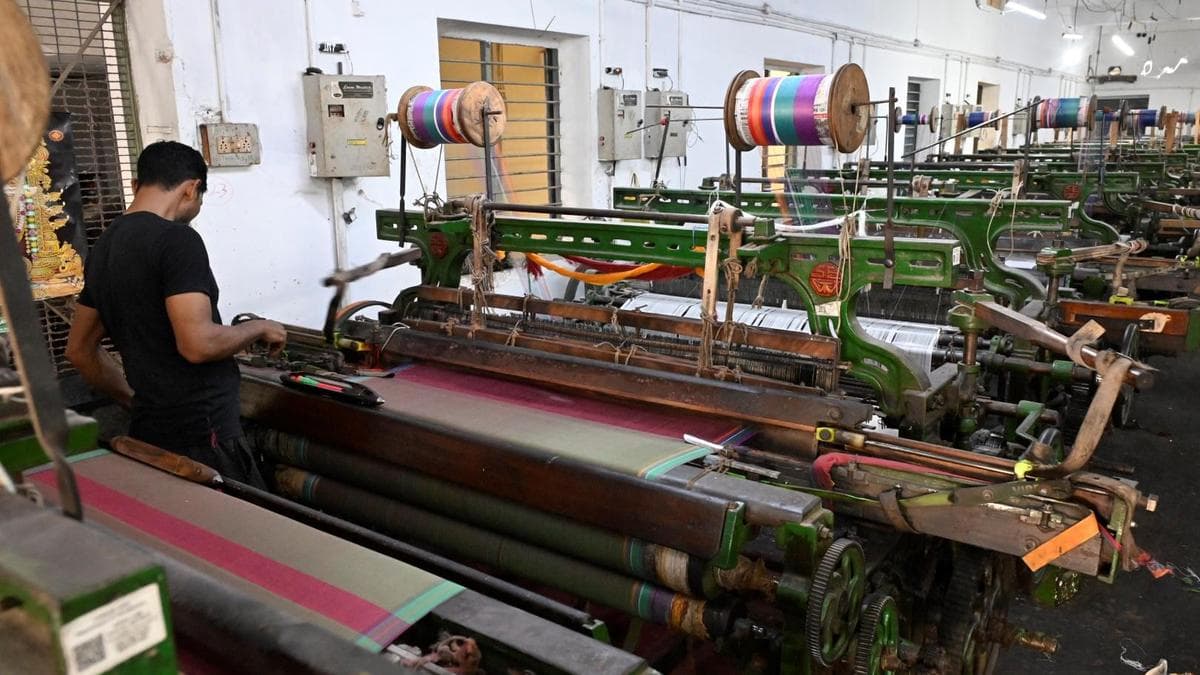
Industry leaders press for expanded electricity quotas and systemic reforms to protect weavers and boost production as the new state administration settles in.
The clatter of powerlooms in Erode has long been the heartbeat of Tamil Nadu’s textile economy, but for those operating these units, the current economic climate is proving increasingly difficult to navigate. At a recent executive committee meeting chaired by L.K.M. Suresh, the Tamil Nadu Federation of Powerloom Associations laid out a comprehensive blueprint for survival. The federation, having formally congratulated the new government led by Chief Minister C. Joseph Vijay, is now turning its attention to the fine print of policy, seeking urgent adjustments to electricity quotas, tax structures, and welfare implementation.
At the core of the federation’s demands is a request to increase the free electricity allowance for Tariff IIIA2 units from 1,000 units to 1,500 units. The industry views this as a vital fulfillment of the ruling party’s election-era promise, intended to soften the blow of rising input costs. Beyond power, the federation is advocating for a shift toward sustainable energy, calling for the government to subsidize solar installations on shed rooftops, complete with net-metering facilities to shield small-scale operators from volatile grid prices.
Bridging the Employment Gap
The seasonal nature of the government’s free saree and dhoti scheme remains a point of contention for local weavers. The federation has proposed a significant restructuring: they want the scheme expanded to cover all ration card holders and suggest that uniforms for schoolchildren and government staff be sourced directly from local powerloom units. By streamlining this production cycle and ensuring it provides at least six months of steady work, the industry hopes to stabilize the livelihoods of thousands of weavers who currently face uncertainty once the festival season concludes.
To curb the misuse of welfare materials, the body also suggested introducing annual changes to the colour codes and border designs of the dhotis and sarees. They believe that if the product is refreshed yearly, it becomes harder for recycled material to flood the market, thereby protecting the value of legitimate, state-contracted production.
Why it Matters
The push by the powerloom federation is a window into the broader struggles of India’s MSME sector. These units are caught in a pincer movement of rising operational costs and shrinking margins, often worsened by administrative friction—such as the recent hike in property taxes for cottage-scale sheds. By demanding that units in residential areas be taxed as residential rather than industrial properties, the federation is essentially arguing for a more nuanced urban policy that recognizes the home-based nature of traditional weaving. The government’s response to these requests will signal its commitment to protecting the informal backbone of the state’s textile industry against the encroaching pressures of organized, large-scale manufacturing.
The list of demands is extensive, ranging from the establishment of common effluent treatment plants to the inclusion of women weavers in state assistance programs. Whether the administration adopts these measures depends on finding the fiscal space to balance these subsidies against other state priorities. For now, the powerloom sector is signaling that its support for the new government is contingent on a policy environment that prioritizes the small-scale manufacturer.
World Desk at PoliticalPedia covers global affairs for an Indian audience in English and Hindi.