A mother’s wet cloth, a father’s struggle: Inside the Indore hospital stretcher horror
Viral video of 11-year-old pushed on stretcher for 1 km in scorching heat sparks outrage at major Indore hospital
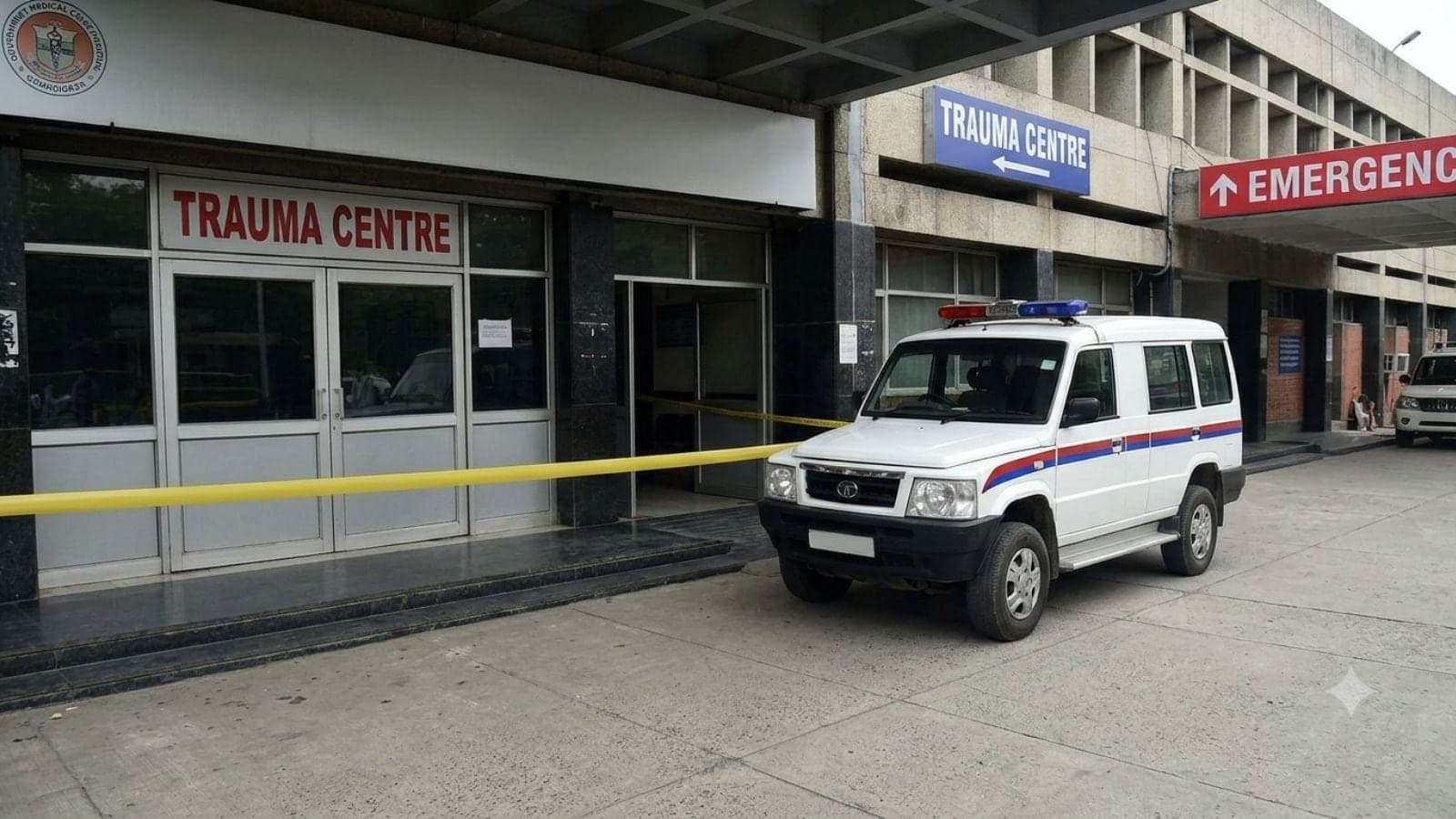
A chilling viral video of parents pushing their son one kilometre through scorching heat exposes systemic rot in Madhya Pradesh’s healthcare delivery.
The image is searing: an 11-year-old boy, Adarsh Malak, lying on a metal stretcher, his skin protected from the brutal sun only by a piece of cloth his mother frantically kept wetting in the heat. There was no ambulance, no orderly, and no support. For nearly one kilometre, his parents were forced to navigate the sprawling campus between MY Hospital and the Super Speciality Hospital in Indore. Adarsh, who suffers from a critical spinal condition and a rare genetic disorder called Hypohidrotic Ectodermal Dysplasia—which leaves him unable to sweat and highly vulnerable to heatstroke—was effectively left to fend for himself by the very institution meant to save him.
The mechanics of neglect
The incident, which surfaced on June 6, immediately went viral, igniting a firestorm of public outrage. Investigations into the negligence revealed that the family had been caught in a bureaucratic loop. Referred from MY Hospital to the Super Speciality facility for a spinal review, they were allegedly told upon arrival that the child did not require admission, only a file review. With no institutional support to transport the ailing boy back, the parents were left to push the stretcher themselves under the blazing sun.
The administration at MGM Medical College has since swung into damage-control mode. Dean Arvind Ghanghoria confirmed the termination of the security in-charge and the help desk lead, citing a blatant lack of sensitivity. Further, three nurses and a senior resident have faced salary cuts, and the outsourced agency, BVG Company, has been fined Rs 1 lakh with a recommendation for blacklisting. However, for a facility that handles thousands of patients, the disciplinary actions feel like a belated reaction to a systemic collapse.
Why it matters
This is not merely a story of two rogue employees; it is a symptom of a deeper rot in public health infrastructure across Madhya Pradesh. Despite the state spending crores on outsourced services to manage patient logistics, the recurring failure to provide basic mobility for the infirm points to a collapse in oversight. When the systems designed to provide comfort—stretchers, wheelchairs, and staff support—are treated as optional rather than mandatory, the most vulnerable citizens are the first to pay the price.
The incident highlights a disconnect between the administrative "paper health" of a hospital and the ground reality faced by families. The outsourced model, intended to streamline services, has instead created a layer of accountability that often vanishes when a crisis hits. Unless the state enforces stringent quality audits on its private contractors, the "system" will remain a hollow shell, leaving families like Adarsh’s to rely on their own desperate, manual labor to keep their children alive.
World Desk at PoliticalPedia covers global affairs for an Indian audience in English and Hindi.