'Watch the skies': Iran’s chilling warning to Israel after strikes on Beirut
'Watch Skies Over Occupied Lands Tonight': Iran Warns Of Strikes On Israel Over Lebanon
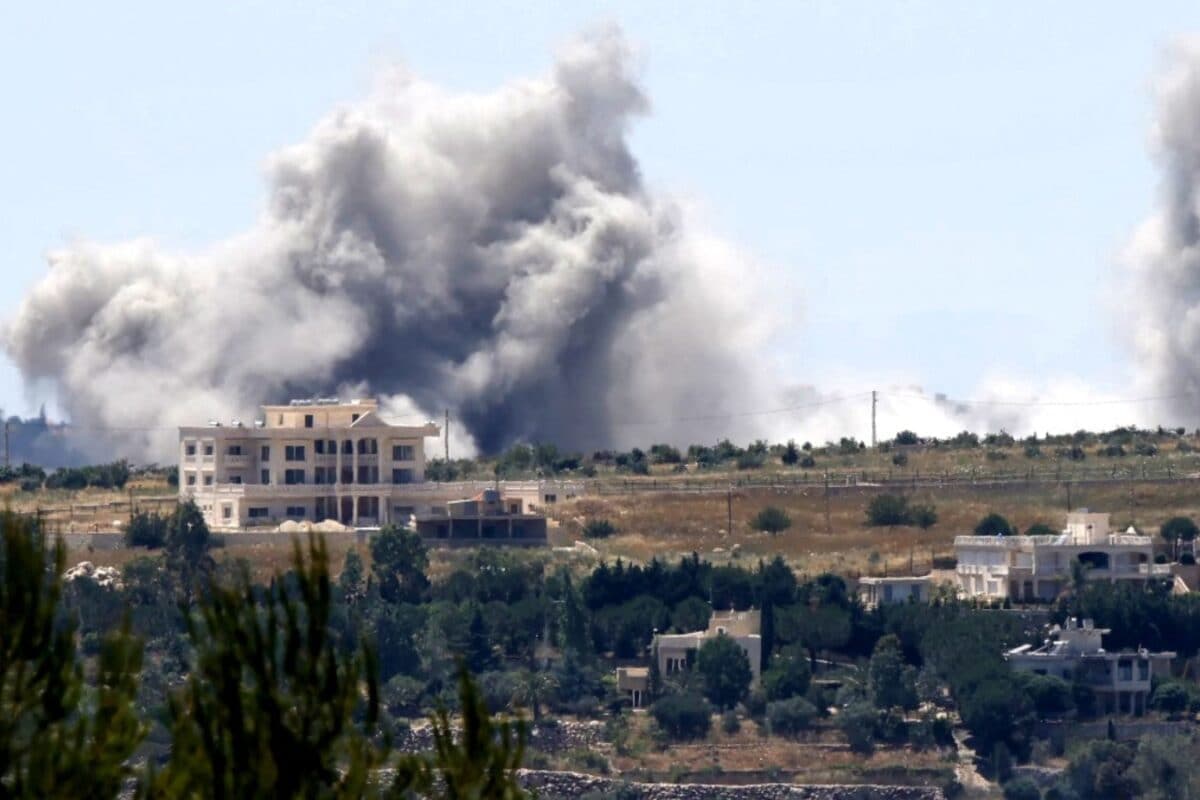
Tehran has threatened a 'painful and decisive' response against Israel following military action in Lebanon’s Dahiyeh district, further destabilising an already fragile regional ceasefire.
The long-simmering tensions in the Middle East reached a flashpoint on Sunday night as Iranian officials issued a blunt, public ultimatum to Israel. Following a series of Israeli military strikes on two apartment buildings in the Dahiyeh area of Beirut—a response to Hezbollah’s rocket fire into northern Israel—Tehran did not mince words. Ebrahim Rezaei, a senior member of Iran’s parliamentary National Security and Foreign Policy Committee, took to social media to tell residents to "watch the skies over the occupied lands tonight," promising that a "decisive and painful response" was imminent.
The rhetoric from Tehran has escalated rapidly. Beyond Rezaei’s warning, the Speaker of the Iranian Parliament, Mohammad Bagher Ghalibaf, expanded the scope of the threat significantly. He accused Washington of providing the "green light" for the Beirut strikes and slammed the ongoing US blockade of Iranian ports. Ghalibaf declared that both American and Israeli assets in the region are now "legitimate targets," signaling that Iran’s armed forces believe they are now free to act against both nations.
A volatile chain reaction
The current crisis stems from a familiar, deadly cycle of retaliation. The Israeli Defence Forces (IDF) launched their strikes on Beirut’s southern suburbs as a direct counter-measure to rocket attacks originating from Lebanon earlier in the day. However, by dragging Iran into the direct line of fire, the scope of the conflict has widened. The immediate regional impact was felt almost instantly, with reports emerging that Qatar has restricted its airspace, a clear indication that surrounding nations are bracing for a potential surge in hostilities.
Why it matters
The shift in Iran’s stance from indirect proxy support to explicit, public threats against US and Israeli assets marks a dangerous inflection point. For months, the region has been balancing on a knife’s edge, with international mediators struggling to maintain a tenuous ceasefire. By framing the Dahiyeh strike as an attack that warrants a "painful" retaliation, Tehran is signalling that it no longer views the conflict in Lebanon as a localised issue.
This move effectively tests the limits of the current ceasefire agreements. If Iran moves from rhetoric to kinetic action, it risks pulling the US deeper into a direct regional confrontation. For global markets and regional security, the warning to "watch the skies" is not just a rhetorical flourish—it is an acknowledgment that the established rules of engagement in the Middle East are being rewritten in real-time, leaving little room for diplomatic error.
National Affairs Desk at PoliticalPedia covers government & policy for an Indian audience in English and Hindi.