London Summit: U.K., France, and Germany back direct Ukraine-Russia talks to end hostilities
U.K., France, Germany back direct Ukraine-Russia talks
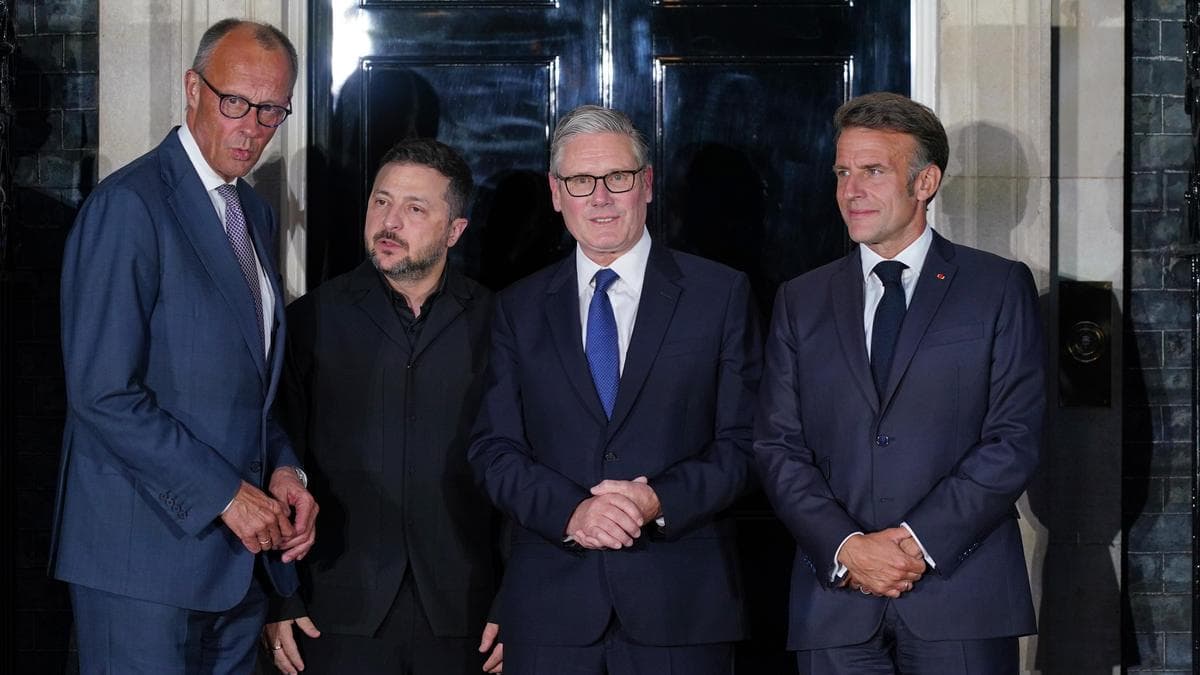
Western leaders unite behind Zelenskyy’s push for face-to-face negotiations with Putin as the conflict in Ukraine reaches a critical, violent inflection point.
The air in London this past Sunday was thick with the urgency of a war that shows no signs of cooling. Following a high-stakes meeting with President Volodymyr Zelenskyy, the leaders of the U.K., France, and Germany have thrown their collective weight behind a new diplomatic push. Prime Minister Keir Starmer, President Emmanuel Macron, and Chancellor Friedrich Merz issued a joint statement with the Ukrainian leader, explicitly endorsing his call for direct talks with Russia to secure a ceasefire.
The proposal marks a shift in how Kyiv and its allies are approaching the stalemate. Rather than relying solely on third-party mediators, they are now pushing for a mechanism that includes active participation from the U.S. and European powers to anchor the process. Crucially, the leaders underscored that the existing line of contact should serve as the starting point for any dialogue, reiterating the bedrock principle that international borders must not be redrawn by force.
A desperate search for an exit strategy
This diplomatic pivot comes as the reality on the ground turns increasingly grim. On the same day the leaders met, officials reported that Russian strikes killed five people, with missiles striking a nuclear storage facility near the site of the Chernobyl disaster. For Kyiv, the request for more ammunition for anti-air defences is no longer just about territorial integrity; it is a desperate bid to survive the daily aerial onslaught that has defined the last few months of the invasion.
President Zelenskyy’s open letter to Vladimir Putin earlier last week set the stage for this London summit. By proposing a personal, face-to-face meeting, he has effectively challenged the Kremlin to move beyond the theatre of public posturing. While reports from outlets like Le Monde suggest that peace talks have frequently stalled, and varying accounts of Putin’s willingness to engage remain contradictory, the European powers are now betting that a unified front might finally force a change in the Russian President’s calculus.
Why it matters: The shadow of the U.S. election
The bigger picture here is less about the battlefield and more about the looming uncertainty in Washington. With Donald Trump publicly weighing in—sometimes critiquing the current administration's strategy and at other times shifting his own stance on a potential peace plan—European allies are clearly nervous. They are attempting to lock in a coherent, trans-Atlantic diplomatic framework before the unpredictable U.S. political cycle complicates the situation further.
Europe is acutely aware that if they don't lead the push for a negotiated settlement now, they risk being sidelined by a future U.S. administration that may prioritize quick, transactional deals over the long-term security of Ukraine. By backing these direct talks, London, Paris, and Berlin are trying to seize the initiative, ensuring that if a resolution is found, it is one that adheres to international law rather than one imposed through unilateral force.
National Affairs Desk at PoliticalPedia covers government & policy for an Indian audience in English and Hindi.