Vanishing Greenery: Coimbatore Faces Crisis Amid Unabated Illegal Tree Felling
Vanishing shade: Coimbatore’s sparse tree cover falls prey to illegal felling
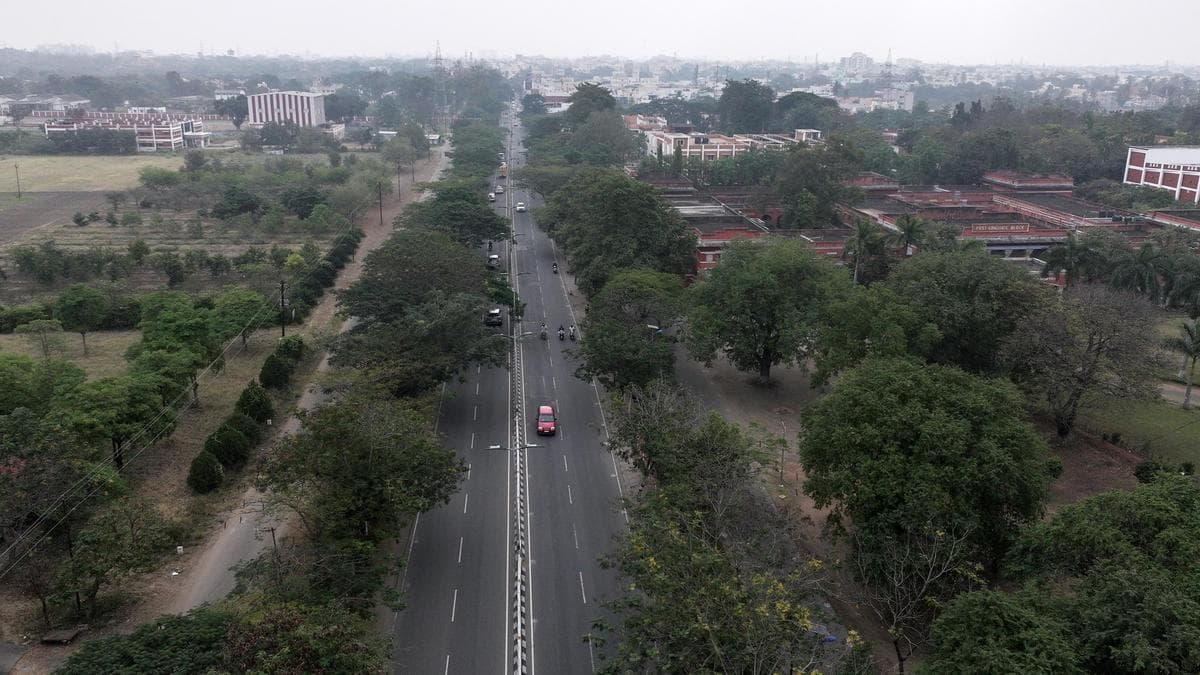
Concerns grow as urban development and private interests lead to the systematic destruction of the city’s vital tree cover without accountability.
The lush canopy that once defined Coimbatore’s identity is rapidly vanishing, as a persistent wave of illegal tree felling continues to undermine the city’s environmental health. Despite growing public awareness, trees in public spaces are frequently being targeted for removal, often to clear views for private establishments or to make way for infrastructure projects. Over the last decade, at least 7,600 trees have been lost to road expansion alone, leaving environmentalists and residents to question the lack of oversight and the absence of a cohesive legal framework to protect the remaining green cover.
A Systemic Failure in Oversight
The administrative response to these incidents has been largely fragmented. Researchers and residents have highlighted significant gaps in accountability, where complaints often bounce between municipal authorities, the revenue department, and the forest department. Joseph Reginald, a local researcher, recently faced this bureaucratic maze after a healthy kodukkapuli tree was removed from a municipal reserve site. Despite formal reports from the Village Administrative Officer, no concrete action was initiated against the offender. Many officials remain unaware of the specific protocols required to permit tree removal, and there is no clear guidance on who holds the authority to penalize those who destroy public property.
Tactics of Destruction
The methods employed to eliminate trees are increasingly brazen. Beyond the use of saws and axes, there have been disturbing reports of miscreants setting trunks on fire or drilling holes into trees to pour acid, as seen in incidents at Saibaba Colony and Cross Cut Road. P. Rajan, a local resident, noted that such organized damage rarely occurs without the tacit knowledge or negligence of government officials. Private individuals often justify these acts by citing concerns over falling dry leaves, potential root damage to structures, or the desire to increase the visibility of shops, disregarding the ecological cost.
The Ecological Toll
Environmentalists emphasize that the value of these trees extends far beyond aesthetics. Urban trees provide essential habitats for various species and act as critical cooling agents in a city experiencing rising temperatures and erratic rainfall. Syed, president of the Green Care organization, warns that the current lack of visible punishment has emboldened offenders, some of whom view potential fines as merely a cost of doing business. While the Prevention of Damage to Public Property Act of 1992 provides for fines and potential jail terms, its enforcement remains inconsistent.
Toward a Greener Future
The state government is now working to address these systemic failures by drafting a comprehensive Tree Act, which aims to formalize the role of state and district-level green committees. This move, modeled after existing legislation in states like Delhi and Karnataka, seeks to mandate strict permissions for any tree removal. As authorities also push forward with ambitious sapling plantation drives, experts argue that success will depend on more than just planting numbers. Without dedicated financial support for the long-term maintenance of saplings and a transparent, community-involved monitoring system, the city’s battle against its vanishing shade will remain an uphill climb.
The PoliticalPedia Editorial Desk brings verified, sourced political news and analysis from across India.