The INDIA Bloc’s New Realignment: Why the Congress is Back in the Driver’s Seat
Analysis: INDIA bloc closes ranks around Congress, but not without caveats
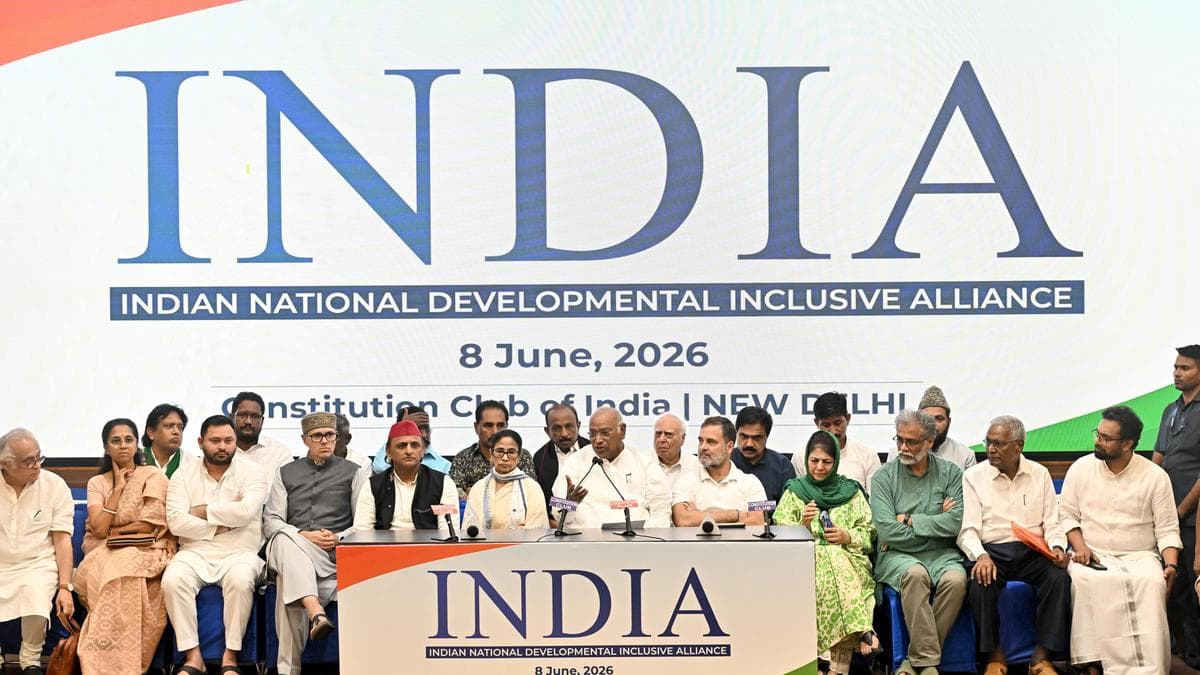
A rare show of unity at the latest INDIA bloc meeting signals a shift in power dynamics as regional giants concede the Congress’s role as the alliance’s national anchor.
The optics in the room were unmistakable: Mamata Banerjee, often the most vocal critic of the grand old party, leaned in for a warm, extended conversation with Sonia Gandhi before Monday’s INDIA bloc meeting. For a coalition that has spent months grappling with internal friction and questions of leadership, the gathering served as a vital reset. It wasn't just a routine meeting; it was a pragmatic acknowledgement that if the Opposition wants to mount a credible challenge to the BJP, it needs the Congress to act as the primary glue.
The Regional Calculus
The sentiment in the room was a blend of grudging respect and calculated survival. Following her party's recent setbacks in the West Bengal assembly elections, Banerjee’s tone shifted significantly. By publicly advocating for the Congress to lead—citing its unique status as the only party with a truly national footprint—she signaled a pivot from past hostility to a more cooperative stance for the 2029 general elections.
This sentiment was echoed by other stalwarts. Both Akhilesh Yadav of the Samajwadi Party and the RJD’s Tejashwi Yadav reinforced the necessity of the Congress’s national reach, even as they firmly reminded the leadership that regional players must retain the first claim on seats within their own states. Jammu and Kashmir Chief Minister Omar Abdullah captured the mood succinctly, labelling the Congress the essential "glue" holding the diverse bloc together.
Rahul Gandhi’s Conciliatory Turn
The meeting was notably devoid of the usual inter-party fireworks, save for a brief, minor exchange between Rahul Gandhi and CPI(M) leader John Brittas. Gandhi, seemingly aware of the fragility of the coalition, adopted a conciliatory posture. He welcomed the critiques leveled by his partners, framing the Congress’s role not as a dominant hegemon, but as an entity committed to uniting the alliance with "love and affection."
The absence of "arrogance"—a charge the Trinamool Congress had repeatedly leveled against the party in the past—suggests that the Congress is finally learning to balance its stature with the sensitivities of its smaller, yet powerful, regional allies.
Why it Matters: The Bigger Picture
This shift is a classic exercise in political survival. The INDIA bloc is moving away from the chaotic, multi-polar friction that defined its early days toward a more structured, top-down strategy. For the Congress, the challenge is no longer just about asserting leadership; it is about proving it can be a flexible partner that doesn't cannibalize the space of its regional allies.
If this consensus holds, the 2029 electoral map could look significantly more organized than the disjointed efforts seen previously. However, the "caveats" remain: the alliance is held together by the immediate necessity of checking the BJP’s momentum. Whether this newfound harmony can survive the intense, localized seat-sharing negotiations that inevitably lie ahead remains the true litmus test for the bloc’s longevity.
World Desk at PoliticalPedia covers global affairs for an Indian audience in English and Hindi.