The Ghost at the Table: Why the CJP Looms Over INDIA Bloc Strategy
Not in room, yet in conversation: CJP crawls into INDIA bloc huddle
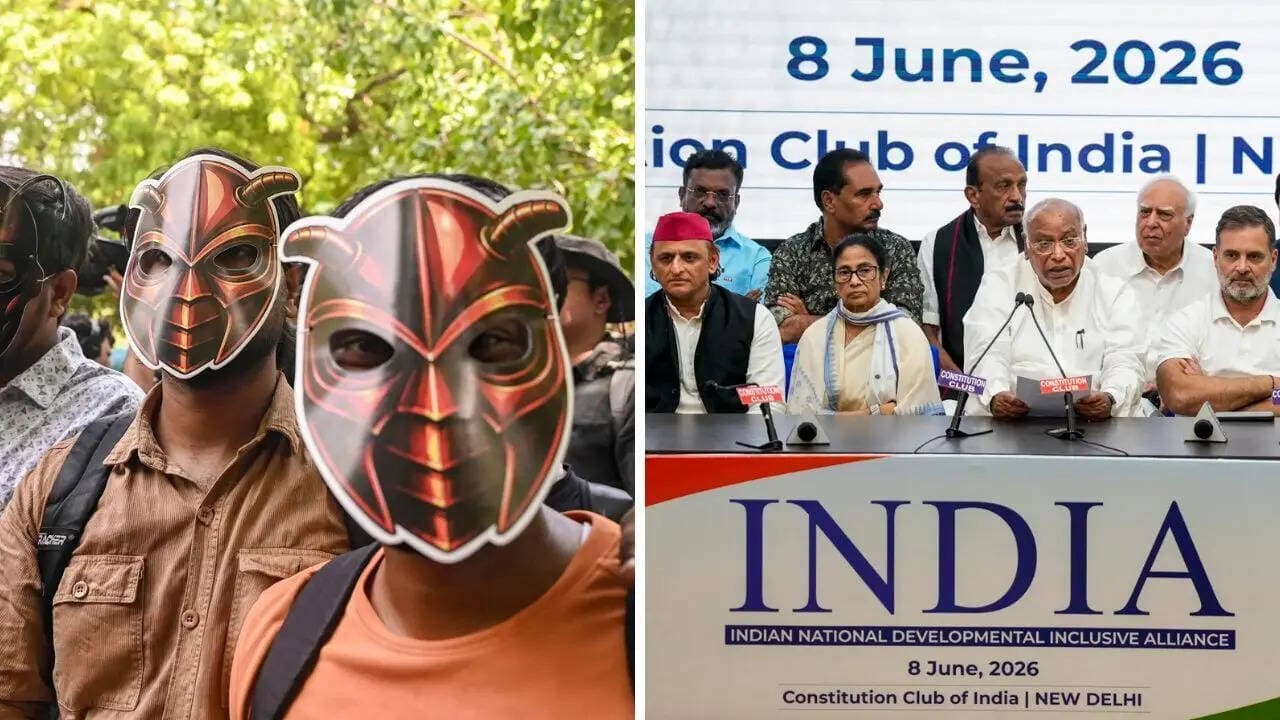
Though absent from the formal agenda, the emergence of the youth-led Cockroach Janata Party has become an unlikely focal point for opposition deliberations.
The meeting room was strictly reserved for the heavyweights of the INDIA bloc, yet the conversation repeatedly drifted toward an entity that wasn't even in the building. As coalition leaders gathered to chart their next moves, the Cockroach Janata Party (CJP)—a Gen-Z movement currently making waves on the fringes—found itself at the center of a surprisingly intense discussion.
A Divided House on the CJP
Sources present during the huddle confirmed that the CJP was never on the official agenda, yet it occupied the minds of those in attendance. The opposition appears far from unified on how to handle this new, energetic political force. While some leaders acknowledged the movement as a raw, authentic expression of youth dissatisfaction with the status quo, others remained deeply suspicious, questioning whether the CJP serves a hidden agenda.
The debate revealed a clear split in ideological temperament. Jammu and Kashmir Chief Minister Omar Abdullah emerged as one of the more pragmatic voices, urging his colleagues to engage rather than isolate. "Let's associate with them, they must be doing something right," he reportedly remarked. Similarly, TMC chief Mamata Banerjee emphasized that political battles shouldn't preclude the encouragement of wider civil movements, suggesting the bloc should remain open to grassroots energy.
The Spectrum of Dissent
The internal discourse spanned from cautious optimism to outright skepticism. CPML Liberation’s Dipankar Bhattacharya signaled a hopeful outlook, viewing the rise of such groups as a natural evolution of political expression. Meanwhile, Shiv Sena (UBT) chief Uddhav Thackeray framed the CJP’s growing footprint as a sign that society is carving out new, necessary spaces for dissent.
Yet, not everyone was convinced. Several leaders raised flags about the movement’s origins and ultimate trajectory. For those veterans accustomed to traditional political structures, the speed at which these new platforms are attracting attention in spaces once dominated by established parties is both a curiosity and a concern.
Why it matters
The preoccupation with the CJP signals a deeper anxiety within the opposition: the realization that their traditional influence is being challenged by fluid, digital-first movements. By discussing the CJP, the INDIA bloc is essentially grappling with its own relevance among younger voters. If the bloc continues to view these movements as either potential allies or threats, it risks missing the core issue—that young people are increasingly bypassing party structures to voice their grievances. The takeaway here isn't just about a single movement, but about how established coalitions struggle to absorb, or even understand, the shifting sands of modern political protest.
World Desk at PoliticalPedia covers global affairs for an Indian audience in English and Hindi.