The INDIA Bloc Divide: Why Mamata Is Embracing The Fold While Stalin Walks Away
The INDIA bloc divide: Why Mamata is all in but Stalin is walking her 'ekla chalo' path
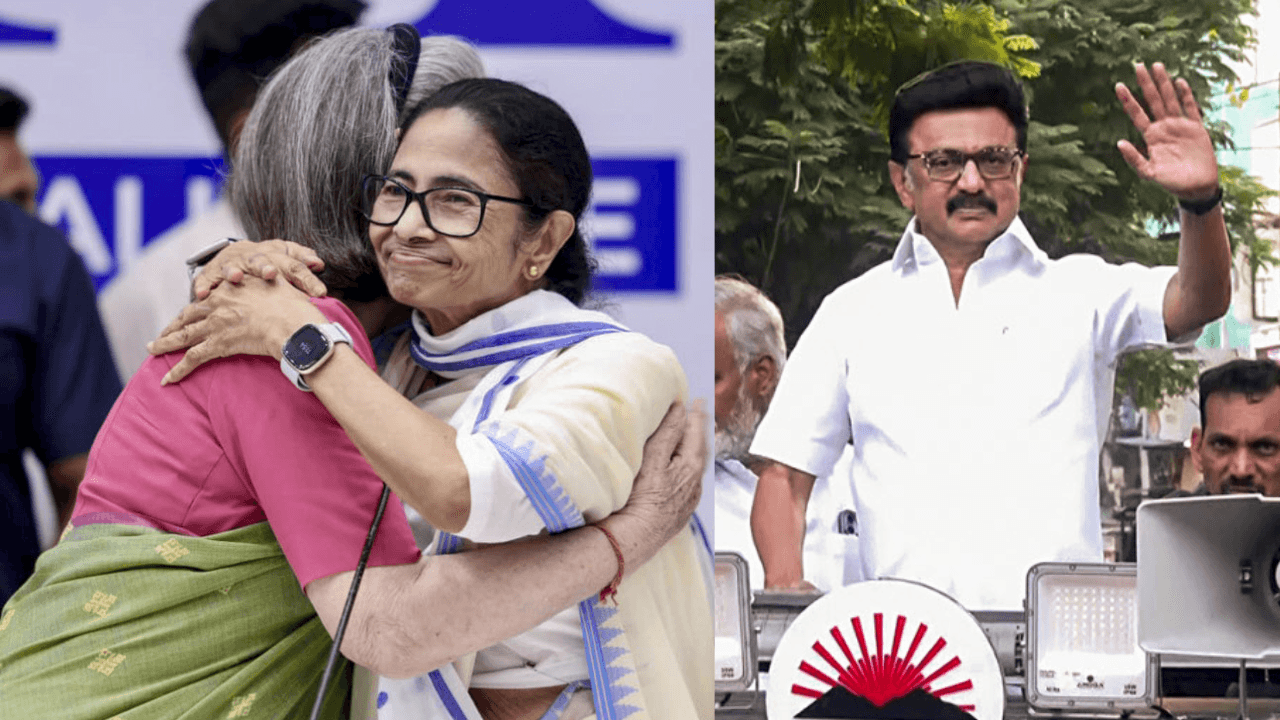
As the opposition bloc attempts to recalibrate its strategy in Delhi, the diverging paths of two powerful regional satraps reveal a deepening rift in the coalition.
The optics at the Constitution Club in New Delhi were carefully choreographed: Sonia Gandhi shared a warm embrace with Mamata Banerjee, while Rahul Gandhi and Mallikarjun Kharge moved through the room, project-managing a show of solidarity. This was the first high-level meeting of the opposition leaders since the 2024 Lok Sabha elections, and the agenda was packed. From demanding the Union education minister’s resignation over NEET paper leaks to drafting a letter to the Chief Justice regarding vote irregularities, the bloc seemed intent on signalling that it is still a force to be reckoned with.
Yet, behind the handshakes and the five-point agenda, the empty chair spoke louder than the presence of those who did show up. Stalin, the chief of the DMK, chose to boycott the meeting altogether. His absence was not merely a scheduling conflict; it was a stark departure from Mamata Banerjee, who has emerged as one of the most vocal proponents for keeping the INDIA bloc alive.
Two Satraps, Two Different Realities
The paradox is that both leaders find themselves in remarkably similar, precarious positions. Each has been bruised by recent electoral setbacks that have rattled their home turfs. While the TMC chief is dealing with a challenging political landscape in West Bengal following her party's electoral shift, the DMK leader is navigating the fallout of losing both ground and a key alliance partner, the Congress, to the political debut of actor Vijay.
Their reactions to these pressures, however, have been polar opposites. For Mamata, the strategy appears to be one of consolidation within the broader coalition. By positioning herself at the heart of the alliance discussions in Delhi, she is signalling a desire to keep the opposition's momentum active. Conversely, Stalin’s decision to stay away suggests he is leaning into his own "ekla chalo" (go it alone) path, distancing himself from the very alliance that was meant to be the firewall against the BJP.
The Bigger Picture: Why It Matters
This divergence marks a quiet but significant rewriting of the power balance within the opposition. Sharad Pawar, the NCP (SP) chief, was blunt about it in Baramati, admitting that the coalition is under visible strain and requires urgent rounds of consultation to prevent a total fracture.
What we are witnessing is the inherent friction of a coalition composed of regional power players with localized interests. When the electoral winds shift, these leaders prioritize their own political survival over the abstract unity of a national bloc. If the after-effects of the recent elections continue to force regional heavyweights to pivot toward isolationism, the INDIA bloc risks becoming a collection of disparate state-level actors rather than a cohesive national alternative. The coming months will be a test of whether this alliance is held together by shared conviction or merely by the convenience of being out of power.
Features Desk at PoliticalPedia covers culture, tech & life for an Indian audience in English and Hindi.