Beyond the Assembly: The Faces of TMC’s Growing Rebellion
Who Are Kakoli Ghosh Dastidar And Ritabrata Banerjee? The Faces Of TMC's Growing Rebellion
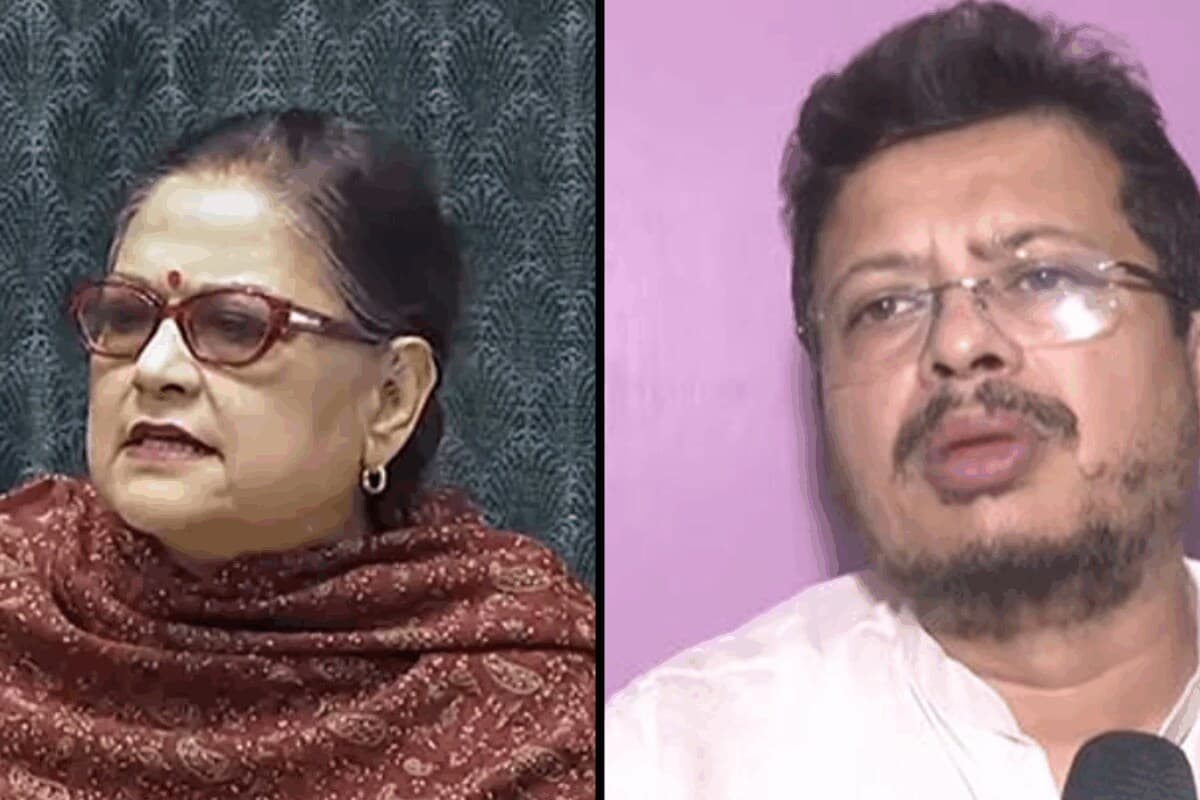
From the halls of the state assembly to the corridors of Delhi, a dual-front revolt led by Kakoli Ghosh Dastidar and Ritabrata Banerjee is threatening to unravel the Trinamool Congress’s hold on power.
The quiet corridors of power in Kolkata and New Delhi are currently vibrating with a singular, disruptive frequency. The Trinamool Congress, once a monolith of discipline under Mamata Banerjee, is witnessing a structural fracture. At the heart of this storm are two distinct uprisings: one in the West Bengal Assembly led by Ritabrata Banerjee, and a parallel, high-stakes parliamentary push spearheaded by veteran tmc mp Kakoli Ghosh Dastidar. For a party that has defined Bengal’s political landscape for over a decade, this isn’t just a bad election cycle; it is an existential crisis.
The Assembly Coup
The rise of Ritabrata Banerjee has been nothing short of cinematic. A former student leader and Rajya Sabha member who transitioned into the TMC, he has now claimed the mantle of Leader of the Opposition in the state assembly. This didn't happen in a vacuum; the state Speaker’s recognition of a rebel faction—the "Naba Trinamool Manch"—has effectively legitimized a breakaway group. By positioning his faction as the "true custodians" of the party’s original ideals, Ritabrata has effectively weaponized the internal disillusionment following the party’s recent poll defeat.
A Parliamentary Front
In the national capital, the mood is equally tense. Who are Kakoli Ghosh Dastidar and Ritabrata Banerjee? They are, for now, the faces of TMC's growing rebellion. Kakoli, a three-time Lok Sabha representative from Barasat, has moved from being a trusted party loyalist to a vocal critic. Her resignation from all organizational posts in May was the first domino to fall. She has since publicly cited "deep mental conflict" and a fundamental disagreement with how the party leadership—specifically the influence of political consultants and the inner circle—has handled governance.
Reports suggest that a significant bloc, upwards of 20 MPs, has written to Speaker Om Birla expressing a desire to align with the NDA. Whether this leads to a formal split under anti-defection laws remains the subject of intense speculation in the lobbies of Parliament. For the TMC, which currently holds 28 Lok Sabha seats, any movement involving two-thirds of its parliamentary strength would trigger a constitutional and political earthquake.
Why it matters
This isn't just about individual ambition; it is a symptom of a systemic collapse in top-down management. The pattern is clear: both the state and central factions are rallying against a perceived lack of grassroots consultation, blaming the party’s reliance on external consultancy and a shrinking decision-making circle. If the "Ritabrata model" of breaking away to form a distinct legislative identity takes root in Parliament, the TMC risks a Maharashtra-style disintegration. Mamata Banerjee’s 15-year grip is being tested by leaders who argue that the party has moved too far from the principles of its 1998 founding. As the dust settles, the question is not just who stays or goes, but whether the TMC can recalibrate its internal democracy before it loses its identity entirely.
Features Desk at PoliticalPedia covers culture, tech & life for an Indian audience in English and Hindi.