Frozen in June: The lingering silence of the Ahmedabad air disaster
‘My memories are frozen on June 12’: A year on, families of AI-171 victims still searching for answers
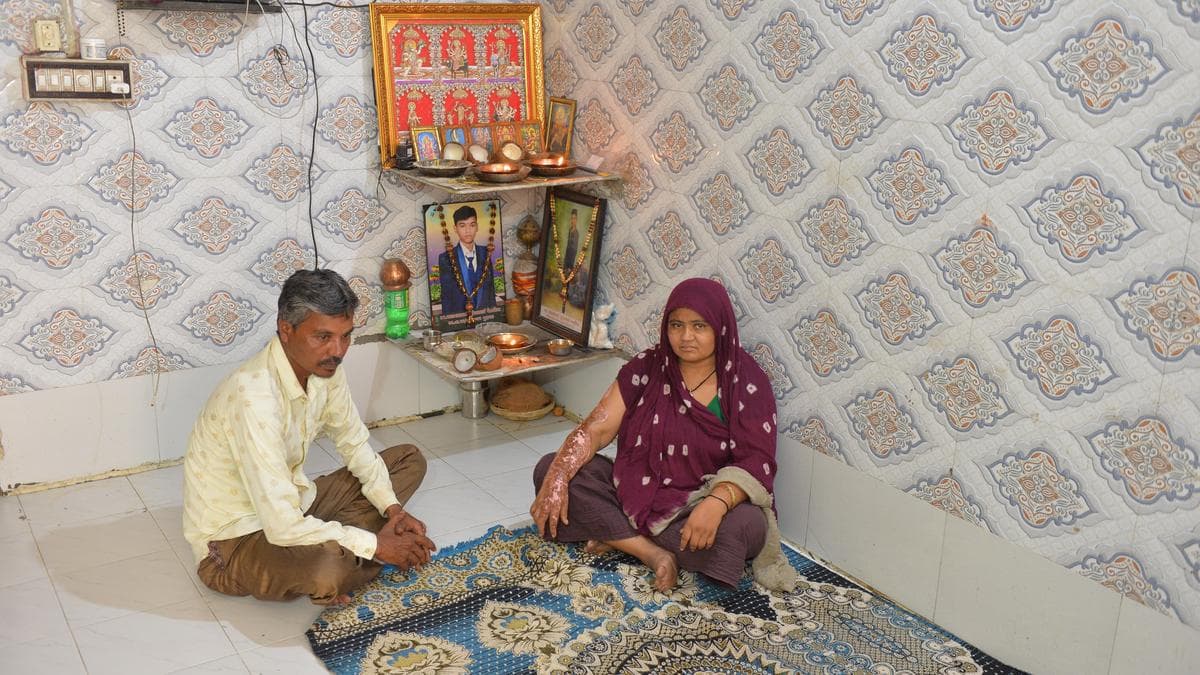
A year after the AI-171 crash shattered lives in Laxminagar and beyond, families are still grappling with a grief that refuses to pass.
The tea stall at the edge of Ahmedabad’s Sardar Vallabhbhai Patel International Airport was a place of routine until the afternoon of June 12 last year. For Sitaben Patani, it was where her 15-year-old son, Akash, brought her lunch. Minutes later, the London-bound Boeing 787 Dreamliner tore through the sky, crashing shortly after takeoff. The disaster claimed 260 lives, including 241 passengers and 19 people on the ground—Akash among them.
For the Patani family, the aftermath was a harrowing exercise in shielding the truth. Sitaben, battling 35% burns, spent weeks in the hospital asking for her son. Her husband, Sureshbhai, and their relatives maintained a painful silence, terrified that the news of Akash’s death—and that of his grandfather, Babubhai, who succumbed to the shock weeks later—would break her will to survive. “My memories are frozen on June 12,” Sitaben says today, her voice heavy with a loss that no financial compensation can mend.
A year of unanswered questions
The Patanis are not alone. Across Ahmedabad, families who saw their UK dreams or personal futures incinerated in that brief, violent window remain in a state of suspended animation. Reports from the time detail a tapestry of shattered lives: doctor couples who had resigned from their positions to start anew in London, and students like the B.J. Medical College survivor who stood frozen on the tarmac, watching a world end in seconds.
While government and airline payouts have addressed the immediate financial strain, the families remain restless. The tragedy has cast a long shadow over India’s aviation sector, prompting uncomfortable questions about safety protocols, maintenance standards, and the proximity of residential neighbourhoods to high-traffic flight paths. For many, the focus has shifted from mere survival to a search for accountability that still feels out of reach.
Why it matters
The AI-171 crash serves as a grim reminder of the high-stakes intersection between urban planning and aviation safety. In India, where expanding airports often collide with rapidly encroaching residential zones, the "ground victims" of such disasters highlight a systemic vulnerability. When a flight goes down, the impact is not confined to the manifest; it ripples through the local economy and the social fabric of the surrounding areas. The persistence of grief in Laxminagar underscores a failure in long-term rehabilitation—not just of the bereaved, but of the safety standards required to prevent such a June tragedy from ever happening again.
The coming months will likely see continued pressure on regulatory bodies to provide transparent findings. Until then, for parents like the Patanis, the calendar remains stuck at a date that changed everything.
Politics Desk at PoliticalPedia covers parties & elections for an Indian audience in English and Hindi.