The ‘G2’ Trap: Why John Bolton believes sidelining India is a strategic disaster
'Dangerous sidelining of India': Former Trump aide rejects US-China 'G2' world order
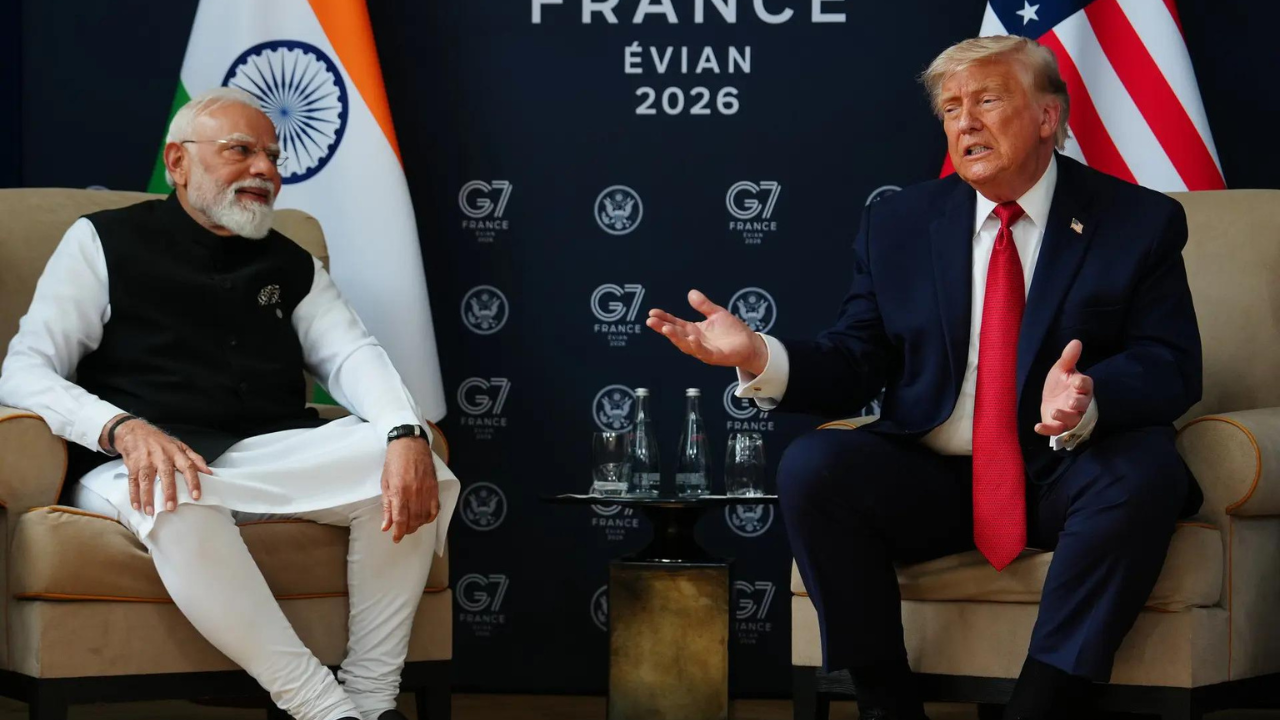
As Donald Trump leans into a US-China centric framework, his former national security advisor warns that ignoring New Delhi could prove fatal to Indo-Pacific stability.
The corridors of power in Washington are echoing with a rare, sharp critique of the former President’s foreign policy vision. John Bolton, the former US national security advisor, has publicly dismantled the idea of a "G2" world order—a framework that places the United States and China at the center of global affairs. For Bolton, this isn't just a shift in diplomacy; it is a "dangerous sidelining" of India at a moment when the geopolitical stakes in the Indo-Pacific have never been higher.
A collision of visions
Bolton’s intervention comes at a sensitive time for the Modi-Trump relationship. While the two leaders recently reconnected on the sidelines of the G7 summit in France, Bolton remains skeptical of the substance behind the handshakes. He observed that the meeting lacked concrete deliverables, though he admitted the optics were necessary to mend personal ties. His core grievance, however, is thematic: he argues that the dialogue between New Delhi and Washington is too often stifled by petty trade disputes and tariff squabbles, rather than focusing on the existential challenge of Chinese hegemony.
The former Trump official was blunt about the "major issue of the 21st century." Whether it is the flashpoints in the Taiwan Strait, the contested waters of the South China Sea, or the friction along the Line of Actual Control, Bolton sees Beijing’s expansionist ambitions as the primary threat. By fixating on a bilateral US-China arrangement, he warns that Washington risks alienating the one partner that is most vital to maintaining a balance of power in the region.
Why it matters: The bigger picture
This critique exposes a deep-seated tension within the US foreign policy establishment. For decades, the "G2" narrative has been the comfort zone for many in the West who prefer stability through great-power management. However, in the current landscape, this approach is increasingly seen as outdated. India is no longer a peripheral player; it is an indispensable pillar of the Indo-Pacific strategy.
If the US continues to view its relationship with New Delhi through the narrow lens of trade tariffs, it ignores the larger strategic necessity of a robust, security-oriented partnership. Bolton’s call for a dedicated, China-focused strategic dialogue between PM Modi and Trump suggests that for the India-US relationship to graduate, it must shed the baggage of economic protectionism. The risk is clear: if Washington insists on prioritizing its competitive dynamic with Beijing at the expense of regional alliances, the "dangerous sidelining" of India could leave a vacuum that the current global order is ill-equipped to fill.
Priya Nair covers parties, elections and the business of power for PoliticalPedia.