Shadow of the Strait: Why India must brace for a protracted economic shock
100 days of Iran war: India must brace for broad-based economic shock
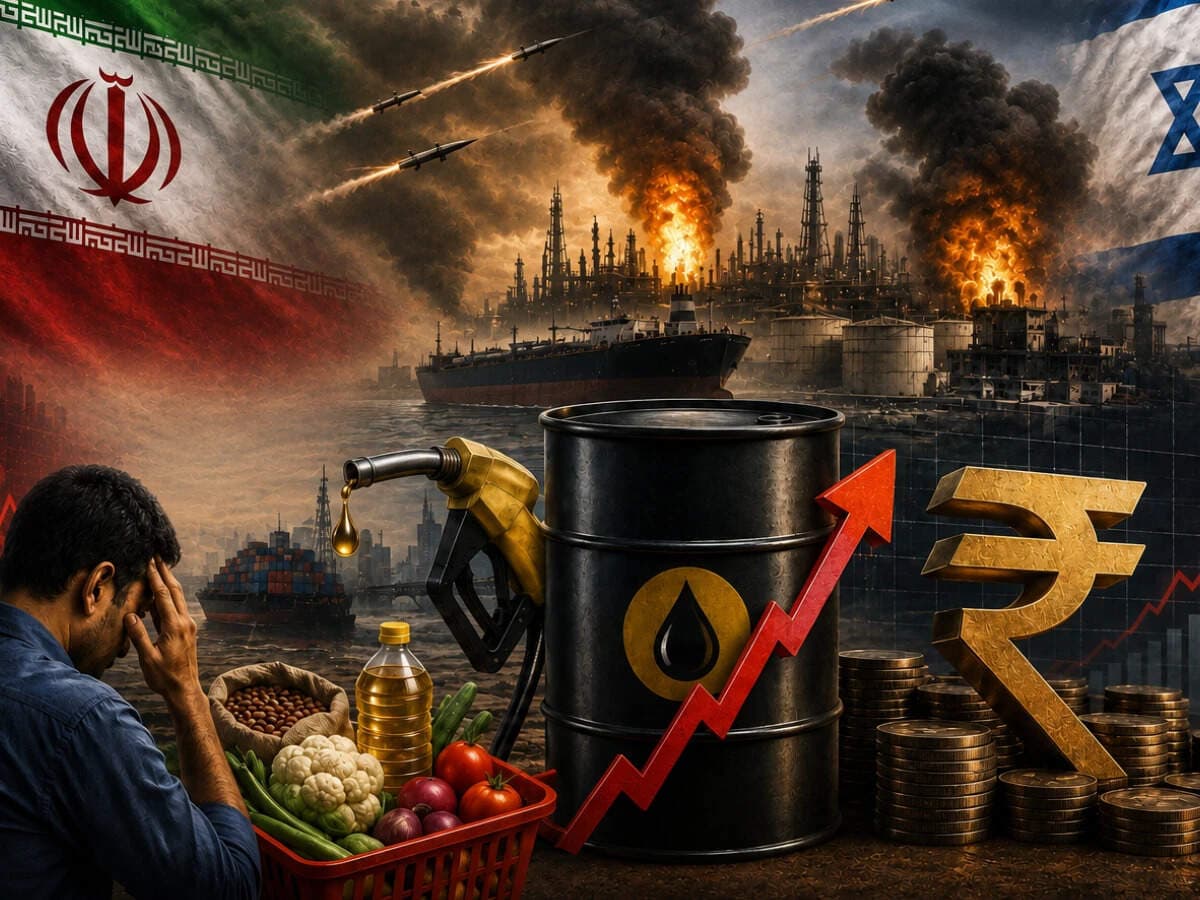
As the fragile Middle East ceasefire crumbles, India faces a double-edged crisis of soaring energy costs and cooling consumer sentiment.
The 100-day window of uneasy calm in the Middle East has officially slammed shut. With Israel and Iran trading direct strikes and the Houthis turning the Red Sea into a maritime minefield, the regional stability that kept global markets on an even keel is evaporating. For India, this isn't just a distant geopolitical tremor; it is a direct hit to the country’s precarious economic recovery. As crude oil prices react with characteristic volatility to the threat of a closed Strait of Hormuz, the ripple effects are already showing up in the RBI’s revised forecasts and a palpable sense of gloom among urban households.
The Growth Trap
India’s growth story, which stood firm at 7.8% in the final quarter of the last fiscal, is hitting a wall. The Reserve Bank of India, in a display of calculated caution on June 6, held the repo rate at 5.25%, but the message was clear: the path ahead is fraught. By slashing the FY27 GDP forecast from 6.9% to 6.6%, the central bank has acknowledged that the external environment has turned hostile. Governor Sanjay Malhotra’s recent comments underscore the fear that inflation is no longer just a supply-side headache—it is beginning to generalise, seeping into input costs across sectors and threatening to choke the momentum of the last two years.
The Consumer Pulse
The mood on the ground is darkening. The latest RBI Urban Consumer Confidence Survey reveals a reality that won't show up in a boardroom presentation. With the current situation index falling for the third consecutive time to 90.7, households have officially tipped into pessimism. When consumers feel the pinch of rising fuel costs and supply chain disruptions, their wallets snap shut, and their expectations for the future dim. This, combined with the looming threat of global tariff wars—specifically the 50% import levies that have sent the Sensex reeling—creates a "nightmare" scenario for domestic job security and investment.
Why it matters
The bigger picture here is the fragility of India’s import-dependent energy strategy. When conflict flares in the Middle East, India doesn't just pay a premium for oil; it pays in the form of a weaker rupee and a wider trade deficit. We are currently caught in a pincer movement: external shocks from the Iran-Israel conflict are raising the cost of production, while domestic demand is being stifled by the very inflation these costs create. If the conflict persists, the RBI will be forced into an impossible corner—having to choose between supporting a slowing economy and aggressively tightening policy to stop a price spiral. The resilience that defined our post-pandemic years is now being tested by forces entirely outside our control.
A Perfect Storm
As trade routes face potential closures and energy security becomes a daily negotiation, the margin for error for policymakers is shrinking. The market crash—wiping out 2,400 points in a single session—is a warning shot. Whether it is the impact of global tariffs on our manufacturing sector or the rising bill for our energy imports, the economic shock is no longer a "what-if" scenario; it is the new baseline. For the common person, this translates to higher fuel bills and fewer job openings. For the desk, the takeaway is simple: the era of easy growth is over, replaced by a period of high-stakes navigation where every global flare-up hits the Indian household first.
Politics Desk at PoliticalPedia covers parties & elections for an Indian audience in English and Hindi.