Seedlings of Dissent: PDP Leaders Defy Pulwama Land Orders in Field Protest
PDP leaders plough paddy fields to protest govt. takeover of land from farmers in Pulwama
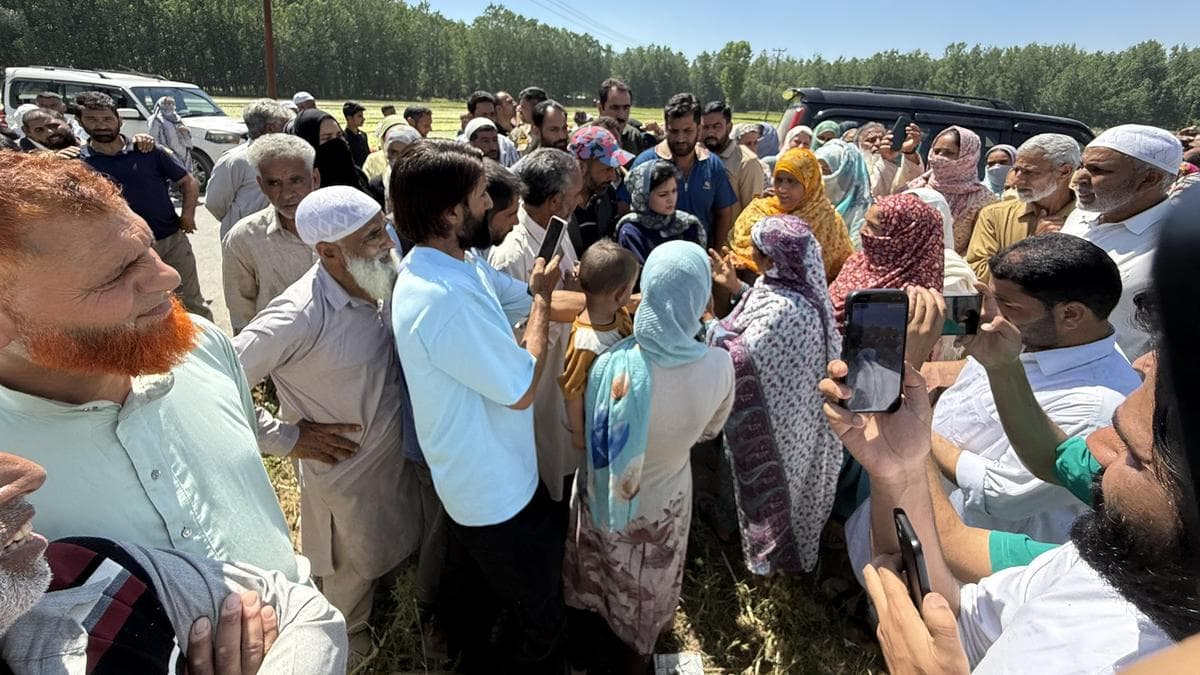
Opposition figures and local cultivators join forces to challenge administration mandates threatening thousands of kanals of agricultural land in South Kashmir.
The muddy fields of Padgampora turned into a theatre of political defiance this Monday as opposition leaders joined local farmers to manually sow paddy, a direct challenge to a government-imposed ban on cultivation. Armed with warnings of police action, the administration had recently cautioned residents across 400 villages that stepping onto 3,000 kanals of land—roughly 375 acres—would trigger the filing of First Information Reports (FIRs). For the villagers, however, the threat of legal action is secondary to the existential risk of losing land that has sustained their families and livestock for over eight decades.
Waheed ur Rehmaan Parra, a local legislator from the Peoples Democratic Party (PDP), waded into the slush to plant rice seedlings, framing the act as a symbolic rejection of the ongoing land occupation campaign. He was joined by senior party leader Iltija Mufti, who escalated the rhetoric by accusing the Revenue Department of attempting to seize 2,000 kanals of fertile acreage in Dangerpora. According to Mufti, the state is misusing its administrative machinery to bypass due process, allegedly threatening the use of the Public Safety Act (PSA) against those attempting to protect their ancestral livelihoods.
A Growing Conflict
The protest gained cross-party momentum as Mukhtar Ahmad Bandh, a former District Development Council vice chairman and senior National Conference leader, also arrived to plough the contested plots. This show of solidarity highlights the deepening rift between the local populace and the administration regarding land management policies in the region. Farmers like Shabir Ahmad, who rely on these small, fragmented patches of 3-4 kanals for survival, described the government's directive as a crushing blow to their agrarian economy. "What will happen to our families and cattle, which are dependent on the yield?" Ahmad asked, noting that the seizure would have a severe, cascading impact on the local community.
Why it matters
This standoff in Pulwama reflects a broader, sensitive tension across Jammu and Kashmir regarding land rights and state-led development initiatives. The administration’s aggressive approach to reclaiming land, often citing legal or revenue classifications, is increasingly being viewed through a political lens by the local population. When the state pivots from civil administrative warnings to the threat of anti-terror legislation like the PSA for what is essentially a land-use dispute, it risks deepening public alienation. For the business and agrarian sectors, this uncertainty creates a volatile environment where the traditional right to cultivate is now subject to sudden, contested bureaucratic interventions.
The administration has yet to issue a formal response to the specific allegations regarding the use of the PSA to stifle agricultural protests. As the planting season progresses, the standoff between the state’s drive to consolidate land and the farmers' determination to hold onto their heritage remains a flashpoint that could dictate the trajectory of local politics in the coming months.
Business Desk at PoliticalPedia covers economy & markets for an Indian audience in English and Hindi.