Record Surge: Largest Batch of 8,815 Devotees Departs Jammu for Amarnath Yatra Amid Tight Security
Largest Batch Of 8,815 Devotees Departs Jammu For Amarnath Yatra Amid Tight Security
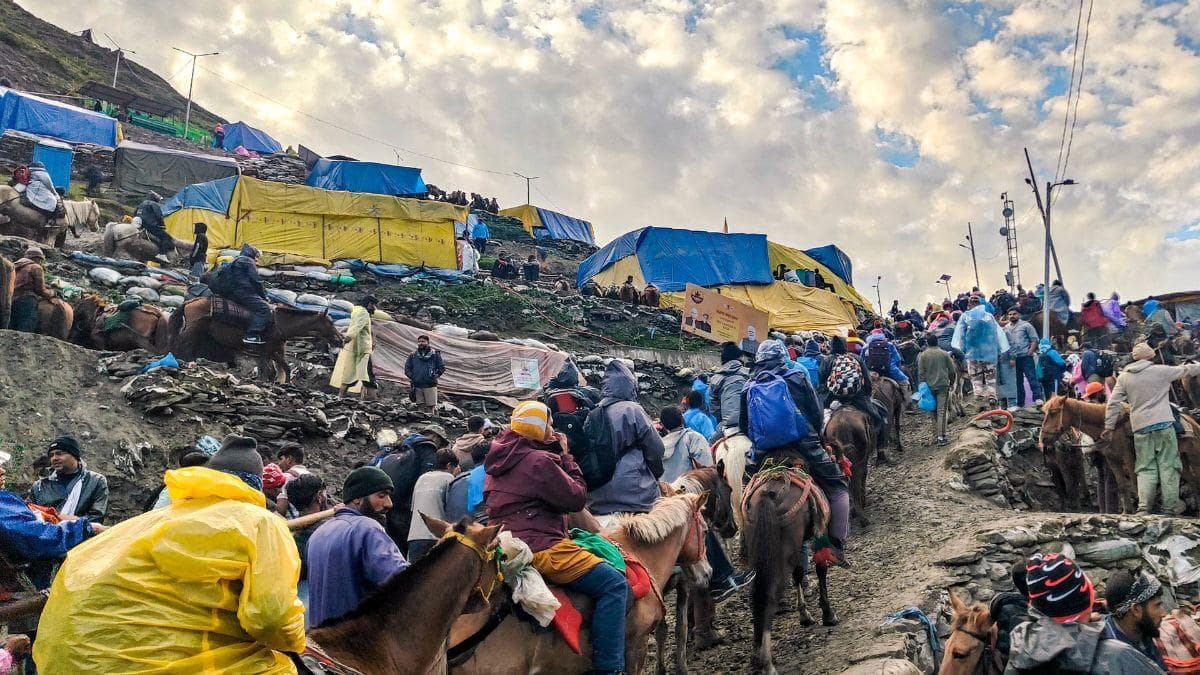
The annual pilgrimage sees its highest single-day turnout yet, with over 93,000 devotees having already reached the cave shrine in the first four days.
The Bhagwati Nagar base camp in Jammu resonated with rhythmic chants of "Bam Bam Bhole" and "Har Har Mahadev" on Tuesday morning as the largest batch of 8,815 pilgrims commenced their journey toward the high-altitude Amarnath cave shrine. This massive movement of devotees, facilitated by a convoy of 363 vehicles, marks a significant logistical milestone for the 57-day pilgrimage, which officially began on July 2.
A Massive Logistical Operation
The scale of this year's Yatra is evident in the numbers. Tuesday’s departure surpassed the previous record of 6,721 pilgrims set just two days earlier. Among the 8,815 individuals in this latest group, the diversity of the pilgrim base was notable: the contingent included 5,831 men, 2,193 women, 31 children, and 598 sadhus, alongside 131 sadhvis. Interestingly, the spiritual pull of the shrine continues to transcend borders, with 31 foreign nationals joining the ranks of the faithful.
The convoy was split to manage the transit flow: 3,989 pilgrims headed toward the Baltal base camp in Ganderbal, while 4,826 traveled via the traditional Pahalgam route in Anantnag. With this latest departure, the total number of pilgrims who have transitioned through the Jammu base camp since the start of the Yatra has reached 34,829.
Security and Infrastructure
The Yatra is currently operating under intense surveillance. The sheer volume of pilgrims, with over 93,000 having already offered prayers at the 3,880-metre-high shrine within the first 96 hours, necessitates a multi-layered security grid. Authorities have been firm in their messaging, urging unregistered pilgrims to defer their travel plans, as the current capacity is already heavily accounted for by booked slots.
The Bigger Picture
The immediate surge in footfall—pushing toward the one-lakh mark within less than a week—highlights the robust return of religious tourism in the region. Beyond the spiritual significance, the Amarnath Yatra acts as a critical engine for the local economy in Jammu and Kashmir. The smooth management of such large-scale movements is a litmus test for regional administration, reflecting not just on logistical capabilities but also on the overall stability of the tourism ecosystem in the Himalayas. As the Yatra progresses, the ability to maintain this pace while ensuring the safety of every devotee will remain the defining challenge for the season.
Rohan Gupta covers the economy, markets and companies for PoliticalPedia.