New Blood Test Could Predict Lung Cancer Risk Five Years Before Diagnosis
Blood test can predict lung cancer 5 years before diagnosis
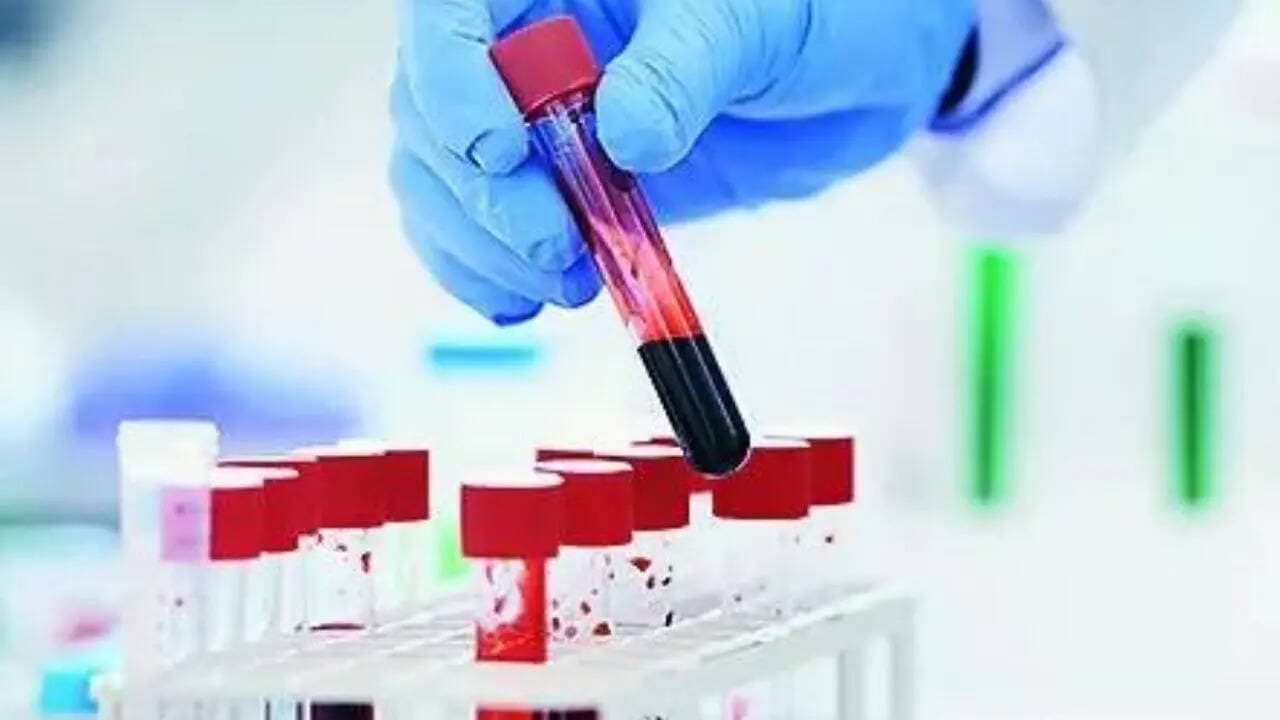
A breakthrough 14-protein signature identified in blood samples offers a potential window for early intervention and precision prevention long before clinical symptoms appear.
For decades, the standard approach to lung cancer has been a race against time. Because the disease is often asymptomatic in its early stages, the vast majority of patients—roughly 80% to 85% in India—are diagnosed only when the cancer has reached an advanced, often incurable stage. Now, a major scientific advancement published in the journal Cell suggests that the tide may be turning. Researchers from the Francis Crick Institute and University College London have identified a specific 14-protein signature in the blood that acts as a biological warning, capable of predicting lung cancer risk more than five years before a formal diagnosis.
A Shift Toward Precision Prevention
Unlike traditional diagnostic methods that search for existing tumors, this new blood test serves as a sophisticated risk-assessment tool. By analyzing data from over 48,000 participants in the UK Biobank, the researchers discovered that these 14 proteins do not originate from the tumor itself. Instead, they reflect an altered inflammatory environment within the lungs—a state often triggered by long-term exposure to air pollution, cigarette smoke, or other environmental stressors.
This finding is particularly significant for public health, as it moves the focus from reactive detection to proactive prevention. Experts suggest that individuals who test positive for this signature could be candidates for preventive interventions, such as medications that target specific inflammatory pathways like the molecule IL-1β, potentially stopping the disease before it ever takes hold.
Beyond Age and Smoking
Current screening protocols, such as low-dose CT scans, are generally reserved for older individuals with a significant history of smoking. This leaves a critical gap in care, particularly for non-smokers and younger individuals exposed to high levels of urban pollution. The new protein-based approach offers a more inclusive path forward. Because the signature was validated across eight international datasets, including cohorts of non-smokers, it provides a more granular view of individual risk that traditional demographic markers—like age or tobacco status alone—cannot provide.
While this research marks a watershed moment, medical professionals emphasize that the test is not a standalone diagnostic. Radiation oncologists note that a positive result should be treated as a signal for further clinical evaluation, such as high-resolution imaging, to confirm if any suspicious lesions are present. "This opens the possibility of identifying high-risk individuals years before cancer develops," explains a specialist familiar with the study, highlighting that the test acts as a gateway to definitive screening rather than a replacement for it.
The Global Burden
The timing of this discovery is critical for countries like India, where the burden of lung cancer is projected to climb significantly over the next decade. With cases expected to rise from approximately 63,700 in 2015 to over 81,000 by 2025, the ability to identify high-risk patients early could drastically improve survival rates. By integrating this blood-based protein signature into existing health frameworks, clinicians may finally be able to offer a level of precision cancer prevention that was previously thought to be years, if not decades, away.
The PoliticalPedia Editorial Desk brings verified, sourced political news and analysis from across India.