Neither Battlefield Nor Talks Abandoned: Iran President Signals Complex Standoff After Halting Strikes On Israel
'Neither Battlefield Nor Talks Abandoned': Iran President After Halting Strikes On Israel
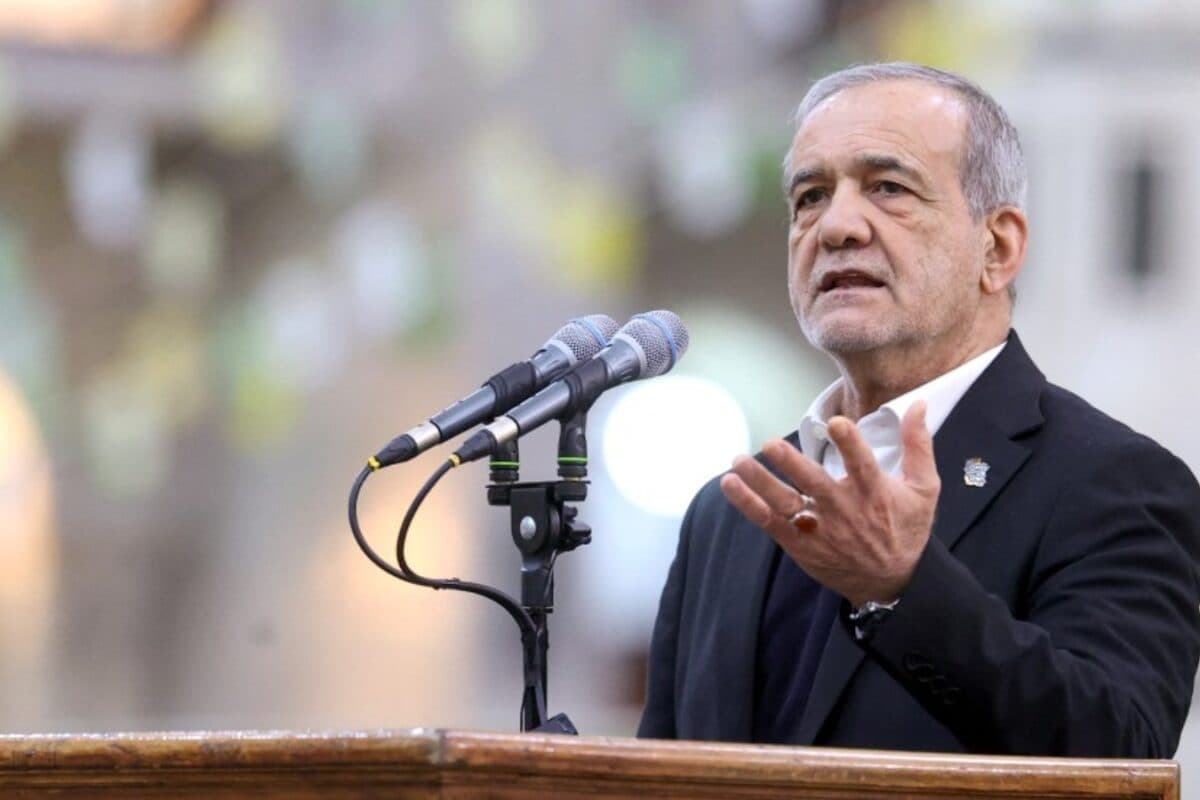
As the latest exchange of fire pauses, Tehran insists it remains committed to both military defense and diplomacy amid growing international pressure.
The skies over the Middle East have momentarily quieted, but the silence feels fragile. Following a night of intense missile exchanges, Iran has announced a pause in its latest operation against Israel. The shift came after reports surfaced of direct intervention, with multiple outlets indicating that international leaders—specifically Donald Trump—called for an immediate cessation of hostilities. For now, the missiles have stopped, yet the rhetoric from Tehran remains as sharp as ever.
Iranian President Masoud Pezeshkian took to social media to define the state of play, declaring that the country has "neither battlefield nor talks abandoned." In a post that underscored the dual-track strategy Tehran is currently pursuing, Pezeshkian emphasized that diplomacy and defense act as the "two wings" of national power. While the immediate military surge has halted, the warning from the Iranian military remains clear: any further aggression, particularly in southern Lebanon, will be met with "crushing" responses that go beyond what was seen in this recent flare-up.
A Fragile Ceasefire or Tactical Pause?
The exchange began in earnest after Israeli military strikes hit the southern suburbs of Beirut, triggering a response from Tehran that saw dozens of missiles fired toward Israeli targets. In turn, the Israeli military reported striking several Iranian defense sites. While the violence has been dialled back, the situation on the ground remains volatile. Pakistani mediators have reportedly arrived in Tehran in a bid to keep peace talks on life support, even as the threat of a broader regional blockade—specifically regarding the Strait of Hormuz—looms over the global energy market.
For the ordinary citizen, the anxiety is palpable. The back-and-forth has injected fresh uncertainty into an already shaky global climate, impacting everything from shipping routes in the Red Sea to the stability of regional markets. While investors often look to indicators like the Nasdaq to gauge broader economic sentiment during geopolitical crises, the immediate reality here is far more localized and dangerous. The focus remains on whether these diplomatic overtures can hold or if the "crushing" warnings will translate into a new, more severe phase of conflict.
The Bigger Picture: Why It Matters
This standoff marks a significant departure from the relative restraint seen since the April ceasefire. What we are witnessing is a high-stakes balancing act where neither side is willing to fully commit to an all-out war, yet neither is willing to retreat from their strategic objectives. Iran’s insistence that it is still at the negotiating table suggests that Tehran is looking for a way to maintain regional influence without triggering a catastrophic collapse of its own security apparatus.
However, the pattern is becoming clear: the traditional boundaries of this conflict are shifting. With Israel continuing its operations against Hezbollah despite calls for restraint, and Iran linking its military actions to the security of Lebanon, the cycle of "tit-for-tat" is becoming harder to contain. The involvement of external mediators signals that the international community is terrified of a total regional meltdown, but as long as the underlying disputes over territorial security and regional proxies remain unresolved, these pauses are likely to be temporary at best.
Features Desk at PoliticalPedia covers culture, tech & life for an Indian audience in English and Hindi.