Naidu Clears Land Logjam: 1.37 Lakh Acres Freed from Section 22(A) Restrictions
1.37 lakh acres excluded from Section 22 (A) list, says A.P. Chief Minister Naidu
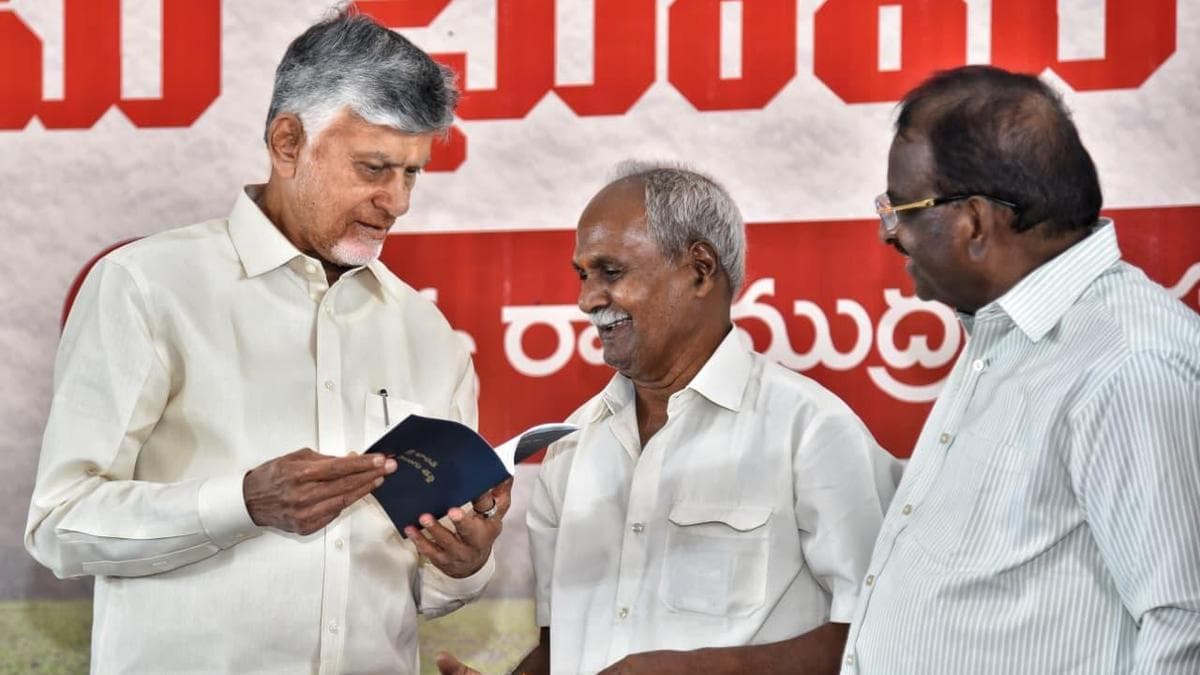
Andhra Pradesh Chief Minister Naidu has launched a massive overhaul of state land records, aiming to resolve millions of pending disputes through digital-first reforms.
At a gathering in West Godavari’s Siddhantham village, Chief Minister Naidu handed over new pattadar passbooks to farmers, marking a symbolic end to years of bureaucratic uncertainty for thousands of landowners. The state government has officially excluded 1.37 lakh acres of land from the contentious Section 22(A) list of the Indian Registration Act, 1908. This move effectively restores the right to transfer and sell land that had been frozen under the previous administration’s land survey policies.
Digitisation and Security
The administration is moving to end the era of paper-based vulnerability. By integrating Adangal, 1-B, and D-patta records into a digitised framework, the government aims to prevent the tampering that has historically plagued land administration. To guarantee data integrity, Naidu noted that the state has employed blockchain technology, comparing the security protocols for these new passbooks to the standards used in printing currency.
The scale of the task is significant. Following a controversial resurvey exercise initiated by the previous government, roughly 90 lakh revenue disputes had piled up. The current ‘Mee Bhumi-Mee Hakku’ programme has spent the last two years untangling these claims. While 26.46 lakh passbooks have already reached farmers, the state is targeting the distribution of 1.12 crore passbooks by March next year to provide clear titles to families across Andhra.
Policy Reversals
A major pivot in the current government’s approach is the repeal of the Andhra Pradesh Land Titling Act, 2022. Naidu characterised the former legislation as a source of state-wide disputes, specifically criticising the previous government’s expenditure of ₹800 crore on boundary pillars that prominently featured the image of former CM Jagan Mohan Reddy. With the repeal of this act, the government is now focused on completing the land resurvey process in all villages by March 2027.
Why it matters
For the business and agricultural sectors, land titling is the bedrock of economic activity. When land is locked under Section 22(A)—which often denotes government-held or restricted categories—it creates a "dead capital" scenario where farmers cannot secure institutional credit or transfer property legally. By clearing these titles, the government is not just resolving individual grievances; it is attempting to unlock liquidity in the rural economy. If the digitisation drive succeeds, it could significantly lower litigation costs and boost investor confidence in rural land markets, which have long been hampered by opaque record-keeping and conflicting ownership claims.
Business Desk at PoliticalPedia covers economy & markets for an Indian audience in English and Hindi.