Middle East on Edge: Iran Vows 'Broader Response' After Strikes on US Assets Across Gulf
US-Iran War Live Updates Today: After Strikes On US Assets Across Gulf, Iran Warns Of 'Broader Response If Aggression Is Repeated'
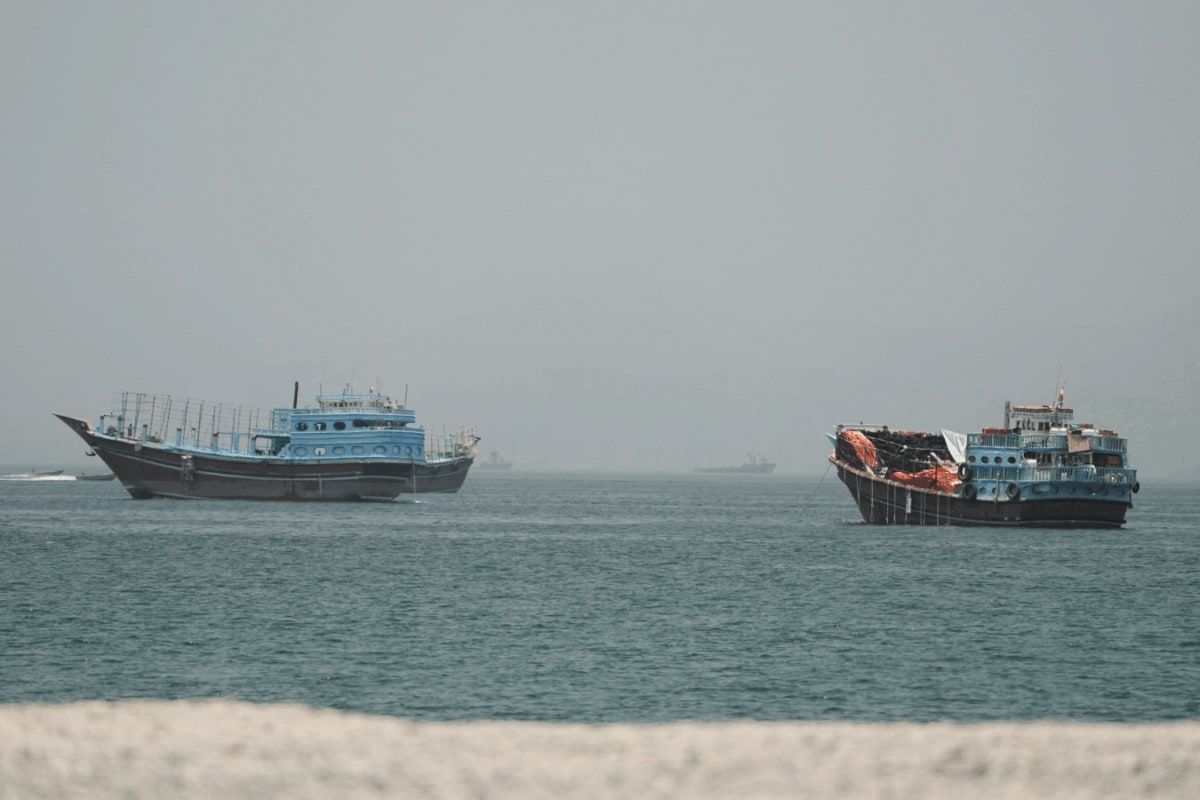
As the fragile ceasefire hangs by a thread, fresh military strikes in the Strait of Hormuz have pushed the US and Iran to the brink of a new, volatile phase of conflict.
The smoke rising from the Taherouyeh pier in southern Iran acts as a grim signal that the Middle East is spiralling into a dangerous new chapter. After the US military launched retaliatory strikes following an attack on a commercial vessel in the Strait of Hormuz, the region is bracing for what Tehran has ominously dubbed a "broader response if aggression is repeated." The escalation, captured in grainy, unclassified footage released by the US Central Command, shows the immediate aftermath of a strike that has now rippled across the Gulf.
The sequence of events marks a sharp deterioration in an already tense environment. Washington maintains it was acting within the bounds of a previously established Memorandum of Understanding (MOU). US Vice President JD Vance’s message on social media was blunt: the US has honoured the ceasefire agreement, but "violence will be met with violence." For a region already witnessing daily barrages, the rhetoric suggests the diplomatic phone lines are being drowned out by the sound of artillery.
A Fragile Peace Unravelling
While the US and Iran trade strikes, a parallel effort to stabilise the northern front has hit a wall. A trilateral framework agreement involving Israel, Lebanon, and the US was signed just this past Friday, aimed at de-escalating the conflict with Iran-backed Hezbollah. Secretary of State Marco Rubio called it the "beginning of the beginning," acknowledging that the path forward remains incredibly difficult. Yet, even as ink dries on these diplomatic papers, the reality on the ground—with Iran’s Revolutionary Guards targeting US military positions in direct retaliation—suggests that regional players are operating on two different timelines: one of uneasy diplomacy and another of rapid military mobilisation.
Why it matters: The Global Ripple Effect
The core of this crisis lies in the strategic chokepoint of the Strait of Hormuz. When this artery is threatened, the world takes notice, as the global energy supply remains tethered to the stability of these waters. The pattern here is clear: both sides are locked in a "grey zone" conflict where limited, tit-for-tat strikes risk spiralling into a broader regional war. For New Delhi, this is a matter of profound concern. A sustained blockade or an all-out conflict in the Gulf would not only spike global oil prices but also threaten the safety of millions of Indian expatriates working in the region and disrupt critical trade routes. We are moving beyond targeted skirmishes into a phase where the margin for error is shrinking by the hour.
As the US increases its military build-up in the Gulf and Tehran continues to assert that its actions are a response to hostile intent, the window for a lasting resolution is closing. Whether the "important first step" in the Lebanon agreement can hold under the weight of these intensifying Gulf hostilities remains the most pressing question for the coming days.
Ananya Iyer covers global affairs with an Indian lens for PoliticalPedia.