Venezuela’s Twin Quakes: A Race Against Time as Death Toll Crosses 900
Watch: Venezuela's twin earthquakes leave nearly 1,000 dead, trail of despair
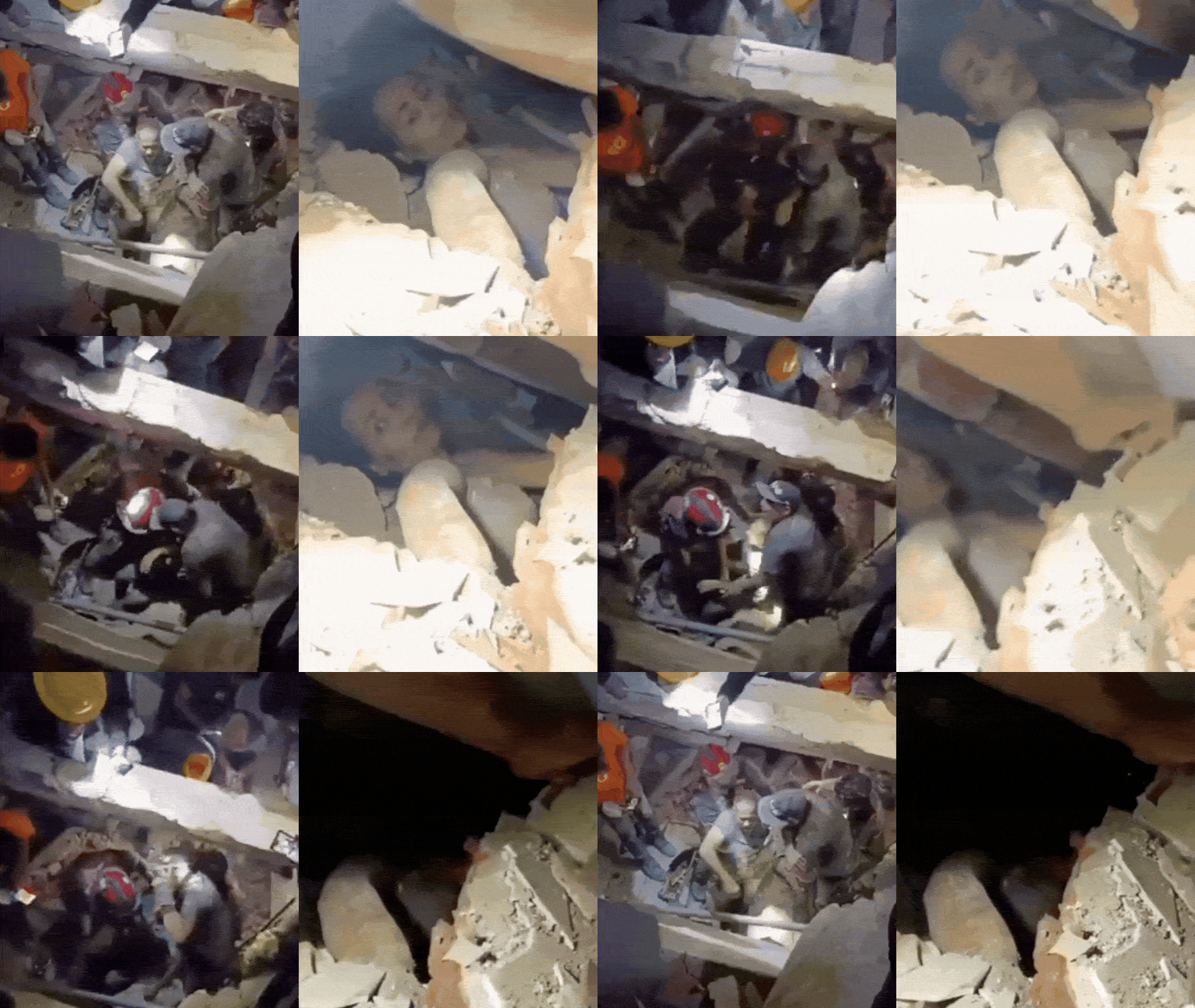
As search operations enter a critical third day, the scale of destruction in La Guaira and Caracas has left tens of thousands missing beneath the debris.
The images emerging from Venezuela are harrowing: families clawing at concrete slabs with their bare hands, desperate to pull survivors from the suffocating dust of collapsed homes. Two powerful earthquakes—a 7.2 and a 7.5 magnitude—struck the country’s north within seconds of each other on Wednesday, turning vibrant neighbourhoods into graveyards of twisted metal and pulverized brick. By Friday, National Assembly President Jorge Rodriguez confirmed the death toll had climbed to 920, with authorities warning that this number will likely rise as the search continues through the wreckage.
The unfolding crisis
The situation in La Guaira and parts of Caracas remains dire. While rescue teams race against the narrowing window to find survivors, the logistical challenge is immense. With over 50,000 people reported missing, the sheer volume of rubble is overwhelming local capabilities. International intervention has begun to materialise, with the United States deploying warships, transport aircraft, and helicopters to bolster the effort. In a significant diplomatic shift, Washington has also suspended economic sanctions that could have impeded the flow of urgent humanitarian aid.
The United Nations is sounding the alarm on the humanitarian front, particularly concerning the 3.9 million children living in the affected zones. UNICEF teams are now on the ground, struggling to meet the basic needs of families who have lost everything. For those still searching through the rubble, the mood is one of bleak endurance; as Rodriguez noted, every successful recovery at this stage is considered a miracle.
Why it matters: A failure of infrastructure
Beyond the seismic intensity, the catastrophe highlights a deeper, systemic vulnerability. Reports indicate that Venezuela’s urban landscape, defined by older buildings and decades of substandard construction, was never equipped to withstand a tremor of this magnitude. This is not just a natural disaster; it is an infrastructure crisis that has turned residential areas into death traps. When rapid urbanisation outpaces safety regulations, the result is the kind of widespread structural failure we are witnessing now.
The political implications of this tragedy will be closely watched. The suspension of US sanctions to facilitate rescue operations marks a rare moment of cooperation in a long-strained relationship. However, the true test for the Venezuelan government lies in its ability to manage the recovery phase without the administrative friction that has historically plagued the country’s disaster response. As the world watches these scenes, the focus shifts from immediate search and rescue to the massive, long-term challenge of rebuilding a shattered nation.
Arjun Mehta reports on government, policy and Parliament for PoliticalPedia, in English and Hindi.