Khajamalai’s endless trench: Why the UGD project has become a civic nightmare
Delay in UGD work continues to trouble Khajamalai residents
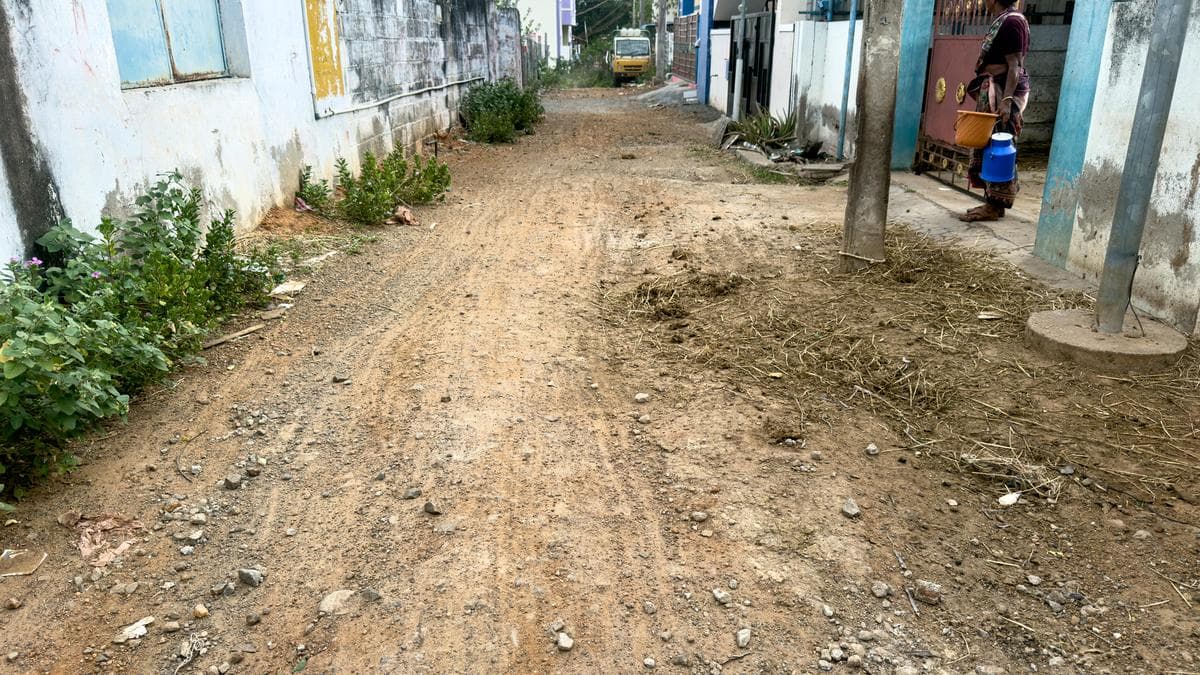
Residents endure months of stagnant construction, broken roads, and persistent sewage overflows while the city corporation cites rocky terrain and pending approvals.
For the residents of Khajamalai, a simple trip to the local market has turned into an endurance test. Roads like Anna Nagar, Noor Mahal Road, and Lourd Swamy Colony Fourth Street remain scarred by open trenches, many left abandoned for over a year. During the monsoon, these excavated stretches transform into treacherous, slushy pits, making daily life a hazardous experience for pedestrians and motorists alike. For those living here, the promise of a modern underground drainage (UGD) system has instead brought a cycle of dust, traffic bottlenecks, and the lingering threat of sewage backflow.
A technical gridlock
The project’s inertia stems from a mix of geographical hurdles and bureaucratic inertia. Corporation officials point to the hard, rocky subsurface beneath Khajamalai as the primary culprit. Initial attempts to lay pipelines were halted when machinery hit massive boulders; standard blasting was deemed too risky for the structural integrity of nearby homes. The proposed shift to "chemical blasting" was meant to be the solution, yet the plan remains stuck in administrative limbo, awaiting clearance from the Assistant Director of Mines and the District Collector. With funding for the remaining phases still unallocated, the work remains in a state of suspended animation.
Beyond the ongoing project delays, Khajamalai faces an older, chronic issue: a design flaw in the UGD network commissioned two decades ago. The existing reinforced cement concrete pipelines are frequently overwhelmed by silt and solid waste, causing sewage to reverse flow into low-lying areas like Nehru Nagar and Crescent Nagar. Frequent pipeline bursts near Race Course Road have forced the corporation to repeatedly tear up roads for emergency repairs, only to leave them in a state of disrepair.
The proposed way out
To address these recurring failures, the Tiruchi Corporation has proposed a new sewage lifting station in Ward 60. Officials hope this will push sewage effectively toward the decanting station near the Anna district sports complex, eventually reaching the Panjapur sewage treatment plant. Plans are also afoot to widen current ducts from 250mm to 300mm and to monitor bulk sewage generators—such as hotels and hospitals—to ensure they have proper filtration mechanisms to stop solid waste from entering the lines.
Why it matters
The situation in Khajamalai is a classic case of infrastructure planning failing to account for ground realities. When projects are launched without a clear assessment of subterranean geology or sufficient financial buffering, the cost is borne entirely by the taxpayer. The pattern of "digging and abandoning" not only creates immediate mobility issues but also erodes public trust in urban planning. Until the corporation synchronizes its technical approvals with actual construction timelines, residents will continue to live in a state of perpetual civic disruption, where the cure—drainage repairs—often feels as damaging as the disease.
Business Desk at PoliticalPedia covers economy & markets for an Indian audience in English and Hindi.