Innovative Drum Plantation Technique Transforms Saline Land in Dholera Into Green Oasis
Drum plantation technique helps grow 3,200 trees in saline land at Dholera
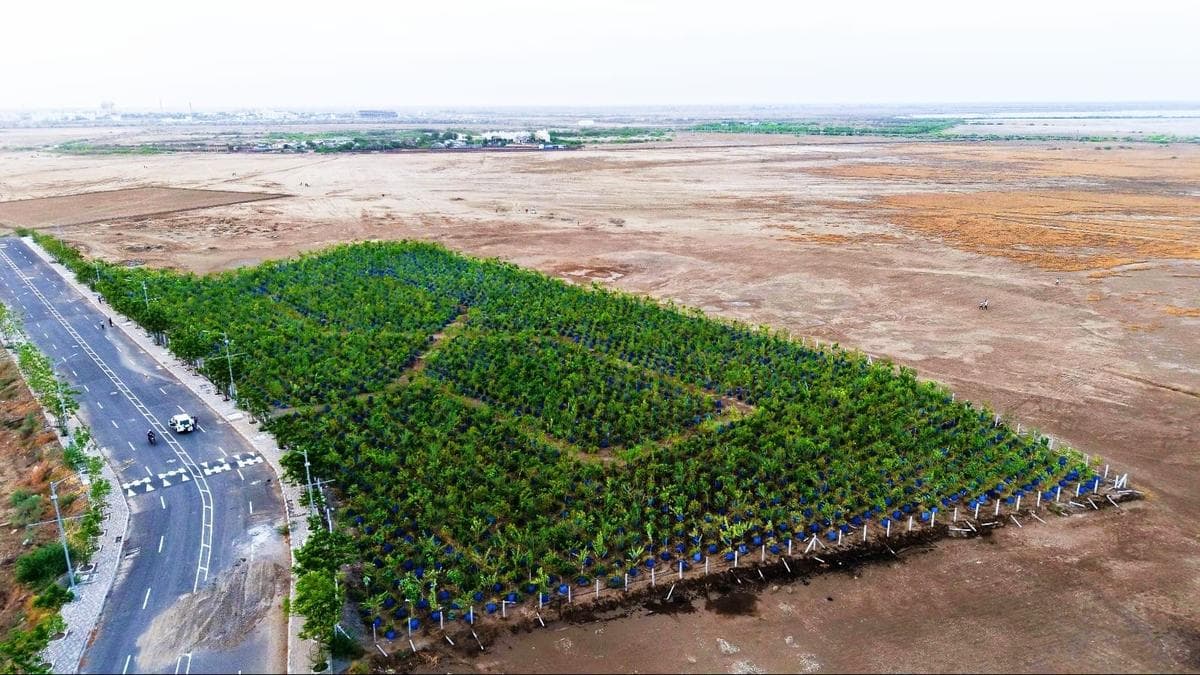
A pioneering afforestation project in Gujarat is successfully reversing desert-like conditions by using a specialized container-based planting method to bypass toxic soil layers.
The landscape of the Dholera Special Investment Region (SIR) is undergoing a significant ecological transformation. In a bid to cultivate greenery within one of India's most challenging terrains, the Ahmedabad Social Forestry Division has successfully implemented a unique drum plantation technique. This initiative, which began in August 2025 at Block No. 29, has allowed over 3,200 saplings to not only survive but thrive in conditions previously deemed hostile to vegetation.
Overcoming Environmental Hurdles
Historically, the Dholera area has been plagued by severe environmental constraints, including extremely high soil salinity and low carbon content. Adding to the difficulty, the region remains prone to persistent waterlogging for nearly half the year. Conventional methods of afforestation had repeatedly failed, as the toxic chemical composition of the earth stunted growth and led to mass mortality of saplings.
Dr. Minal Jani, Deputy Conservator of Forests, explained that the team required a radical departure from traditional practices to see results. The solution involved using plastic drums as protective vessels for the young plants. By filling these drums with a carefully curated medium—comprising sand, nutrient-dense soil, vermicompost, cocopeat, and stubble—and embedding them one foot into the ground, the forest department effectively isolated the roots from the surrounding saline environment.
A Thriving Ecosystem
The success of this technique is visible in the physical development of the trees, some of which have already surged to heights of 12 feet within a single year. The plantation features a diverse mix of 15 species, including neem, tamarind, Pilu, Arjun, and Banyan. The installation of a dedicated drip irrigation system, supported by the Dholera Special Investment Region Development Authority (DSIRDA), has provided the necessary moisture to sustain the saplings during critical growth phases.
Beyond mere survival, the project is yielding broader ecological benefits. The presence of these trees has begun to attract pollinators and birds, while naturally occurring grass has started to reclaim patches of land that were once completely barren. This return of biodiversity serves as a clear indicator of the project's success in stabilizing the local micro-climate.
Future Expansion
Given the promising outcomes of the pilot, authorities are now looking toward significant expansion. Plans are already underway to scale the project across an additional 20 hectares of the Dholera Activation Area. The forest department aims to plant upwards of 50,000 new saplings, utilizing the same drum-based methodology that has proven so effective in turning this challenging, salt-ridden zone into a burgeoning forest.
This model of integrating nature with industrial development demonstrates that even the most difficult landscapes can be reclaimed through localized, innovative interventions. As the project matures, it stands as a potential blueprint for other regions in India struggling with soil salinity and land degradation.
The PoliticalPedia Editorial Desk brings verified, sourced political news and analysis from across India.