India Must Engage Japan on Its Own Terms, Not as a Pawn in Asia's New Cold War
OPINION | India Must Engage Japan On Its Own Terms, Not As A Pawn In Asia's New Cold War
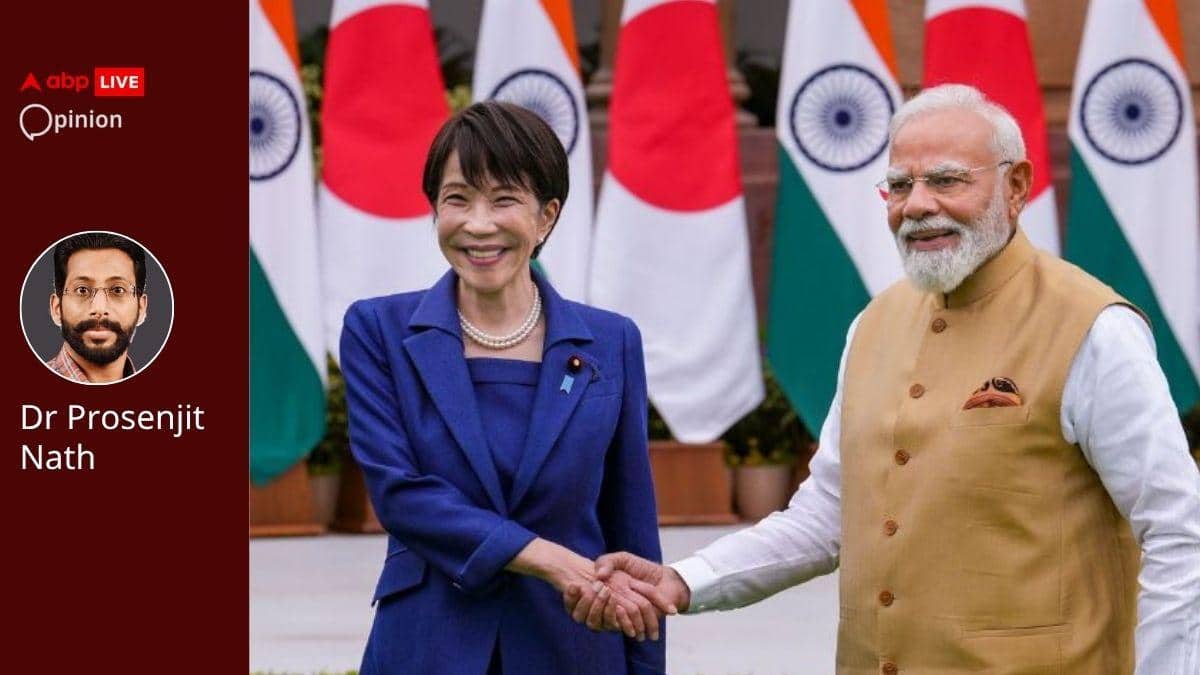
As Tokyo seeks a pivot point in the Indo-Pacific, New Delhi’s growing proximity to Japan highlights a delicate dance between deepening vital partnerships and maintaining hard-won strategic autonomy.
The handshake at the Prime Minister’s residence carried the weight of a shifting continent. With Prime Minister Sanae Takaichi’s visit to India, the message from Tokyo is clear: Japan is looking for reliable, capable partners to shore up a balance of power in an Indo-Pacific defined by China’s expanding shadow and the growing unpredictability of American policy. The meetings between the two leaders were not merely symbolic; they covered the high-stakes machinery of the future—semiconductors, artificial intelligence, critical minerals, and defence collaboration.
For New Delhi, the appeal of this deepening relationship is obvious. Japan offers the capital and the high-tech precision that India needs to scale its own domestic industrial base. From energy security to resilient supply chains, the complementarities are undeniable. However, beneath the surface of these bilateral agreements lies a more complex geopolitical reality. Tokyo clearly envisions India as a central, active pillar of its Free and Open Indo-Pacific (FOIP) strategy, a framework that serves as a bulwark against regional hegemony.
The Trap of Bloc Politics
The danger for India lies in the transition from pragmatic cooperation to overt alignment. There is a palpable temptation to treat this partnership as a convenient tool to contain China, effectively turning India into a key player in what many are already calling a new cold war in Asia. But becoming a pawn in a larger power game would be a fundamental departure from India’s long-standing foreign policy of strategic autonomy.
If New Delhi allows its ties with Tokyo to be defined solely by an anti-China agenda, it risks losing the agility that has allowed it to engage with diverse global players. The history of India’s foreign policy is built on the premise that it dictates its own choices, rather than having them dictated by the formation of competing strategic blocs.
Why It Matters
This engagement matters because it tests the limits of India’s "multi-alignment" strategy. As regional neighbours like Nepal and Bangladesh also grapple with their own positioning amidst the scramble for influence by global powers, India’s approach serves as a litmus test for the region. If India successfully leverages Japanese tech and investment while keeping its sovereign distance from a formal containment bloc, it signals a new, more mature phase of its global rise. If it falters, it risks being pulled into a zero-sum game where its domestic economic needs become secondary to the strategic anxieties of others.
The path forward requires a firm, calibrated approach. India must embrace deeper economic and technological integration with Japan, but it must do so on its own terms. By focusing on mutual development rather than just military posturing, New Delhi can ensure that its partnership with Tokyo strengthens its own resilience without turning the Indo-Pacific into a theatre of permanent, frozen conflict. The goal is to build a modern, capable India—not an auxiliary force for another nation’s geopolitical design.
Priya Nair covers parties, elections and the business of power for PoliticalPedia.