Revisiting the Past: Anand Ranganathan and the Discourse on Historical Memory
For More Than 70 Years, We Have Been Taught To Forget Our Historical Injustices: Anand Ranganathan
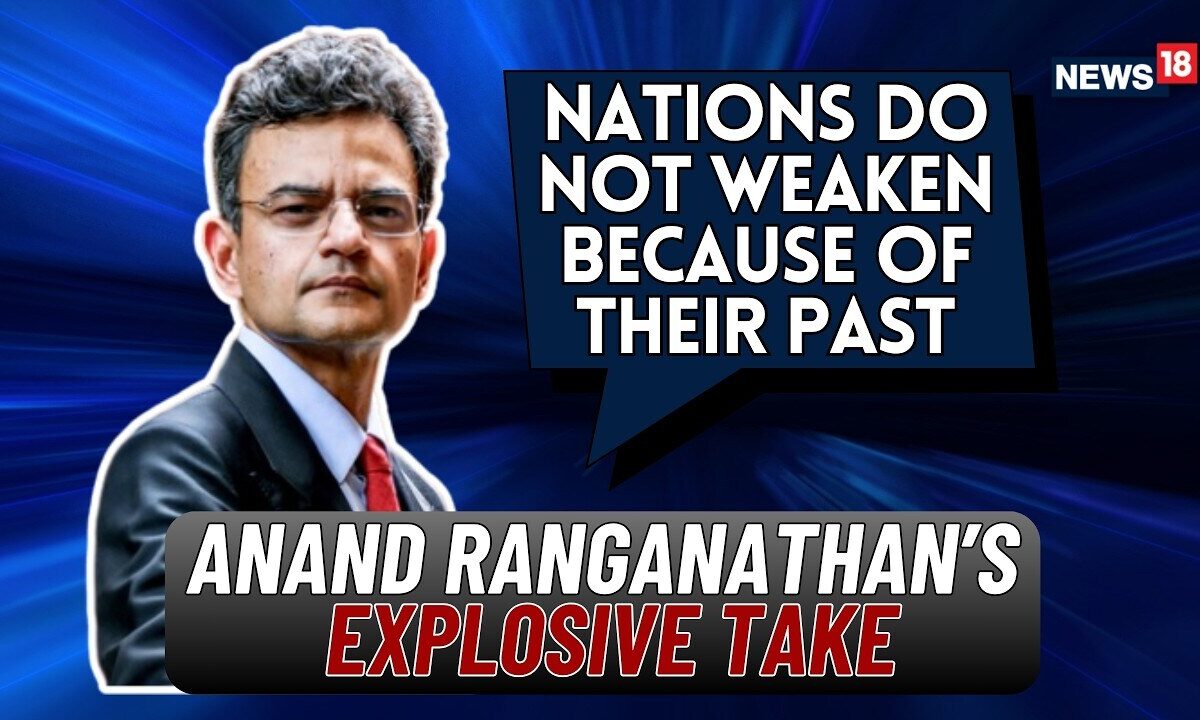
Author Anand Ranganathan’s recent assertions have ignited a fresh debate over how India interprets its past and the consequences of long-standing narratives.
The debate over the national narrative has shifted into a higher gear this week. Anand Ranganathan, in a recent appearance on News18, argued that for more than 70 years, we have been taught to forget our historical injustices. His comments suggest that the standard educational and cultural scaffolding built since Independence has systematically sidelined certain difficult truths, creating what he describes as an institutionalized amnesia regarding the country’s past.
This perspective is not occurring in a vacuum. It comes at a time when the Indian public square is increasingly preoccupied with the accuracy of historical accounts versus their political utility. Whether it is the ongoing interest in movies that reimagine historical events or the constant stream of photos and digital archives surfacing on social media, the appetite for a "re-evaluation" of the last seven decades is palpable.
The Context of the Debate
For decades, the standard academic consensus focused on a specific brand of nation-building. Ranganathan’s critique hits at the heart of this consensus, implying that in the pursuit of a unified, secular narrative, many historical grievances were swept under the rug. This has led to a pushback where voices are now demanding that these "forgotten" injustices be brought to the center of the national conversation, regardless of how uncomfortable they might make the current establishment.
The timing of this discourse is notable. While the nation’s attention remains divided between high-stakes updates like the latest cricket scores or the shifting AQI levels across major metros, the intellectual battleground remains fixed on history. It is a clash between those who believe stability requires moving past historical trauma and those who argue that true stability is impossible without acknowledging it.
Why It Matters: The Bigger Picture
This is more than just an argument between intellectuals. It reflects a fundamental shift in the Indian electorate’s relationship with its own history. The trend suggests a move toward "decolonizing" the national curriculum and popular culture, where the primary objective is no longer just to learn history, but to reclaim it.
The implication is clear: we are likely to see more institutional friction as these narratives collide. When the past is viewed as a series of unresolved injustices rather than a settled story, the political fallout is inevitable. This creates a volatile environment where public figures, authors, and creators find themselves at the center of a tug-of-war between competing visions of what it means to be Indian. Whether this leads to a more nuanced understanding of our past or deeper polarization is the question that will define the coming years.
Rohan Gupta covers the economy, markets and companies for PoliticalPedia.