Fragile truce frays as Israeli strikes kill at least 10 in Gaza
Gaza health officials say 10 killed in Israeli attacks
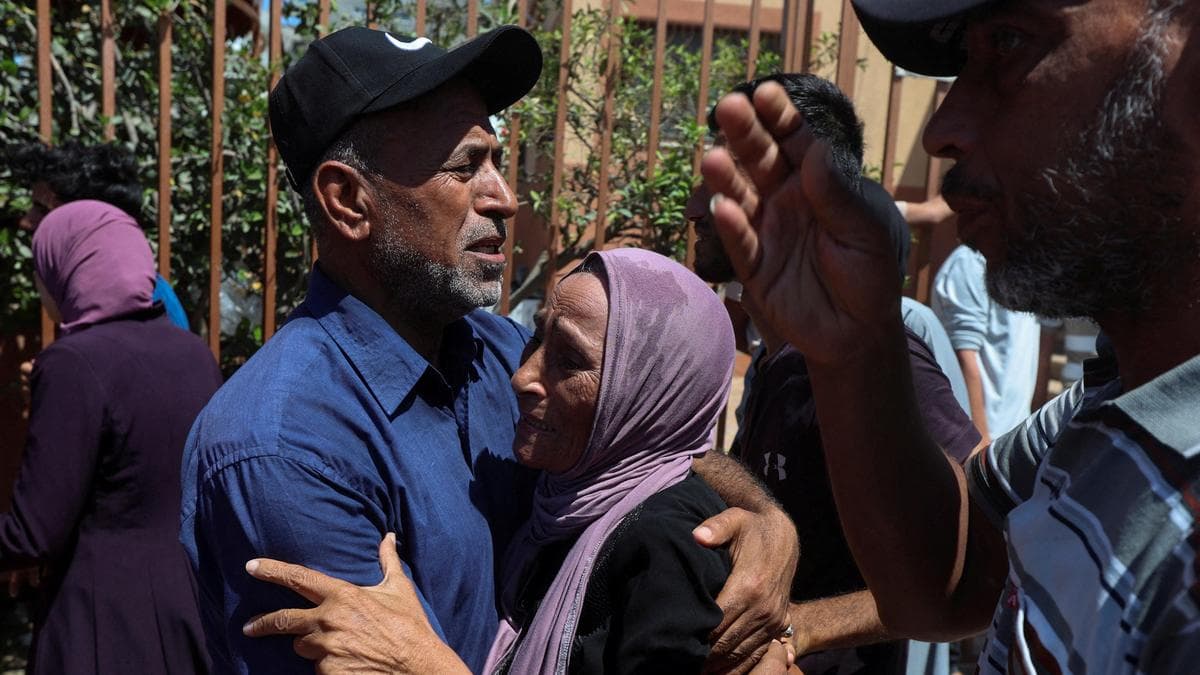
The long-stalled ceasefire continues to unravel as fresh violence claims civilian lives across the Gaza Strip.
The cycle of bloodshed in Gaza shows no signs of abating. On Sunday, June 7, 2026, Israeli strikes across the territory killed at least 10 people, further straining a truce that has failed to bring anything more than a superficial peace to the region. From the wreckage of a vehicle in western Gaza City to a targeted police station in the Al-Mawasi district of Khan Yunis, the death toll continues to rise as both Israel and Hamas trade daily accusations of ceasefire violations.
The day’s violence began early, with Israeli naval forces reportedly shooting and killing a fisherman near Deir el-Balah. By mid-day, the intensity had shifted to urban centers. Gaza’s civil defence agency reported that an airstrike near the Al-Buraq school in western Gaza City killed four people, a toll confirmed by officials at Al-Shifa hospital. Simultaneously, in the south, a strike on a police station in Al-Mawasi left five people dead and 17 others wounded, some of whom remain in critical condition at Nasser Hospital.
Divergent narratives on the ground
As is often the case in this conflict, the accounts of these engagements differ sharply. While civil defence teams and Gaza health authorities report civilian casualties and strikes on infrastructure, the Israeli military maintains a different focus. Regarding the Gaza City incident, an Israeli spokesperson stated that forces had targeted two "Hamas terrorists," while the strike in Al-Mawasi was described by the military as an operation against a "command centre" used by the armed wing of the group.
The lack of independent access to the Gaza Strip makes reconciling these reports nearly impossible. The Israeli military’s operational secrecy, coupled with severe restrictions on media movement, means that the figures provided by the local health ministry—an agency under Hamas authority—remain the primary, albeit contested, source of data. According to these figures, at least 961 Palestinians have been killed since the ceasefire began on October 10 last year, a period during which the Israeli army has reported five deaths in its own ranks.
Why it matters
The persistence of these lethal encounters highlights a grim reality: the ceasefire exists in name only. When a truce is punctuated by near-daily violence and a rising civilian death toll, it ceases to be a functional diplomatic tool and becomes a mere pause in active warfare. With progress on a permanent end to the conflict completely stalled, the current pattern suggests a slide back into full-scale hostilities. The danger is that these "isolated" strikes—whether on police stations or vehicles—will eventually trigger a wider escalation that neither side may be able to contain, leaving the international community with little leverage to enforce a lasting peace.
The volatility of the current situation is underscored by the sheer inconsistency in reporting across the international press. With some outlets reporting seven deaths and others counting up to eleven, the confusion surrounding these figures reflects the fog of a war that has become increasingly fragmented. As the casualty count climbs and the promise of a diplomatic breakthrough remains distant, the people trapped in the Gaza Strip are left to bear the brunt of an unending, volatile status quo.
Politics Desk at PoliticalPedia covers parties & elections for an Indian audience in English and Hindi.