Forget the powder tubs: Why your kitchen is already a protein powerhouse
Eat plant proteins the right way: Here’s how to hit your daily target with regular meals
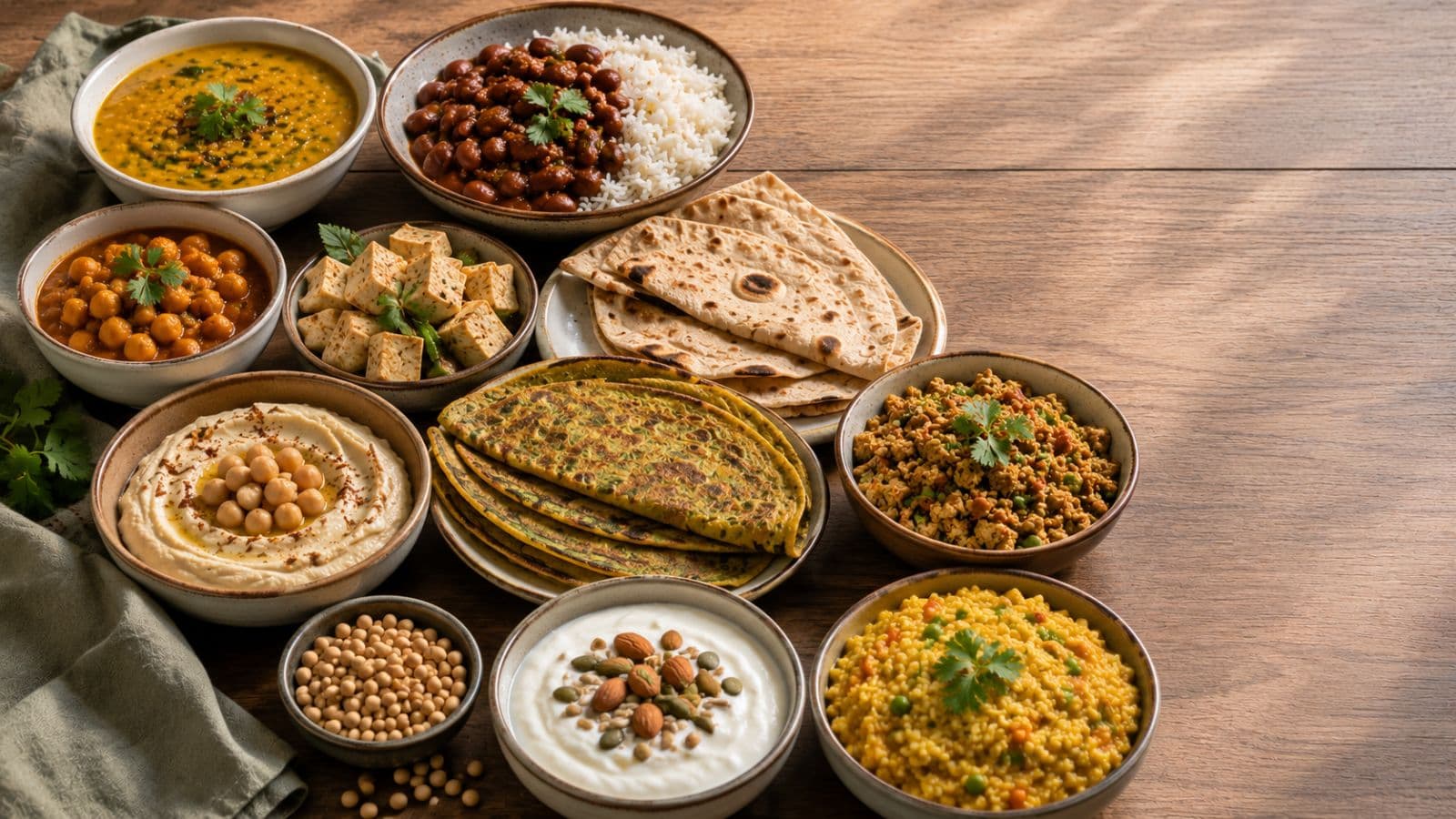
You don’t need expensive supplements to hit your daily targets; the secret to muscle health and steady energy is already sitting in your pantry.
Walk into any modern supermarket, and you are greeted by an aggressive aisle of neon-coloured tubs, protein-fortified cookies, and "recovery" shakes. The industry has spent years convincing us that our bodies are failing unless we supplement our way to a target of 100 grams of protein daily. But for most adults, this obsession with processed powders ignores a simple truth: our traditional Indian staples were designed to do the heavy lifting for us.
The math of the plate
Protein is the building block of our health, crucial for everything from immune function and hormone production to keeping our muscle mass intact as we age. For the average adult, the requirement usually lands between 0.8 to 1.2 grams per kilogram of body weight. If you weigh 70 kg, that’s roughly 56 to 84 grams a day—an amount easily achievable through regular, home-cooked meals. The real mistake isn't a lack of total protein, but how we eat it. Research shows that spreading your intake across breakfast, lunch, and dinner does far more for muscle synthesis than cramming it all into one massive evening meal.
Traditional wisdom, modern science
The "quality" of plant protein is often debated because some plants lack specific essential amino acids. However, the Indian diet has been solving this problem for centuries through intelligent food pairing. When you eat dal with roti, or rajma with rice, you aren't just having a comfort meal; you are creating a complete protein profile. The cereal provides what the pulse lacks, and vice versa. A simple cup of cooked dal paired with three rotis provides about 18-20 grams of protein, while a cup of rajma with rice delivers up to 18 grams. Throw in a glass of milk or a bowl of curd, and you have easily checked off a significant portion of your daily requirement without ever touching a scoop of synthetic powder.
Why it matters
The shift toward hyper-processed supplements reflects a wider cultural anxiety—the need to "hack" our biology with quick fixes. While supplements have a place for elite athletes or those recovering from illness, the reliance on them for everyday health creates an unnecessary financial and digestive burden. By returning to whole-food combinations, we aren't just eating more sustainably; we are stabilising our blood sugar and appetite naturally. The bigger picture here is the rediscovery of the balanced plate. When we view our meals as synergistic combinations rather than isolated macros, we stop chasing trends and start building a diet that supports the body for the long haul.
Quality over quantity
Whether you are hitting the gym or just looking to stay active, the goal is consistency. If you struggle to eat enough, look at your breakfast first; it is the meal where most people fall short. Swapping a carbohydrate-heavy breakfast for something like peanut chutney with dosa or soy chunks with millets can bridge the gap. Remember, the body doesn't distinguish between protein from a fancy bar and protein from a bowl of home-cooked khichdi. Listen to your body, focus on variety, and let your kitchen do the work.
Features Desk at PoliticalPedia covers culture, tech & life for an Indian audience in English and Hindi.