Beneath the Blue: How Andaman’s Karen and Ranchi Youth Are Reclaiming the Ocean
World Oceans Day 2026: How diving is changing lives in Andaman’s Karen and Ranchi communities
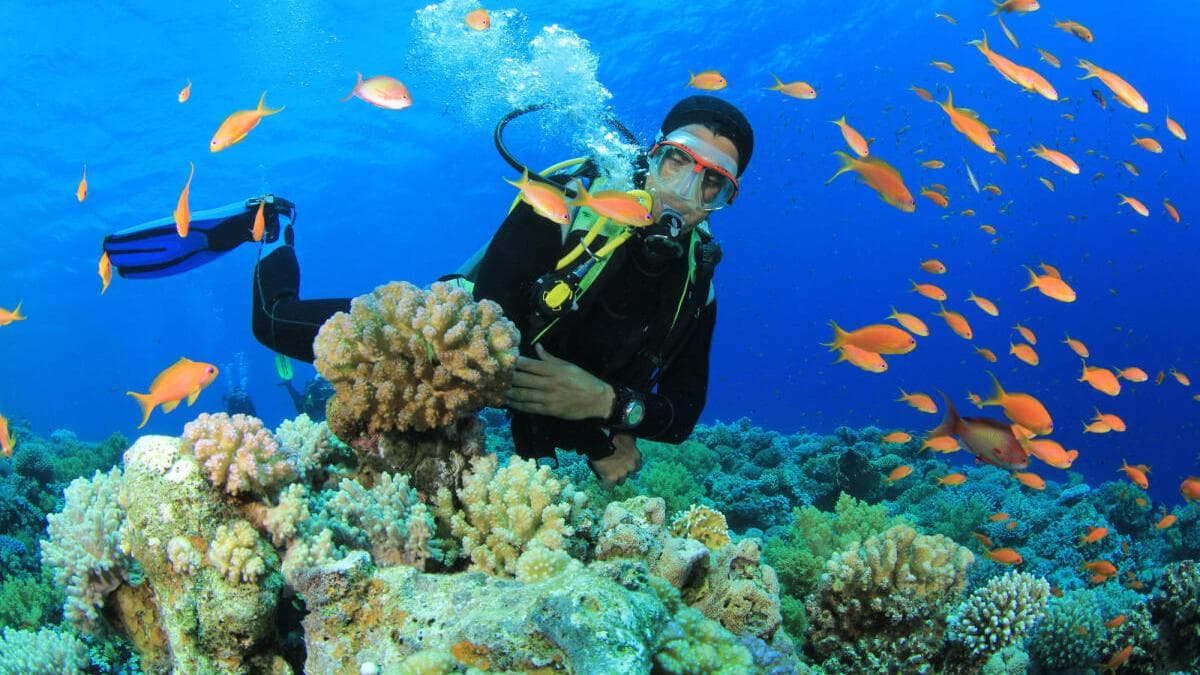
A new wave of professional diving is transforming ancestral knowledge into modern livelihoods for the Andaman Islands’ most marginalized communities.
For the Karen and Ranchi youth of Havelock Island, the ocean was never a destination; it was a home. Long before they held PADI certifications or led tourists through coral reefs, these children learned to read the sea with the same fluency others reserve for a mother tongue. Their grandfathers could sense a storm in the shifting of a cloud or track a turtle through currents that looked like nothing more than blue water to the untrained eye. Yet, for generations, this deep, intuitive expertise remained confined to subsistence, rarely opening doors to formal economic growth.
Turning Tradition into Trade
That narrative is shifting on Beach No. 2, where the dive school Gypsy Divers has become a hub for change. Founded in 2016 by veteran diver Poonam Darne—one of India’s pioneering female instructors—and her husband, the theatre actor D. Santosh, the school has moved beyond simple tourism. They have spent the last decade training over 1,000 students, including local Karen and Ranchi youth, alongside Army personnel and recreational divers. By formalizing these ancestral skills, the school is helping descendants of local fishermen transition into professional marine guides and instructors.
The Invisible Architects
The Ranchi community’s presence in the Andaman Islands is a complex legacy of colonial-era migration and post-independence settlement schemes. With a population estimated between 50,000 and 100,000, the Ranchiwalas have long contributed to the islands' social fabric, yet they remain tethered to an administrative limbo. They are currently pushing for the Scheduled Tribe status they already enjoy in their home state of Jharkhand, a move they argue is essential to accessing the constitutional protections and benefits they need to thrive in their adopted home.
Why it matters
This transformation is more than a simple career shift; it is a realignment of power. By professionalizing their innate relationship with the sea, these communities are moving from the periphery of the tourism economy to its center. When a local guide leads a dive, they aren't just providing a service—they are validating an indigenous knowledge system that was previously ignored. As these islands continue to balance ecological preservation with the pressure of a growing tourism sector, the success of these divers suggests a sustainable path forward. Empowering local communities to act as stewards of their own waters—rather than just laborers—is likely the only way to ensure the long-term health of the Andaman’s marine ecosystems.
A Growing Movement
On this World Oceans Day 2026, the success stories emerging from Havelock offer a blueprint for coastal development. As these divers carry their heritage into the professional sphere, they are not just changing their own financial prospects; they are reshaping the identity of the Andaman islands themselves. They have proven that the best way to safeguard the deep blue is to ensure the people who know it best are the ones holding the compass.
Politics Desk at PoliticalPedia covers parties & elections for an Indian audience in English and Hindi.