'Dressing Up A Massacre': India Slams Pakistan Over Afghanistan Strikes At UN Security Council
'Dressing Up A Massacre': India Slams Pakistan Over Afghanistan Strikes At UN Security Council
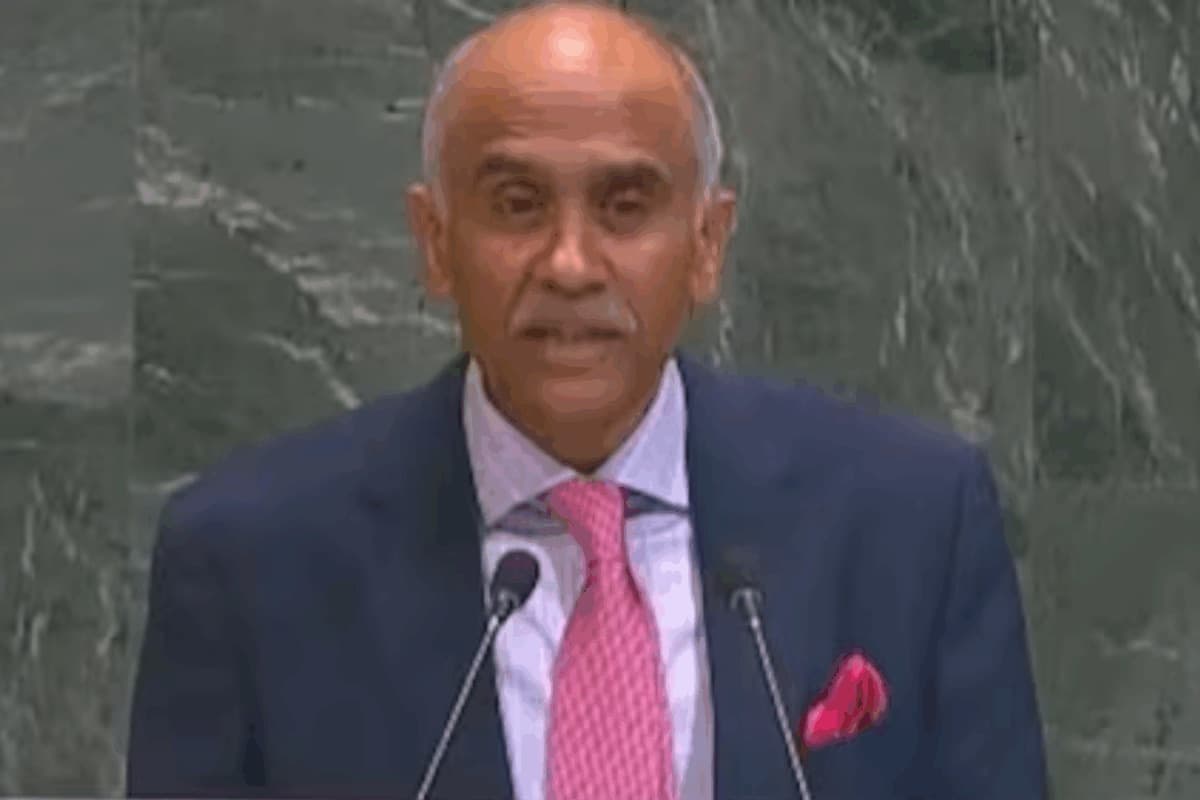
India’s permanent representative at the UN has launched a stinging critique of Islamabad, accusing it of civilian slaughter and economic strangulation of a landlocked neighbor.
The United Nations Security Council (UNSC) floor, usually reserved for measured diplomatic prose, became the stage for a blistering indictment this week as India confronted Pakistan over its recent military operations in Afghanistan. Harish Parvathaneni, India’s Permanent Representative to the UN, did not mince his words, labeling Islamabad’s cross-border strikes a “massacre” and dismissing the notion that they constitute legitimate counter-terrorism efforts.
The Indian envoy’s address underscored a grim reality on the ground. Citing UNAMA data, the briefing highlighted that 372 civilians were killed and 397 injured in the first three months of 2026 alone—a period that saw a spike in casualties during Ramadan. Parvathaneni argued that “dressing up a massacre” as a military operation is a tactical deception that fails to absolve the perpetrator of violating international humanitarian law, particularly the principles of distinction and proportionality.
Beyond Borders: The Economic Stranglehold
The critique went deeper than just military incursions. India accused Pakistan of practicing "trade and transit terrorism," effectively weaponizing Afghanistan’s landlocked status. By obstructing the movement of goods and cross-border trade, Islamabad is not only defying the UN Charter but also violating established international norms regarding landlocked developing countries.
This dual-pronged strategy—military aggression coupled with economic isolation—has drawn condemnation from various quarters, including former Afghan President Hamid Karzai, who has publicly urged Islamabad to rethink its hostile policy toward Kabul. For New Delhi, the situation is a clear case of hypocrisy, where the same state claiming to fight terror is accused of orchestrating it against vulnerable populations.
The Bigger Picture: Why It Matters
This diplomatic confrontation marks a hardening of New Delhi’s stance as the situation in Afghanistan spirals into a deepening humanitarian crisis. By bringing these issues to the UN Security Council, India is attempting to force accountability for the civilian toll and the economic blockade, which is pushing an already fragile Afghan economy toward total collapse.
The broader implication here is the growing international spotlight on Pakistan's "officially sponsored" narratives, which India has consistently dismissed as misinformation. As the regional security architecture remains volatile, New Delhi’s push for independent, UN-backed investigations into these civilian casualties suggests a strategic pivot: shifting from quiet concern to loud, multilateral pressure. Whether this will lead to a change in policy or further entrench the status quo remains the central question for regional stability.
Business Desk at PoliticalPedia covers economy & markets for an Indian audience in English and Hindi.