Beyond Project-75I: Inside India’s Vision for the Indigenous Project-76 Submarine
From Project-75I to Project-76: What PM's Hazira visit reveals about India's submarine plans
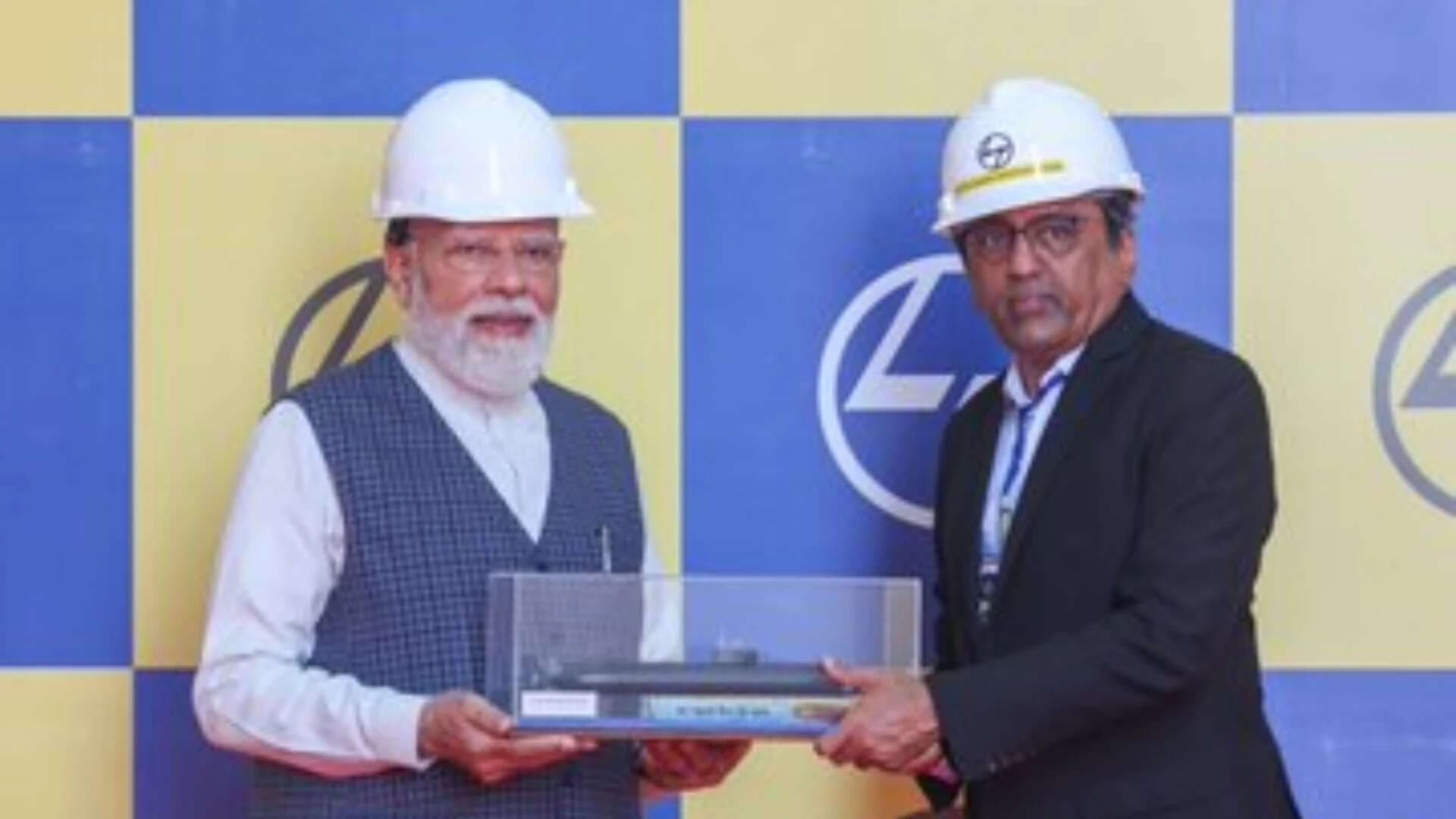
Prime Minister Modi’s visit to L&T’s Hazira facility has spotlighted the ambitious roadmap for India’s next-generation underwater fleet.
The recent visit of Prime Minister Narendra Modi to the Larsen & Toubro (L&T) facility in Hazira has provided the clearest signal yet regarding the future of the Indian Navy’s underwater combat capabilities. Amidst the display of cutting-edge defence manufacturing, the Prime Minister was presented with a scale model believed to represent the Project-76 submarine. While official confirmation remains pending, the presentation of this design—conceived by the Naval Design Bureau—serves as a pivotal marker in India’s quest to transition from foreign-assisted procurement to complete indigenous autonomy in submarine construction.
Bridging the Capability Gap
The Indian Navy currently faces a significant strategic challenge. With a fleet of 16 conventional diesel-electric submarines comprising the Kalvari, Sindhughosh, and Shishumar classes, the force is grappling with an average fleet age that necessitates urgent modernisation. As older vessels reach the end of their service lives, the gap between the sanctioned strength of 24 boats and the current operational reality has become a primary concern for maritime planners. Project-76 is being positioned as the long-term answer to this shortfall, aiming to deliver 12 advanced conventional submarines that will redefine the Navy’s underwater endurance and stealth profile.
The design philosophy behind Project-76 marks a departure from previous collaborative ventures. Unlike the Kalvari-class (Project-75), which relied on French technology, or the impending Project-75I, which involves German collaboration via Thyssenkrupp Marine Systems, Project-76 is intended to be a wholly indigenous effort. With a target of up to 80% to 95% indigenous content, the project is expected to feature state-of-the-art technology, including lithium-ion batteries, pump-jet propulsion for enhanced silence, and an indigenous weapon control system. By drawing on the design expertise gained from the development of India’s nuclear-powered attack submarines (Project-77), the Navy aims to create a platform that is significantly larger—displacing between 3,000 and 4,000 tonnes—than its predecessors.
The Procurement Landscape: P-75I and Beyond
While Project-76 represents the horizon, Project-75I remains the immediate focus of the Navy’s modernisation drive. Following years of delays, the tender for six advanced submarines has gained momentum, with Mazagon Dock Shipbuilders Limited (MDL) and Thyssenkrupp Marine Systems currently engaged in technical negotiations. Valued at approximately Rs 70,000 crore, the P-75I programme is a critical stopgap, designed to integrate Air-Independent Propulsion (AIP) technology and advanced sensors into the fleet. Industry experts note that the parallel progression of P-75I and Project-76 is essential to maintaining a continuous submarine-building pipeline through the 2040s.
However, the path to modernisation is fraught with technical hurdles. Efforts to retrofit the existing Scorpene-class submarines with an indigenous AIP system have faced development delays, pushing back the planned integration for the fleet. This has led to discussions regarding the potential of a stopgap "Project-75(AS)" to maintain fleet numbers, though this remains in a state of limbo. As the Navy prepares to retire more ageing Sindhughosh-class boats, the focus on Hazira as a hub for advanced defence manufacturing suggests that the government is leaning heavily on domestic industrial partnerships to ensure that future submarine designs are not just built in India, but designed and mastered within the country.
The PoliticalPedia Editorial Desk brings verified, sourced political news and analysis from across India.