Beijing’s ‘Spider’s Web’: Taiwan Faces New Maritime Pressure in the East
Taiwan says China Coast Guard patrols to its east are 'provocative act'
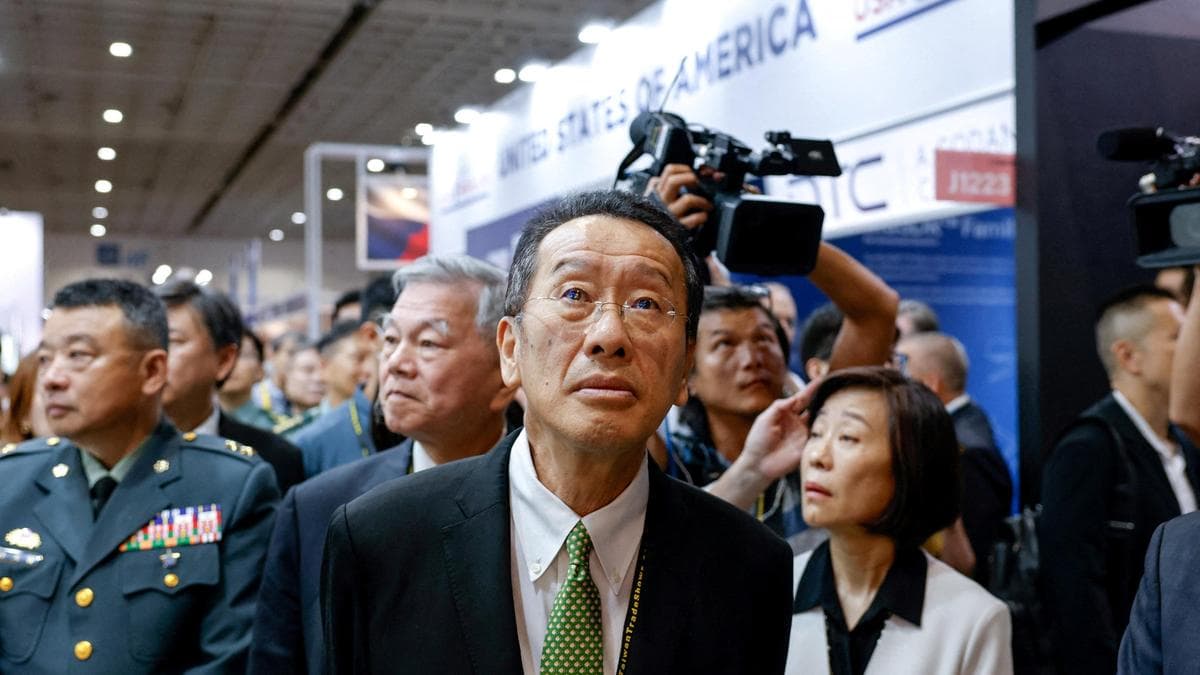
Taiwanese officials have denounced recent Chinese Coast Guard incursions as a calculated campaign of cognitive warfare aimed at eroding the island's sovereign maritime boundaries.
The waters east of Taiwan, usually a quiet expanse of the Pacific, have become the latest flashpoint in the simmering cross-strait conflict. On Monday, June 8, 2026, Taiwan’s Defence Minister Wellington Koo pulled no punches, labelling the recent appearance of Chinese vessels in these restricted zones a "provocative act" and a deliberate attempt to cast a "spider’s web" over the region. By attempting to assert jurisdiction where none has historically existed, Beijing is signalling a shift in its maritime strategy, treating the eastern coastline not as a boundary, but as a territory waiting to be claimed.
The flare-up follows a diplomatic ripple effect that began last month. After Japan and the Philippines announced their intent to open formal talks on delimiting their respective maritime boundaries—discussions that Beijing views as an encroachment on its perceived sphere of influence near Taiwan—China’s state media confirmed the deployment of ships. The stated objective: a "special maritime traffic law-enforcement operation."
A Game of Cat and Mouse
Taiwan’s Coast Guard hasn't stayed idle. Throughout the weekend of June 6 and 7, Taipei deployed its own vessels to confront the Chinese ships, successfully forcing them out of restricted waters. Footage released by Chinese state media on June 8 offered a glimpse into the tense encounters, showing a Chinese officer broadcasting a stern warning to their Taiwanese counterparts: "Be aware of your language — the two sides of the Taiwan Strait are both part of one China."
Beyond the tactical manoeuvres, the strategy is increasingly psychological. Kuan Bi-ling, head of Taiwan's Ocean Affairs Council, noted that this is far from an isolated incident. Since early May, the island has faced a month-long surge in "escalating provocations," ranging from incursions near the Taiwan-controlled Pratas Islands to the deployment of research vessels in sensitive zones. For Taipei, this is not just about physical borders; it is about cognitive warfare designed to normalise Chinese presence in areas that Taiwan considers its own.
The Bigger Picture: Why it Matters
The implications of these patrols extend well beyond the immediate maritime friction. By using the Coast Guard rather than the navy, Beijing is effectively "grey-zoning" the conflict—applying enough pressure to test Taiwan’s resolve and readiness without triggering a full-scale military engagement. This allows China to steadily erode the status quo, one patrol at a time, while forcing Taiwan to expend significant resources in constant surveillance and response.
For the regional security architecture, this signals a hardening of positions. Beijing is clearly bristling at the growing coordination between Taiwan’s neighbours, particularly the Philippines and Japan. As these nations attempt to firm up their maritime legal frameworks, China is responding by attempting to preemptively assert its own dominance. The message is clear: Beijing intends to challenge any international effort that treats Taiwan as a distinct maritime entity, regardless of the diplomatic fallout.
As intelligence sharing between Taiwan's military and its coast guard intensifies, the region remains on edge. While the four Chinese ships involved in the latest standoff retreated on Monday morning, the tactical pattern suggests that this is not a retreat, but a pause in an evolving, long-term campaign to redraw the boundaries of influence in the Pacific.
Politics Desk at PoliticalPedia covers parties & elections for an Indian audience in English and Hindi.