Trump’s walkout: When the ‘crooked’ press meets a political firestorm
'Thank you, darling': Trump storms out of NBC interview after calling interviewer 'stupid'
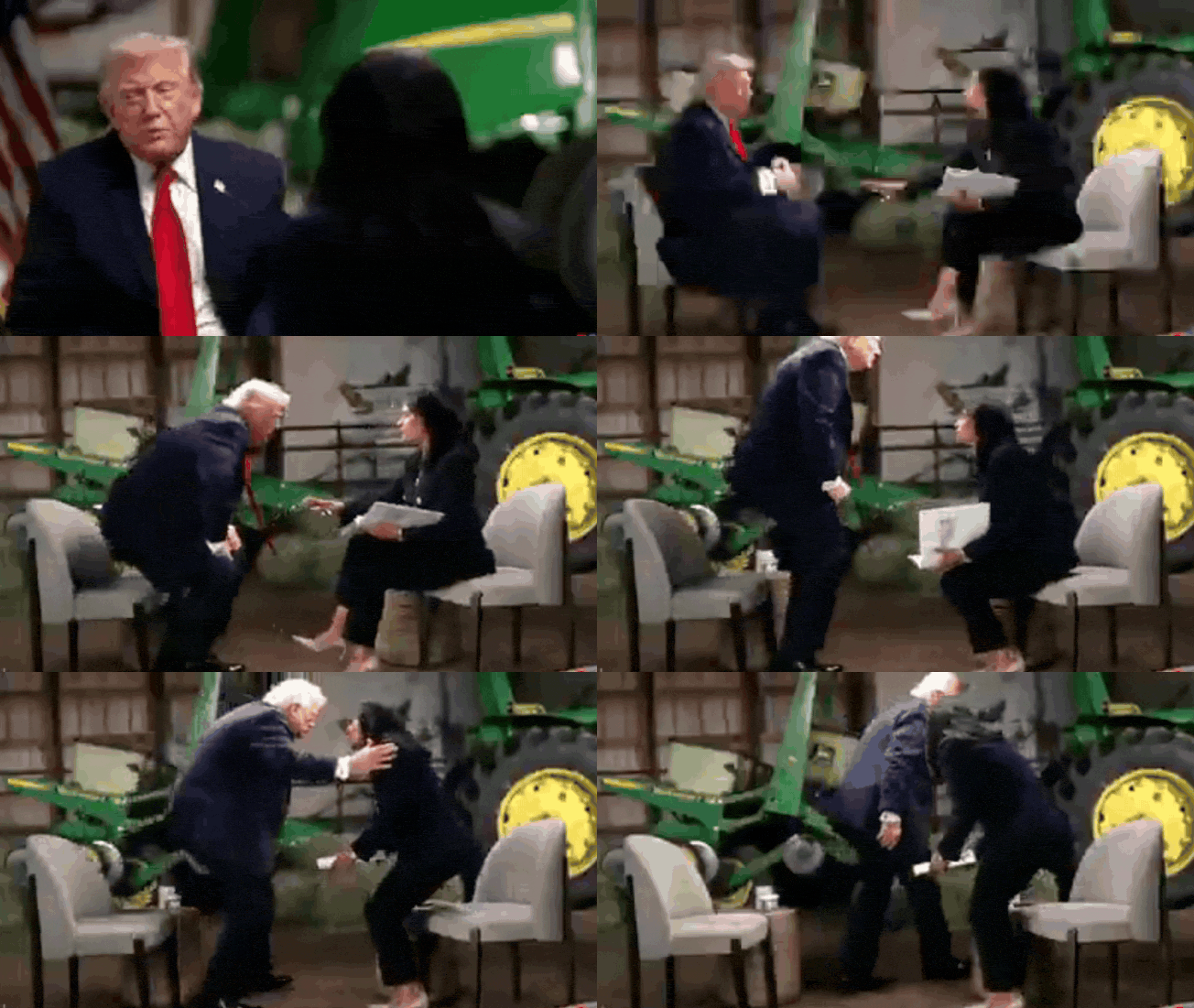
The former US President’s abrupt exit from an NBC interview highlights the deepening chasm between political rhetoric and journalistic scrutiny.
The studio lights were still bright, but the air in the room had soured long before Donald Trump reached for his microphone. In a tense exchange that has since ricocheted across social media, the former US President abruptly cut his interview with NBC’s Meet the Press moderator Kristen Welker. What began as a discussion about his proposed "anti-weaponisation fund"—a policy meant to aid those he claims were targeted by the Biden administration—quickly devolved into a familiar, jagged confrontation over the integrity of the American election system.
As Welker pressed him for tangible evidence regarding his long-standing claims that the 2020 election was rigged, the mood shifted. Trump, visibly agitated, dismissed her inquiries. When the journalist maintained her line of questioning, the former president didn’t hold back. "Really? Well, you play right into their hands then. You're either crooked or you're stupid," he said. The target of his ire was clear: to him, the media—and specifically NBC—is a hostile entity, a sentiment he underscored by labeling the press as "dirty" and "crooked" before walking away from the set.
A pattern of hostility
This isn't the first time an interview has soured under the heat of fact-checking, but the intensity here feels symptomatic of a broader strategy. Trump’s rhetoric during the exchange mirrored his common campaign trail language: he insisted that there is "tremendous evidence" of fraud, yet when asked to produce it, he pivoted to criticizing the pace of vote counting in California. By framing the questioning as a personal attack, he effectively shifted the focus from the validity of his claims to the perceived bias of the interviewer.
For people watching, the incident serves as a stark reminder of the current state of political discourse in the US. When Welker stood her ground, she became the latest in a long line of journalists to be labeled as "crooked" for simply doing their job. Trump’s refusal to engage with the question, instead choosing to attack the messenger, underscores a tactical preference: delegitimise the platform to avoid the burden of proof.
Why it matters
This standoff is more than just a viral clip; it is a signal of how the upcoming election cycle will be fought. As political campaigns increasingly bypass traditional gatekeepers to speak directly to their base, the role of institutional news outlets is being aggressively redefined. By framing the news cycle as a battle against a "crooked" establishment, politicians can insulate themselves from critical scrutiny. For the electorate, this creates a fractured reality where the line between evidence-based reporting and partisan narrative becomes dangerously blurred.
The broader implication here is the total erosion of a shared baseline for facts. When the media is treated not as a conduit for information but as a political opponent, the very mechanisms of democratic accountability face a stiff challenge. As they continue to spar, it is the voters who are left to sift through the noise, trying to discern truth in an environment where "thank you, darling" is often the final, dismissive word in a debate that never really began.
Features Desk at PoliticalPedia covers culture, tech & life for an Indian audience in English and Hindi.