Arjun Erigaisi’s Tashkent Turnaround: A Resurgent Win Amidst Vidit’s Steep Struggle
UzChess Cup 2026: Arjun roars back for 1st win; Vidit suffers 2nd straight loss
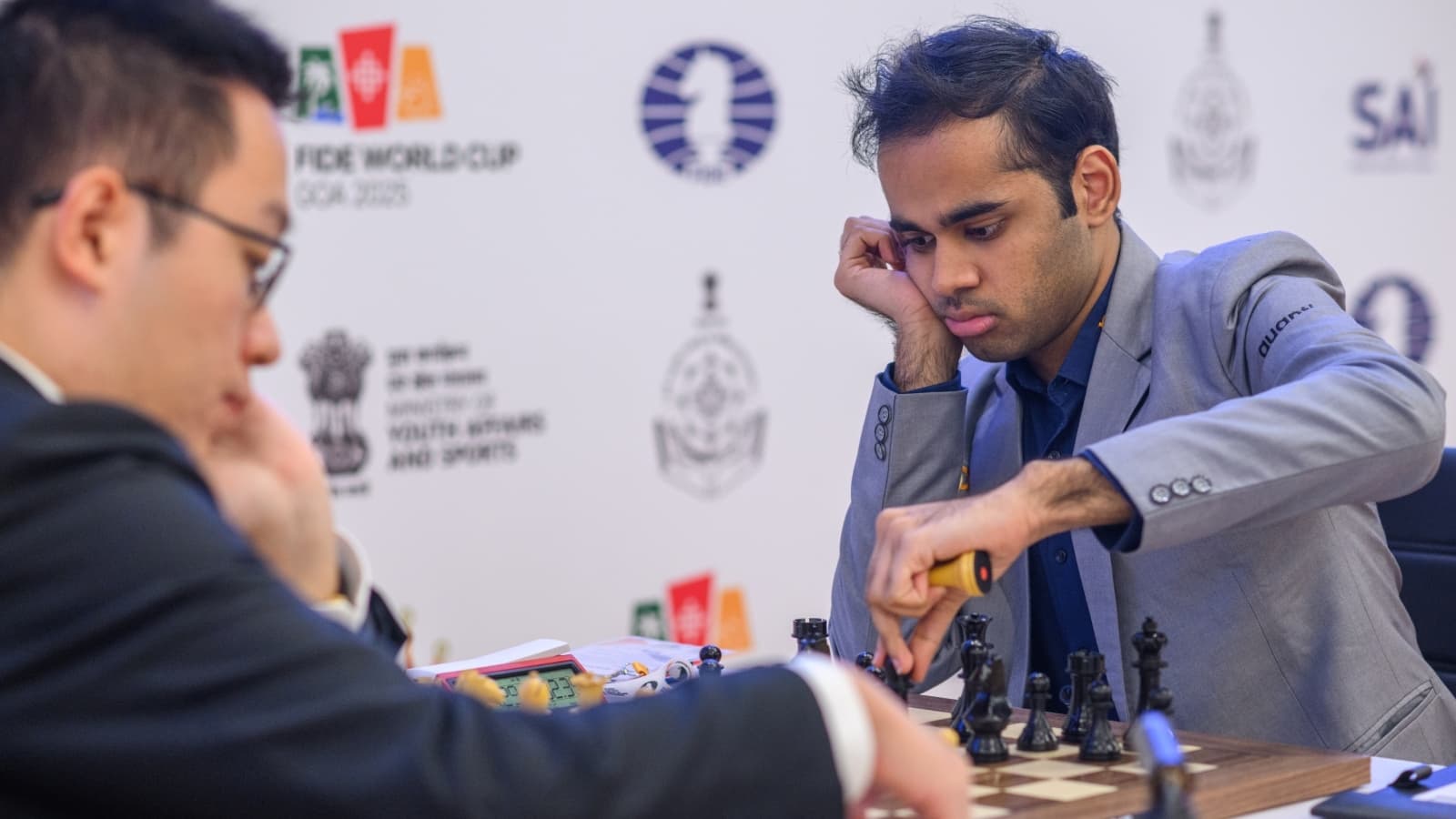
While Arjun Erigaisi found his rhythm in the second round of the UzChess Cup, Vidit Gujrathi’s campaign hit a fresh low in the high-stakes Tashkent Masters.
The pressure of the 2026 UzChess Cup was laid bare on Sunday as all five games in the Masters round-robin ended with a decisive result, offering no room for complacency. For the Indian contingent, the day in Tashkent was a study in contrasts. Arjun Erigaisi, who began his tournament with a quiet draw, roared back into contention by dismantling Uzbekistan’s own Nodirbek Yakubboev. It was a victory earned through sheer resilience; after an initial mistake pushed him to the brink of a pawn deficit in an English opening, Arjun capitalised on a series of shaky decisions from his opponent under the clock to seal the win after 36 moves.
For Vidit Gujrathi, however, the start of this June campaign has been punishing. Following a crushing opening-round defeat to Shakhriyar Mamedyarov, Vidit faced the formidable Ian Nepomniachtchi. The Nimzo-Indian clash quickly devolved into a chaotic scramble. While both players struggled with precision, Nepomniachtchi masterfully exploited a recurring weakness in Vidit’s game: time management. By the 29th move, the Russian veteran had built a daunting hour-long lead on the clock, leaving the Indian grandmaster with barely three minutes to navigate the tactical minefield.
A Crucial Test of Form
The Masters category in Tashkent brings together ten of the world’s elite, with the prize money and vital FIDE Circuit points ensuring that every single game counts. For Arjun, the win against Yakubboev—a FIDE World Cup 2025 semifinalist—is a significant confidence booster. It proves that despite a tense, hour-long drain on the clock in the early middle game, he possesses the composure to turn an equal position into a winning one when the heat is turned up.
Vidit, meanwhile, finds himself in a difficult spot. The UzChess Cup demands peak performance from the very first move, and back-to-back losses put him in a position where he must now hunt for a win to stabilise his tournament trajectory. His struggle to maintain parity against Nepomniachtchi—a two-time Candidates champion—highlights how even the smallest slip in time control can derail a high-level classical game.
Why it matters
The current dynamics in Tashkent underscore the brutal reality of the 2026-27 FIDE Circuit. With the field including top-tier talent like Nodirbek Abdusattorov and Hans Niemann, there is no "easy" game on the schedule. For India’s top players, this tournament is not just about the $80,000 prize pool; it is a proving ground for consistency at the elite level. While Arjun’s recovery demonstrates the mental fortitude required to stay in the hunt, Vidit’s start serves as a stark reminder that in a round-robin format, momentum is fleeting. The ability to manage the clock—an issue that continues to nag the Indian camp—will likely determine who remains in contention as the tournament enters its mid-week rounds.
The stakes remain high as the competition progresses toward the final round on June 15. With the time control set at a demanding 90 minutes for 40 moves plus an additional 30 minutes, every player is forced to balance deep calculation with the need to avoid the kind of time pressure that saw both Arjun and Vidit stretched to their limits in the second round.
National Affairs Desk at PoliticalPedia covers government & policy for an Indian audience in English and Hindi.