In Kerala, the World Cup is a 350-foot flex board war
Flex battles, football dreams mark Kerala’s World Cup countdown
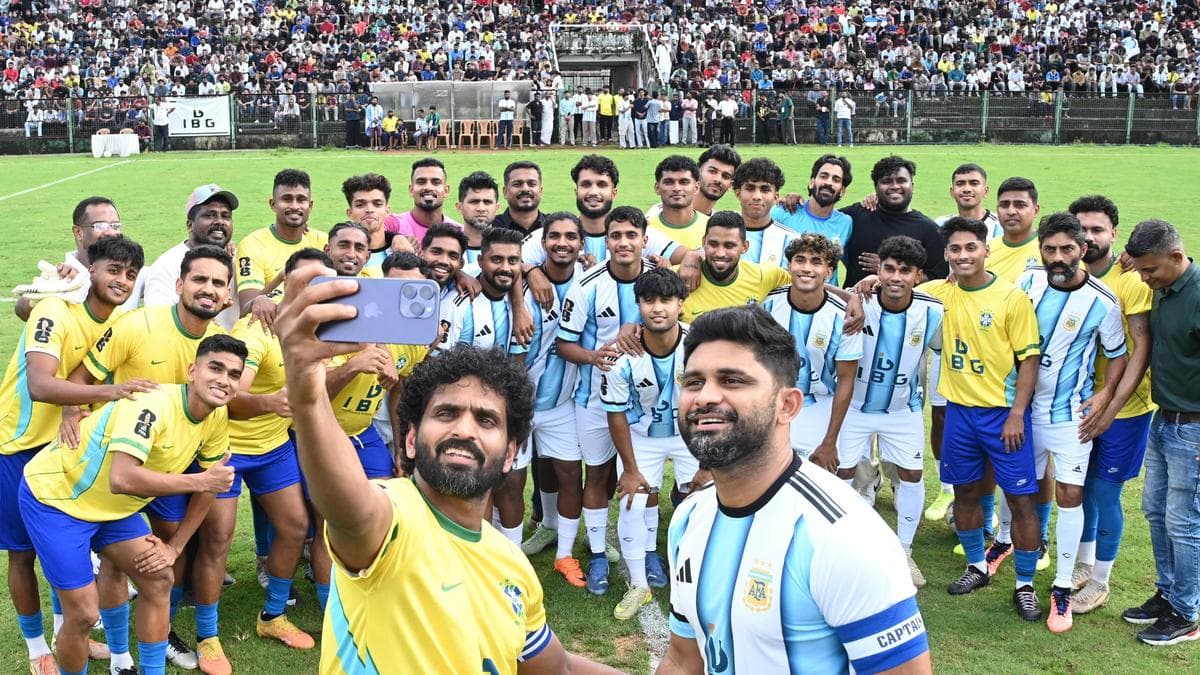
From giant cut-outs to house makeovers, football mania in the Malabar region is reaching a fever pitch as fans prepare for the global tournament.
In the towns of Malappuram and Nilambur, the countdown to the World Cup isn’t measured in hours, but in feet. What started as casual support for international teams has morphed into a high-stakes "flex" war. After a 160-foot banner of Lionel Messi appeared in Kongad, Brazil supporters didn’t hesitate; they countered with a 182-foot display. Now, the ante has been upped to a staggering 350-foot flex board, turning quiet streets into battlegrounds of team loyalty.
The obsession has spilled over from the streets to domestic spaces. In Nenmara, civil engineer Sheikh Shabeer has transformed his entire house into a shrine, painting the exterior in the vibrant yellow and green of the Brazil team, complete with portraits of footballing icons. For these fans, the World Cup is more than a sporting event; it is a manifestation of local pride, even if it occasionally sparks tension. In Pothukal, the rivalry turned sour when flex boards were vandalised, leaving supporters frustrated by the destruction of what they consider deep-seated emotional investments.
Beyond the rivalry
While the flex boards dominate the skyline, the grassroots impact of the football fever is significant. Local bodies are actively pushing to deepen the region's engagement with the sport. In Wandoor, the Kudumbashree mission organised a "She Kick" tournament, bringing women of all ages onto the pitch for a dream final between Argentina and Brazil. Meanwhile, the Malappuram municipality is investing in the next generation through its 'Mini Blasters' project, distributing jerseys and footballs to thousands of Balasabha members.
However, the late-night schedule of the matches remains a logistical headache for the working population. With the opening match slated for 12:30 a.m., many fans are bracing for sleepless nights. "Most matches are at odd hours," notes Mohinudheen M., a student from Malappuram, reflecting the struggle of balancing professional commitments with the demands of the world's most-watched tournament.
Why it matters
This explosion of fandom in Kerala highlights a unique socio-cultural phenomenon where global sports are consumed with a hyper-local intensity. When communities move from passive viewership to active participation—through collective community-viewing centres, infrastructure investment, and elaborate street displays—football becomes a pillar of the local economy and social cohesion. It signals a shift where sports tourism and local branding, even in the form of amateur banners, create a distinct identity for the region on the global map. While the betting markets and flex-board rivalries capture headlines, the underlying trend is the institutionalisation of football as a primary community builder in the state.
Business Desk at PoliticalPedia covers economy & markets for an Indian audience in English and Hindi.