White House Ballroom Dispute: US Government Argues Court Cannot Stop Trump Construction Project
Court can't stop Trump ballroom construction, government lawyer tells judge
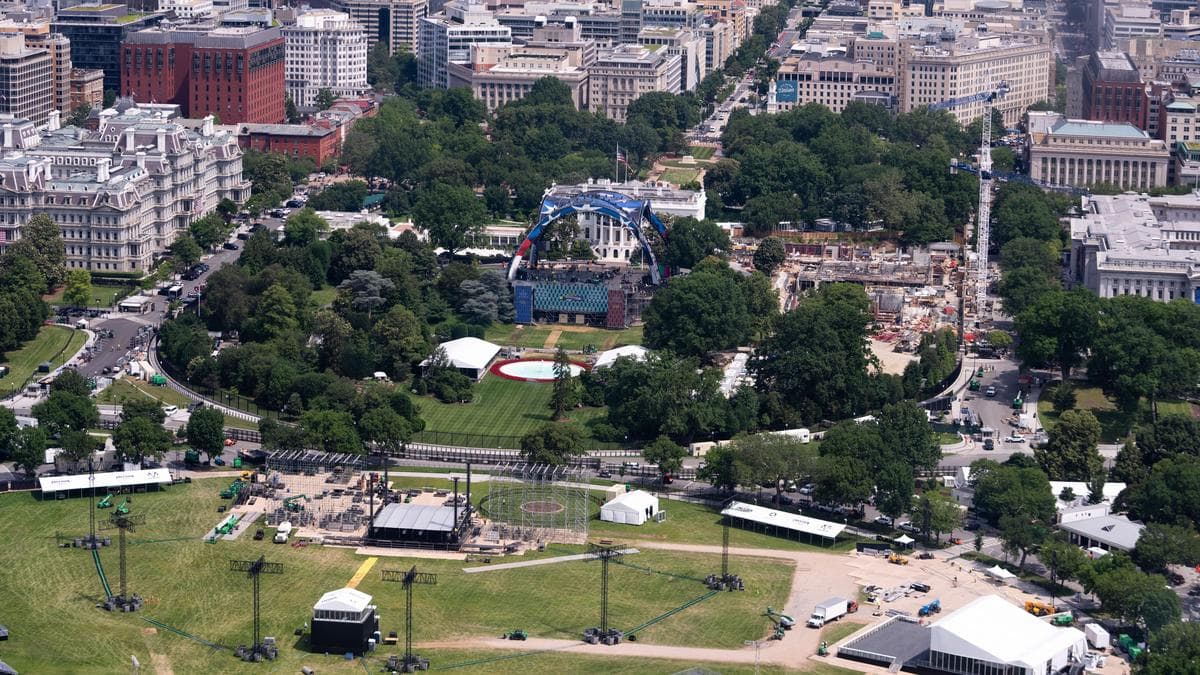
Federal attorneys contend that the $400 million development at the White House is beyond judicial reach, even citing extreme hypothetical scenarios to defend executive authority.
The legal battle over a proposed 90,000-square-foot ballroom at the White House reached a fever pitch this Friday as Department of Justice lawyers argued that the judiciary lacks the authority to halt the $400 million project. During a tense two-hour hearing before a three-judge panel at the U.S. Court of Appeals for the District of Columbia Circuit, attorney Yaakov Roth asserted that once construction is underway, the project effectively becomes a "fait accompli" that courts cannot stop.
Security Concerns vs. Legal Standing
The controversy centers on an April 16 order from U.S. District Judge Richard Leon, which blocked aboveground construction of the ballroom while allowing work to proceed on subterranean "national security facilities." The administration has pushed back, arguing that the two elements are inseparable and that only Congress—not the court—possesses the power to halt the project.
The National Trust for Historic Preservation initiated the lawsuit last December, shortly after the White House demolished the East Wing to make room for the massive expansion, which President Trump has stated is designed to accommodate 999 guests. Judge Patricia Millett, a Barack Obama appointee, repeatedly pressed Roth on the limits of executive power, questioning at what point a project becomes so deeply entrenched that it bypasses legal oversight.
A Controversial Defense
In a moment that has drawn significant attention, Roth utilized extreme hypotheticals to illustrate his point on legal standing. When prompted by Judge Millett, Roth agreed that even if the government decided to bulldoze the Statue of Liberty or the White House itself, descendants of those historically linked to the sites would lack the legal standing to challenge the actions after they had occurred. The admission highlights the administration’s aggressive stance on executive autonomy in the face of environmental and historical preservation challenges.
The hearing concluded without a definitive ruling, leaving the future of the construction site in limbo. While the government maintains that the project addresses vital security needs, the case highlights an ongoing tension between the Trump administration's infrastructure agenda and the judicial branch's role in oversight. With no decision yet from the appeals court, the project’s status remains a flashpoint for legal experts examining the boundaries of presidential authority.
The PoliticalPedia Editorial Desk brings verified, sourced political news and analysis from across India.