Regional Parties Assert Strategic Independence as Core National Interest
Regional parties assert independence, stress national interest
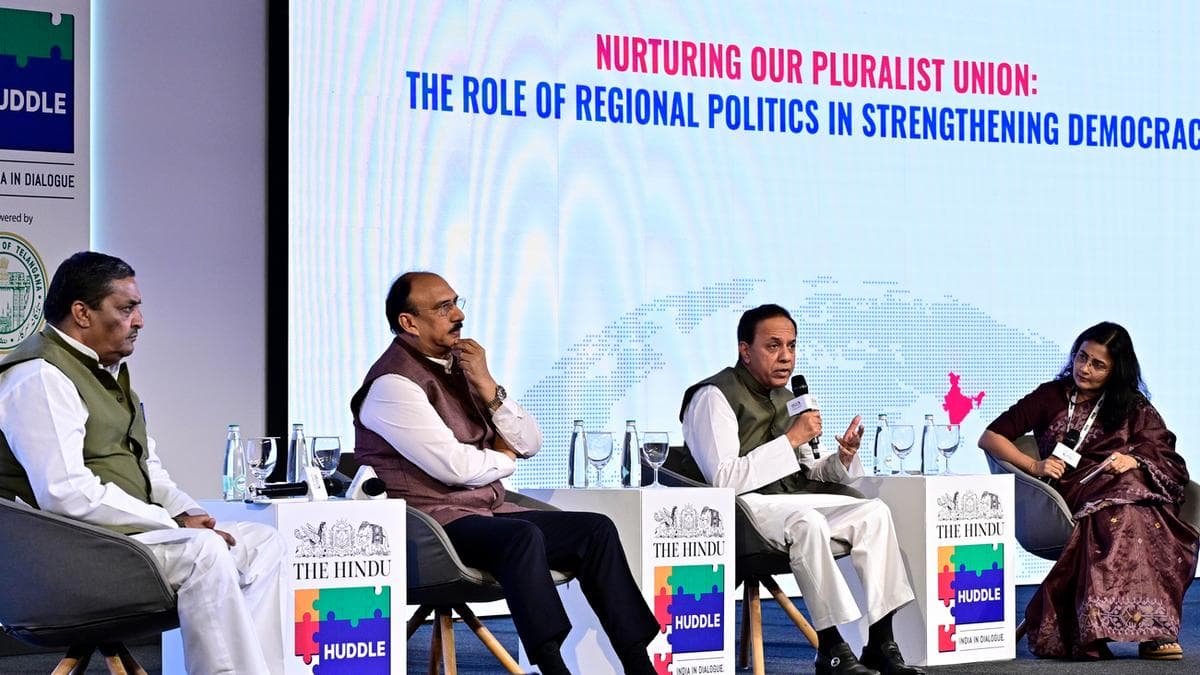
At The Hindu Huddle 2026, leaders from major regional outfits defended their political autonomy, arguing that their shifting allegiances are driven by governance outcomes rather than partisan convenience.
The growing influence of regional parties in India’s democratic architecture has once again come into sharp focus. Speaking at The Hindu Huddle 2026, a panel of Rajya Sabha members—Javed Ali Khan of the Samajwadi Party, Santrupt Misra of the Biju Janata Dal (BJD), and former BRS parliamentary leader K.R. Suresh Reddy—defended the autonomy of non-national political forces. The discussion highlighted a persistent tension: while national parties often dismiss regional shifts as opportunism, these organizations maintain that their decision-making is rooted firmly in the national interest.
Beyond Ideological Labels
For K.R. Suresh Reddy, a veteran with three decades of legislative experience, the label of being "pro" or "anti" a national bloc is a reductive narrative. He emphasized that his party’s position on critical legislation—ranging from opposing the Waqf Bill and Kisan Bill to supporting demonetisation—was never dictated by a desire to curry favor with the UPA or NDA. Instead, he argued that a regional party’s strength lies in its ability to remain neutral and evaluate policies based on how they affect the country’s trajectory.
This sentiment was echoed by Santrupt Misra, who addressed the "double standard" often applied to coalition dynamics. He pointed out that when a national party forms an alliance, it is frequently lauded as a masterstroke of pragmatism. However, when a regional party does the same, it is often unfairly maligned as politically convenient. Misra argued that the BJD’s success, which saw the party secure 182 Lok Sabha seats over a 25-year span, was a direct result of prioritizing the people of Odisha over the ambitions of central power brokers.
The Regional Development Argument
The panel underscored that the rise of these parties is inseparable from the socio-economic transformation of their respective states. Reddy cited the evolution of Telangana, noting that the state’s demand for autonomy was predicated on tangible grievances regarding water, funds, and employment. He characterized the state's transition from a drought-prone region to a prosperous economic engine as the ultimate justification for the regional movement.
Similarly, Misra pointed to the fiscal turnaround of Odisha under Naveen Patnaik’s leadership. By moving from a bankrupt state in 2000 to a revenue-surplus economy by 2024, the BJD demonstrated that regional governance, when focused on local needs, can outperform the traditional models of national politics. These leaders maintained that their legitimacy stems from this track record of delivery, which creates a mandate that transcends standard party-line politics.
Caution on Centralization
The conversation also touched upon the proposal for "One Nation, One Election." With the historical context that India’s first five general elections were conducted simultaneously, the speakers urged the central government to approach the idea with extreme caution. As the influence of regional voices continues to shape parliamentary discourse, the consensus among the panelists was clear: India’s federal character is not an obstacle to national progress, but rather the very foundation of its stability. By asserting their independence, these parties argue they are protecting the diversity essential to a functioning democracy.
The PoliticalPedia Editorial Desk brings verified, sourced political news and analysis from across India.