US Federal Judge Strikes Down Trump Administration Immigration Policy Targeting 39 Countries
Federal judge strikes down Trump administration immigration policy affecting 39 countries
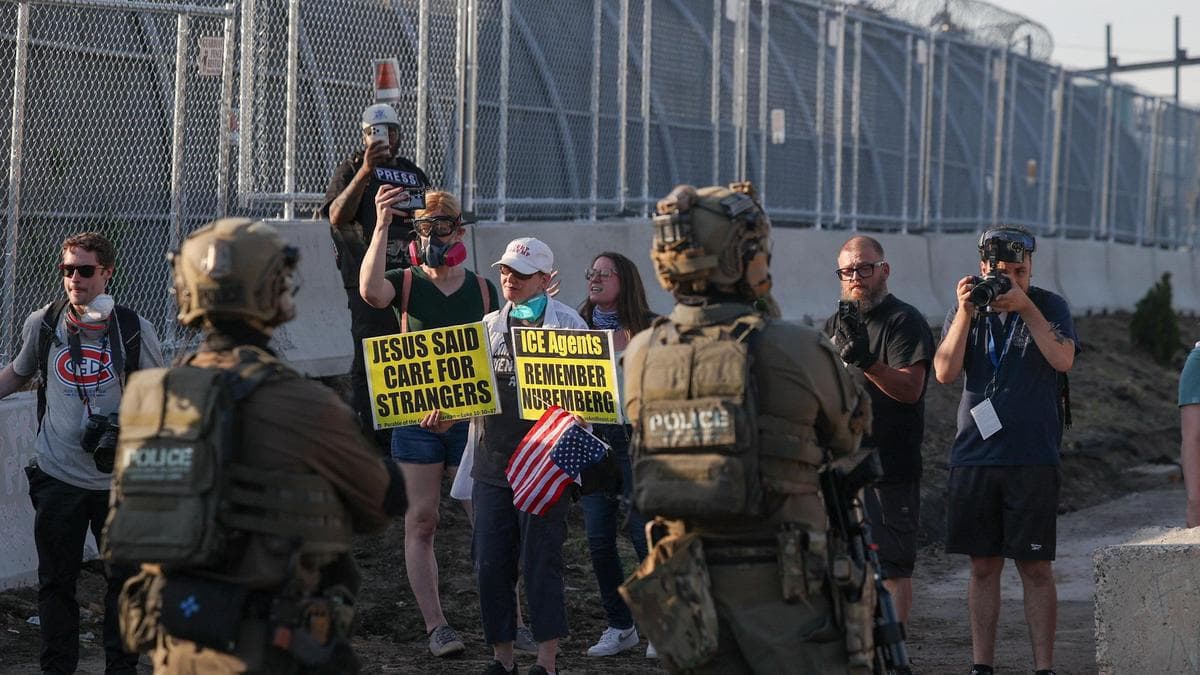
A landmark ruling has invalidated restrictive measures that stalled asylum, work permits, and green card applications for immigrants from dozens of nations.
In a stinging rebuke to the current administration, U.S. District Chief Judge John McConnell Jr. issued a ruling on Friday that effectively dismantles a sweeping immigration policy. The directive, which had been in place since a high-profile shooting involving National Guard members last year, functioned as a categorical freeze on applications for asylum, work permits, and green cards for nationals from 39 countries across Africa, Asia, Latin America, and the Middle East.
Judge McConnell’s decision did not merely strike down the policy; it excoriated the U.S. Citizenship and Immigration Services (USCIS) for its conduct. In his written opinion, the judge accused the agency of overstepping its legal mandate by claiming authority it does not possess. He noted that the administration had routinely bypassed the requirement for reasoned explanations, instead justifying its actions through what he termed "pretextual concerns of national security" that masked deep-seated anti-immigrant sentiments.
Legal Limbo and "Arbitrary" Governance
The impact of the invalidated policy has been profound, leaving thousands of individuals trapped in a state of indefinite legal uncertainty. By categorically barring applicants from the 39 affected nations, the administration essentially ground the processing of legal pathways to a halt. Judge McConnell characterized these actions as "arbitrary and capricious," emphasizing that the federal government failed to account for the reliance interests of those already integrated into the U.S. workforce and society.
Legal experts and civil rights groups have hailed the decision as a critical defense of procedural fairness. Skye Perryman, President and CEO of Democracy Forward, noted that the ruling serves as a vital reminder that the federal government cannot simply shutter lawful immigration channels or discriminate based on a person’s country of origin. For the thousands of families, students, and professionals caught in the backlog, the ruling provides a glimmer of hope that their pending cases may finally proceed.
Broader Implications for Immigration Reform
This development arrives amidst a volatile period for U.S. immigration policy, where enforcement measures are often balanced against the administrative capacity of federal agencies. While the administration framed the 39-country freeze as a security necessity following the National Guard incident, the court’s intervention suggests a clear judicial limit on how such security claims can be used to bypass existing immigration statutes.
As the legal dust settles, the ruling forces the USCIS to revisit its operational framework. Observers are now watching closely to see whether the government will seek an appeal or if it will be compelled to process the long-stalled applications. For the thousands of applicants residing in the U.S. under these restrictions, the judge's order acts as a significant check on executive overreach, reinforcing the legal standards that protect both residents and those seeking legal entry into the country.
The PoliticalPedia Editorial Desk brings verified, sourced political news and analysis from across India.