Long-range Ukrainian Drones Strike St Petersburg, Russia Claims Gains in Kharkiv
Watch: Ukrainian drones hit St Petersburg region again; Russia claims capturing village
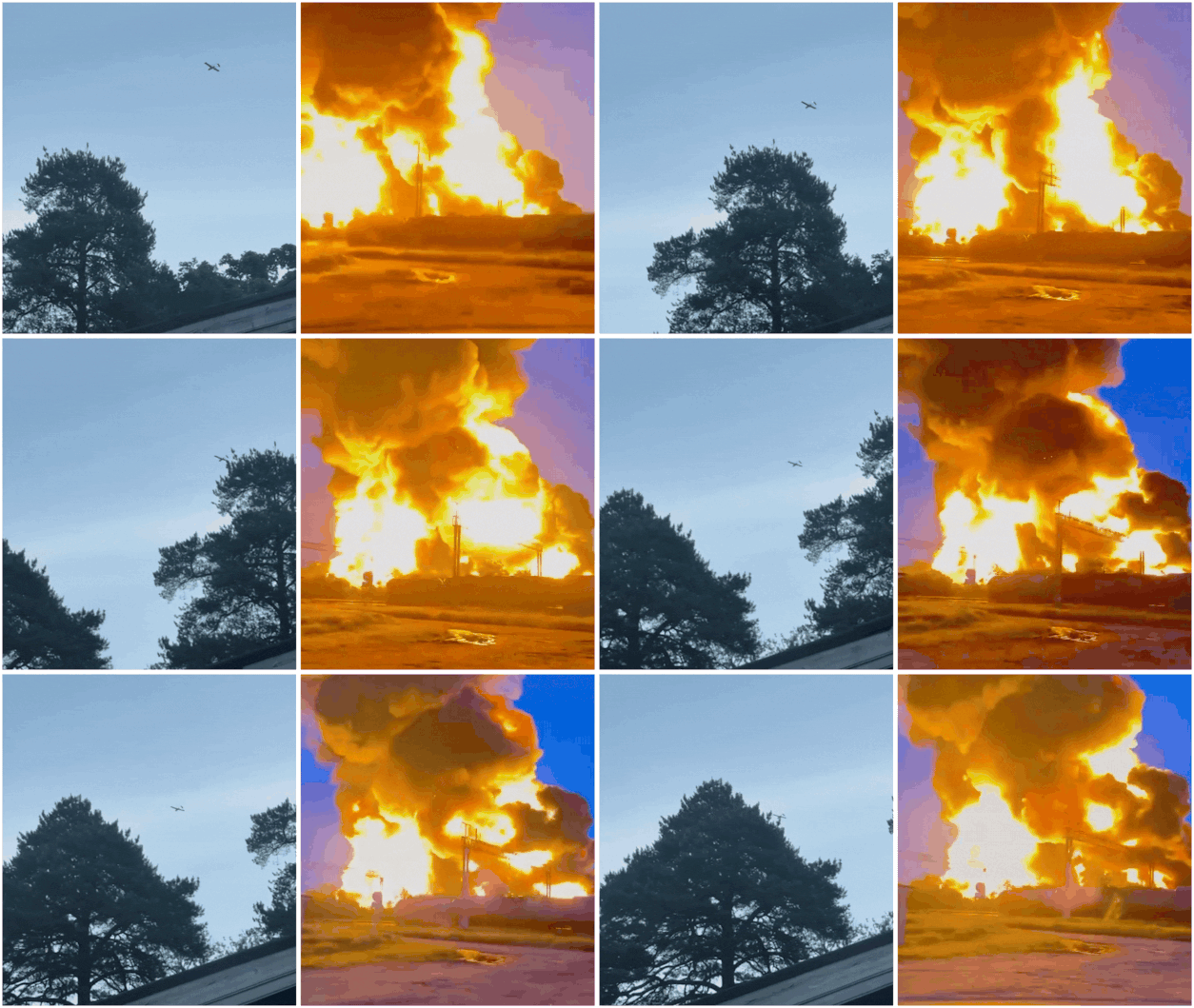
As the conflict enters a volatile new phase, Kyiv has launched a massive drone campaign deep into Russian territory while Moscow reports tactical advances in the northeast.
The war between Russia and Ukraine has witnessed a significant escalation in aerial hostilities over the last 48 hours. Ukrainian forces launched a series of high-precision, long-range strikes targeting strategic military and energy infrastructure deep within the Russian heartland. President Volodymyr Zelenskyy confirmed that these operations reached targets as far as 1,000 kilometres from the border, including a military facility near St Petersburg and a critical oil depot in the Krasnodar region.
In the St Petersburg region, the intensity of the drone attack prompted local authorities to issue emergency directives, urging citizens to remain indoors. Governor Alexander Beglov warned of a “large-scale” aerial incursion, cautioning that mobile internet services might face disruptions as a result of the defensive measures. While Russia’s Defence Ministry claimed their air defences intercepted a staggering 376 drones nationwide, Ukrainian officials maintained that the mission successfully struck the enemy navy’s arsenals and a base in Kronstadt.
Strategic Shifts on the Frontlines
While the skies remain contested, ground fighting continues along largely static but brutal frontlines. Russia’s Ministry of Defence reported that its units have successfully captured the village of Shevchenko in the Kharkiv region. Moscow described the seizure as the result of "decisive actions" by its northern military grouping, signaling a persistent, albeit slow, push to consolidate positions in the northeast. This territorial claim follows a broader pattern of grinding attrition that has defined the conflict’s current phase.
The surge in drone activity reflects Kyiv’s evolving strategy to force a cost on Russia by targeting the logistics and supply chains that sustain the Kremlin's war effort. Zelenskyy, in a public statement, asserted that the strikes were a “just response” to ongoing Russian aggression, framing them as a necessary measure to force an end to the hostilities. The ability of Ukrainian drones to penetrate so deeply into the St Petersburg region underscores a widening gap in traditional defensive perimeters.
A Conflict Without Respite
The human cost of these exchanges continues to mount. Beyond the strategic infrastructure, reports from the ground indicate that civilian areas are not being spared. Recent data highlights that while both sides trade drone attacks, the broader impact of the conflict—ranging from the loss of embattled towns to the persistent threat of air strikes—is placing an immense strain on the population. As regional governors in Russia scramble to manage the fallout of drone incursions, Ukraine remains locked in a desperate struggle to hold its ground against a relentless Russian offensive.
For now, the situation on the ground remains highly fluid. With the Kremlin focused on its Donetsk offensive and the Ukrainian leadership seeking to leverage long-range technology to alter the strategic calculus, there is little indication of a de-escalation. The international community continues to monitor these developments closely, particularly as the frequency of such deep-strike operations suggests that both Moscow and Kyiv are digging in for a protracted and increasingly unpredictable confrontation.
The PoliticalPedia Editorial Desk brings verified, sourced political news and analysis from across India.