Trump reveals he rejected Iran uranium raid to avoid 'Jimmy Carter' moment
'Didn't want to be Jimmy Carter': Trump shares why US troops didn't extract Iran's uranium
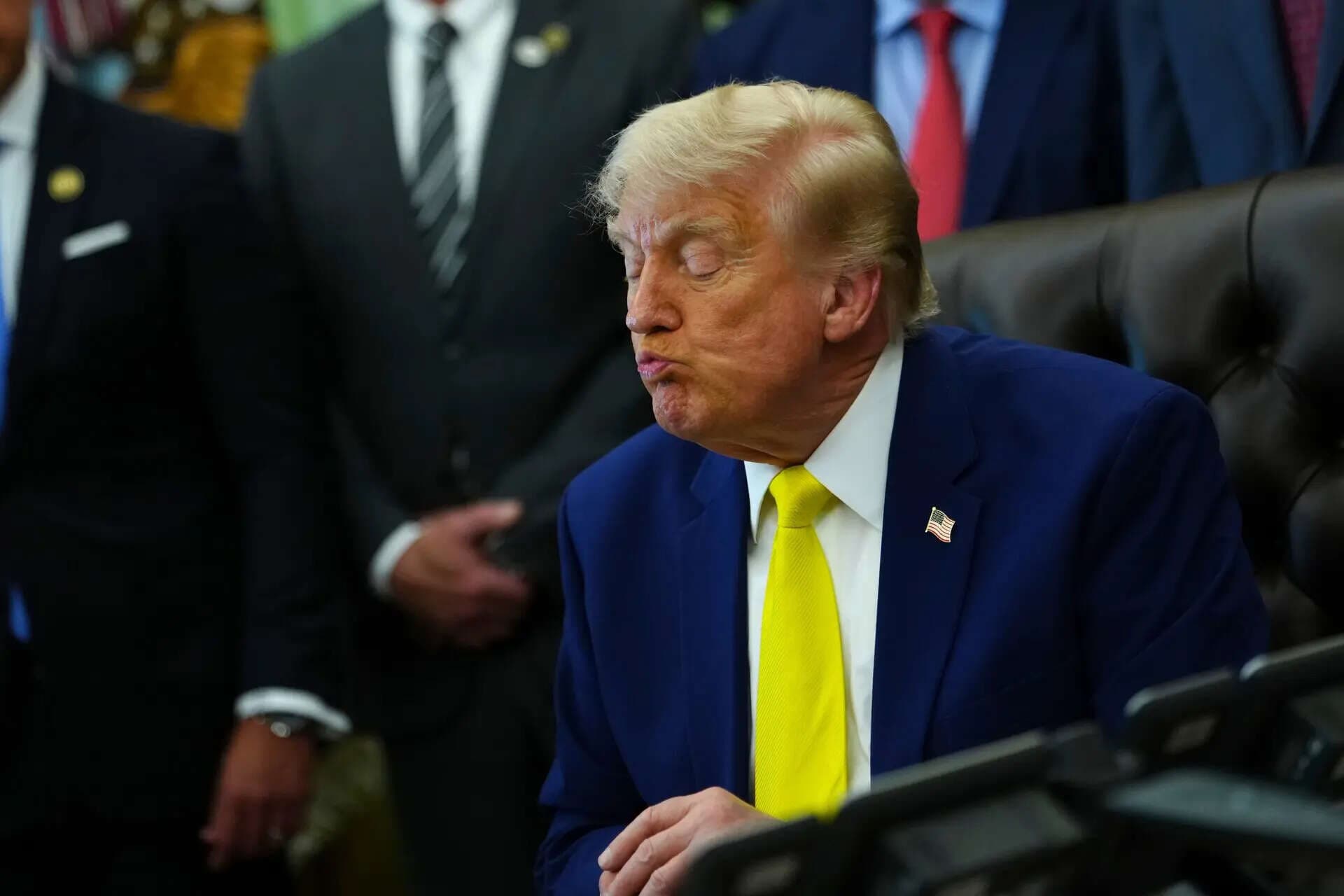
The former US President confirmed that military planners evaluated a ground operation to seize Tehran’s nuclear stockpile, but the plan was ultimately shelved due to high risks.
Donald Trump has disclosed that his administration once seriously considered a military operation to extract Iran's enriched uranium, a plan he ultimately rejected because he "didn't want to be Jimmy Carter." Drawing a direct parallel to the 1980 failed hostage rescue mission that marred the Carter presidency, Trump revealed that Pentagon planners had presented him with multiple strategies to seize the nuclear material. He noted that while the US maintains the tactical capability to execute such a mission, the logistical burden—requiring at least two weeks and the movement of massive amounts of hardware into Iranian territory—was deemed too risky.
The 'Entombed' Strategy
Despite the earlier consideration of a ground incursion, Trump insisted that the current status of the uranium stockpile does not necessitate an immediate or aggressive intervention. "It’s entombed," he said, suggesting that the material is currently secure and that the United States does not require a formal diplomatic agreement with Tehran to assert control over it if necessary. By framing the uranium as "nuclear dust," the former president indicated that the strategic focus has shifted away from direct extraction, though he maintained that Iran would be unable to stop the US military if a decision to intervene were ever finalized.
Shifting Dynamics with the Khamenei Leadership
The geopolitical landscape remains complex, particularly following the transition of power in Tehran. Mojtaba Khamenei, the 54-year-old cleric, took the helm as the Supreme Leader after a series of joint US-Israeli military operations decimated his immediate family members. Trump acknowledged the personal animosity likely harbored by the younger Khamenei, yet he expressed a pragmatic—if cautious—willingness to engage. "We killed his father, his wife and his son, so I’m probably not his favourite person," Trump admitted, while acknowledging that the Iranian leader maintains a reputation in some circles for professional conduct. He did not rule out a direct meeting, provided it occurred within the framework of a broader diplomatic understanding.
Diplomatic and Technical Preparations
As rhetoric fluctuates, back-channel efforts appear to be gaining momentum. Reports indicate that senior US envoys, including Steve Witkoff and Jared Kushner, were recently dispatched to Oak Ridge, Tennessee, to consult with technical specialists. These consultations are widely viewed as a precursor to upcoming negotiations regarding Iran's nuclear program. While Trump has signaled that the nuclear issue will be resolved "one way or the other," the White House continues to balance the threat of military force with the technical preparations required for a potential diplomatic breakthrough. The situation remains a high-stakes standoff, with Washington appearing to keep all options on the table while emphasizing that it no longer feels compelled to rush into a formal deal to mitigate the perceived threat.
The PoliticalPedia Editorial Desk brings verified, sourced political news and analysis from across India.