The Silent Crisis: How Visakhapatnam’s Drains Are Choking the Bay of Bengal
Visakhapatnam’s toxic stormwater drains threaten ecosystem
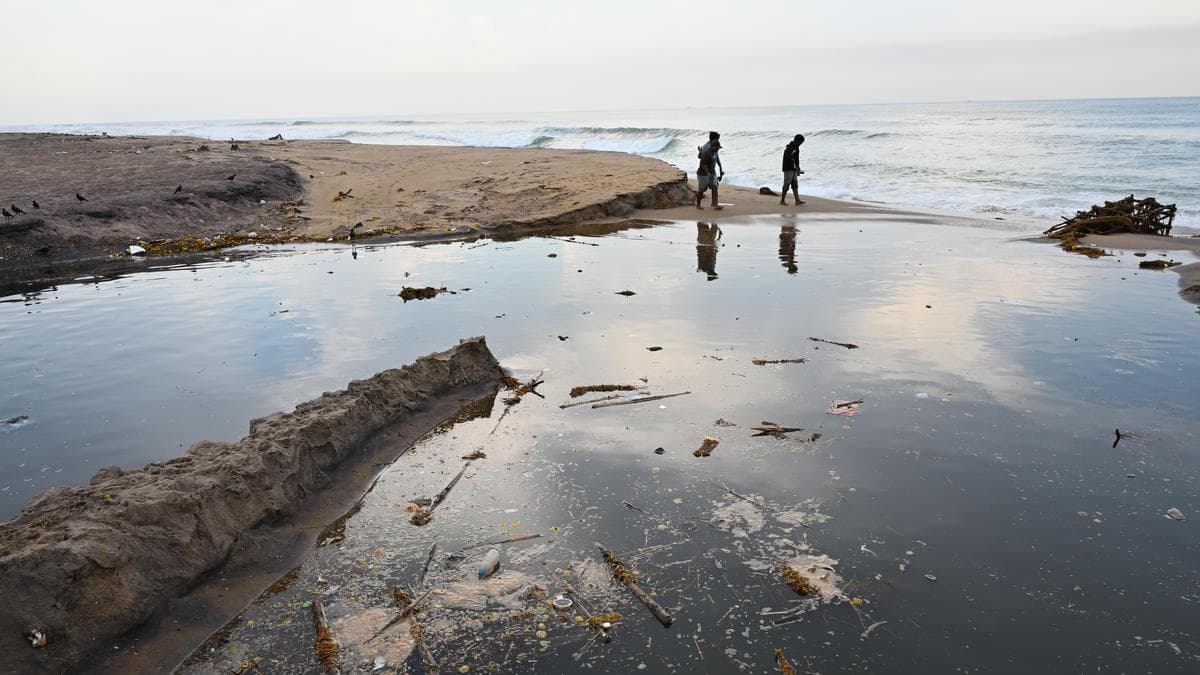
Once designed to manage rainwater, the city’s drainage channels are now functioning as pathways for untreated wastewater, posing a severe threat to local coastal ecosystems.
The scenic coastline of Pedda Jalaripeta, a historic fishing hamlet in Visakhapatnam, currently presents a grim reality. Where the land meets the Bay of Bengal, the serene blue waters are often marred by a thick accumulation of plastic debris and stagnant sludge. This sight, appearing regularly at the mouth of local stormwater drains, reflects a broader failure in the urban management of the "City of Destiny." Originally constructed to channel heavy rainfall and mitigate flooding risks, these conduits have morphed into year-round arteries for waste, dumping pollutants directly into the sea.
A System Under Strain
Visakhapatnam’s unique geography—a complex network of hills, valleys, and wetlands—naturally directs water toward the coast. Over time, these natural paths were integrated into the municipal drainage network. However, the system is now struggling to cope with the city's rapid expansion. On World Environment Day, the state of these local channels, known as geddas, serves as a stark reminder of the fragile balance between urban growth and environmental preservation.
The primary issue involves what authorities classify as "Dry Weather Flow" (DWF). Unlike household sewage, this consists of grey water from kitchens, bathrooms, and urban runoff that enters the drainage channels even when there is no rain. Because the city's infrastructure has failed to keep pace with its booming population, these drains have become the primary method for transporting this wastewater toward the ocean.
The Infrastructure Gap
Official reports presented to the National Green Tribunal (NGT) in December 2025 highlight a significant deficiency in the city's capacity to manage waste. Visakhapatnam generates approximately 224 million litres per day (MLD) of sewage. Yet, the current setup, which relies on 19 sewage treatment plants (STPs), can only process 179 MLD. This leaves a daily deficit of 45 MLD of untreated waste looking for an exit point.
While the Greater Visakhapatnam Municipal Corporation (GVMC) and the Andhra Pradesh Pollution Control Board have managed to divert 18 of the city’s 41 major drains to treatment facilities, the remaining channels continue to discharge directly into sensitive coastal zones. Popular locations, including RK Beach, Appughar, Sagar Nagar, and Rushikonda, remain vulnerable to this ongoing contamination.
Future Challenges
The situation is particularly volatile in the northern corridor stretching from Madhurawada to Bheemunipatnam. As this area undergoes rapid residential development, the existing drainage network is being pushed to its limits. Unless the pace of sewerage infrastructure development is accelerated to match the speed of urban construction, the city risks long-term damage to its most iconic natural asset: the coastline. The current reliance on stormwater channels to handle domestic grey water remains a stopgap measure that clearly threatens the long-term ecological health of the region.
The PoliticalPedia Editorial Desk brings verified, sourced political news and analysis from across India.