The Road to Nowhere: How Broken Promises Haunt a Tribal Village in Gujarat
Pregnant woman’s death, High Court intervention and a government promise: Gujarat tribal village waits for a road nearly 2 years later
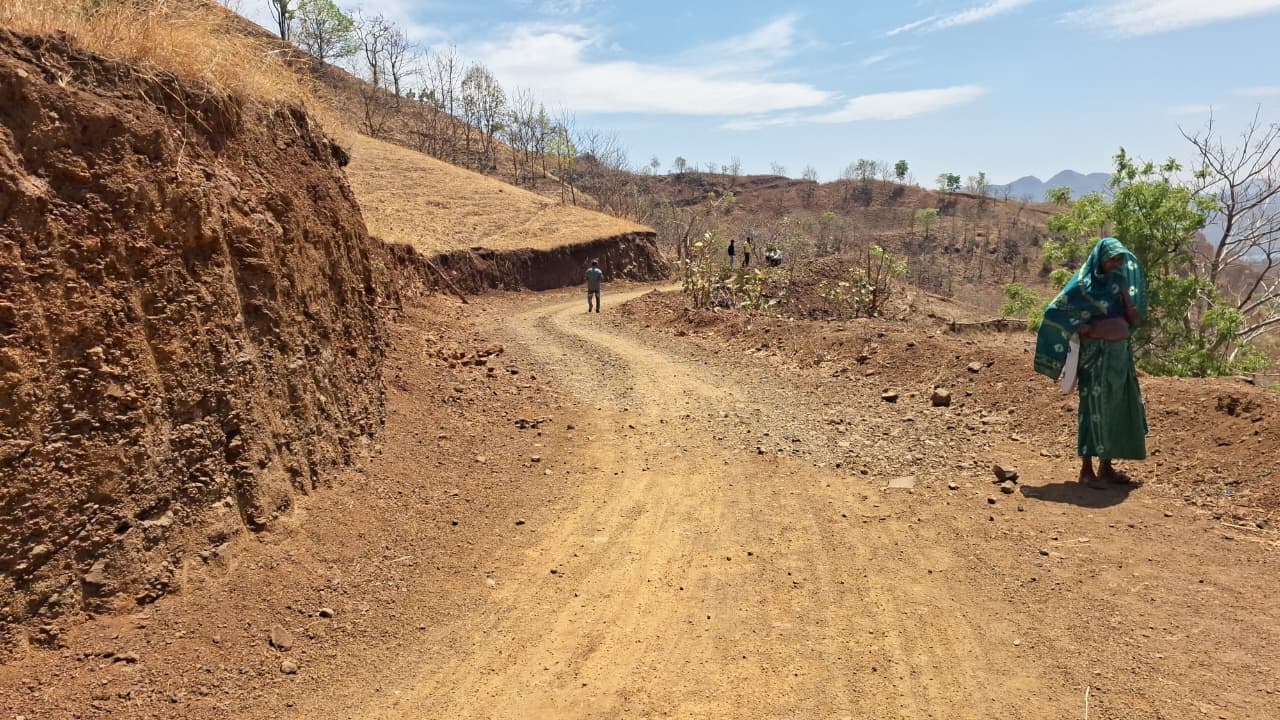
Two years after the tragic death of a pregnant woman sparked high-level judicial intervention, the residents of Turkheda are still carrying their loved ones on stretchers to reach the nearest road.
The path to Baskariya faliya in Gujarat’s Chhota Udepur district doesn’t lead to a destination; it simply fades into a treacherous trail of loose mud and jagged stone. For the residents of this tribal cluster, the six-kilometre journey to the nearest motorable road is a daily gamble. In the early hours of October 1, 2024, the fragility of this connection became a national headline when 32-year-old Kavita, who was pregnant, went into labour. With no ambulance capable of navigating the terrain, villagers carried her on a makeshift cloth stretcher tied to bamboo poles. She died before reaching help, though her baby survived.
A Cycle of Neglect
The tragedy triggered an immediate outcry, eventually drawing the attention of the Gujarat High Court, which took suo motu cognisance of reports detailing the incident. The state government responded with a flurry of announcements, promising the "immediate" construction of an eight-kilometre road to connect the isolated hamlet to the outside world. Yet, as the calendar turns, those promises remain locked in bureaucracy.
The grim reality of the situation was underscored again on September 16, 2025. Vansi Nayak, a 36-year-old pregnant woman, faced the exact same nightmare as Kavita. She too had to be carried on a cloth stretcher for five kilometres under the harsh sun before reaching an ambulance. Despite being rushed to the Vadodara SSG hospital, she did not survive. The mountain track remains as it was: devoid of railings, drainage channels, or basic safety infrastructure, leaving villagers to navigate steep, crumbling slopes that turn into impassable streams of mud the moment the monsoon hits.
Why It Matters: The Policy Gap
This recurring crisis in Turkheda exposes a persistent disconnect between judicial mandates and ground-level execution. While the High Court’s intervention provided a momentary spotlight on the lack of connectivity in tribal pockets, the failure to deliver the promised infrastructure reveals a systemic inertia. For residents, the road is not merely a development project; it is a critical lifeline. When the state fails to bridge the last mile of connectivity, the constitutional guarantee of the right to health effectively expires at the edge of these remote villages. The pattern here suggests that high-level directives often lose their momentum once the media cycle shifts, leaving vulnerable communities to wait indefinitely for basic public works that could save lives.
National Affairs Desk at PoliticalPedia covers government & policy for an Indian audience in English and Hindi.