Tehran’s Sea of Grief: Why Trump Says Khamenei Funeral Crowds Surprised Him
'I Was Shocked, Thought People Hated Him': Trump Says Khamenei Funeral Crowds Surprised Him
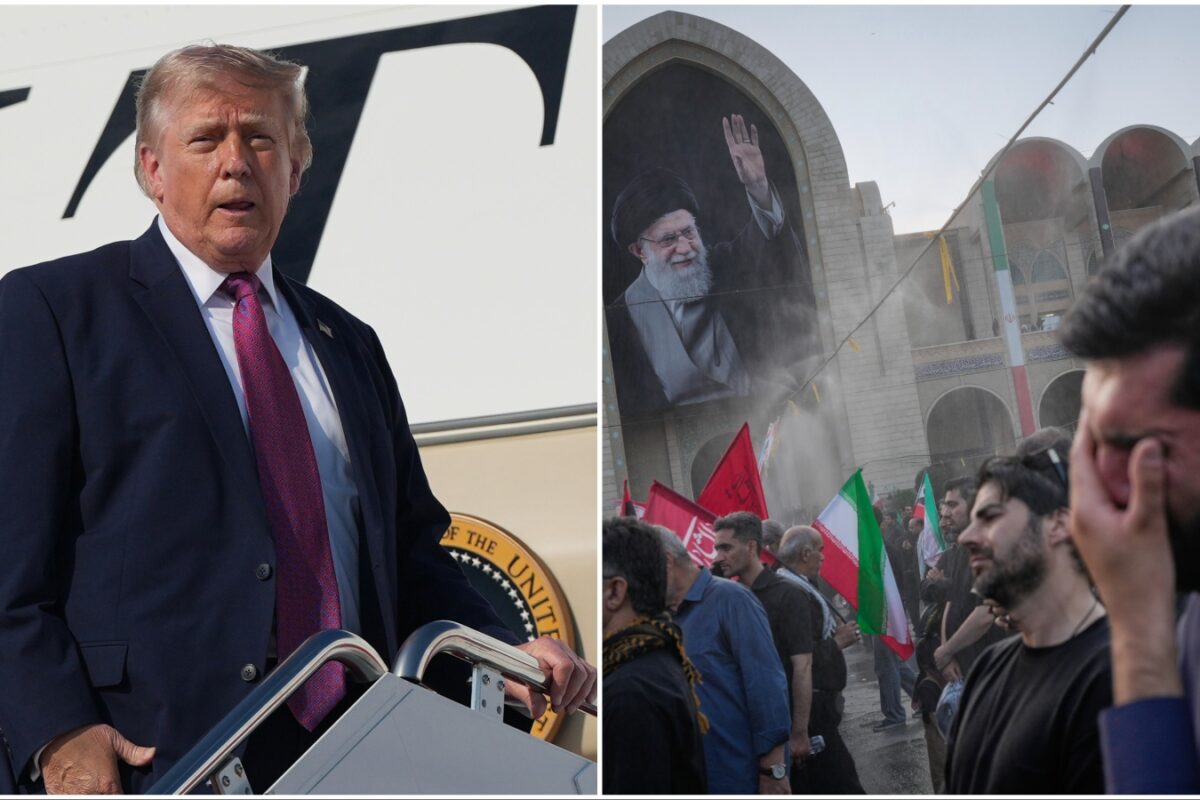
As mass mourning grips Iran following the death of its Supreme Leader, global observers are grappling with a stark disconnect between Western expectations and the reality on the ground in Tehran.
The Grand Mosalla in Tehran is currently a sea of black, filled with hundreds of thousands of mourners beating their chests in visceral grief. As Ayatollah Ali Khamenei’s flag-draped coffin—topped with his signature black turban—moved through the capital, the sheer scale of the turnout caught many in Washington off guard. Including, by his own admission, Donald Trump.
When asked about the unprecedented public display, the US President confessed he was shocked. "I thought people hated him," Trump told Axios, admitting that his administration’s internal calculus regarding the Iranian public’s sentiment toward their leadership had been fundamentally challenged by the funeral scenes. The crowds surprised him, disrupting a narrative that had long suggested the Iranian establishment was standing on shaky, unpopular ground.
A Nation in Flux
The death of Khamenei in a February 28 airstrike is a seismic event, marking only the second time since the 1979 Islamic Revolution that Iran has lost its Supreme Leader. As his son, Ayatollah Mojtaba Khamenei, prepares to assume the mantle of power, the funeral has become more than a burial; it is a tactical display of national unity. While some Iranian-American groups argue that the masses are merely a reflection of a trapped populace, the chanting of "Revenge! Revenge!" suggests a deep-seated defiance against the United States and Israel that remains potent.
The spectacle has placed a pause on back-channel negotiations. Iran’s control over the Strait of Hormuz—the world’s most critical maritime oil chokepoint—remains the primary leverage in these talks. With service fees confirmed and diplomatic maneuvers shifting, the funeral period has effectively frozen the high-stakes game of economic and geopolitical brinkmanship.
The Bigger Picture: Why It Matters
The disconnect between Trump’s perception and the reality in Tehran highlights the perennial "intelligence gap" that often plagues foreign policy. For policymakers, this serves as a sobering reminder that the internal dynamics of a closed society like Iran rarely align with the optics projected by external sanctions or diplomatic pressure.
When a leader who is portrayed as a pariah in the West receives a massive, genuine-looking funeral turnout, it forces a recalibration of strategic assumptions. Is this genuine grief, or a calculated orchestration by the ruling establishment to consolidate power during a transition? The answer likely lies somewhere in between. However, for the global economy, the takeaway is clear: the transition in Tehran is not leading to the immediate instability some predicted. Instead, it appears to be hardening the resolve of a regime that remains firmly in control, complicating any quick path to a deal in the Strait of Hormuz.
Rohan Gupta covers the economy, markets and companies for PoliticalPedia.