From Threats to "No History": The Escalating War of Words Between Washington and Tehran
Iran's "No History" Reply To Trump's "One Shot" Threat Amid Khamenei Funeral
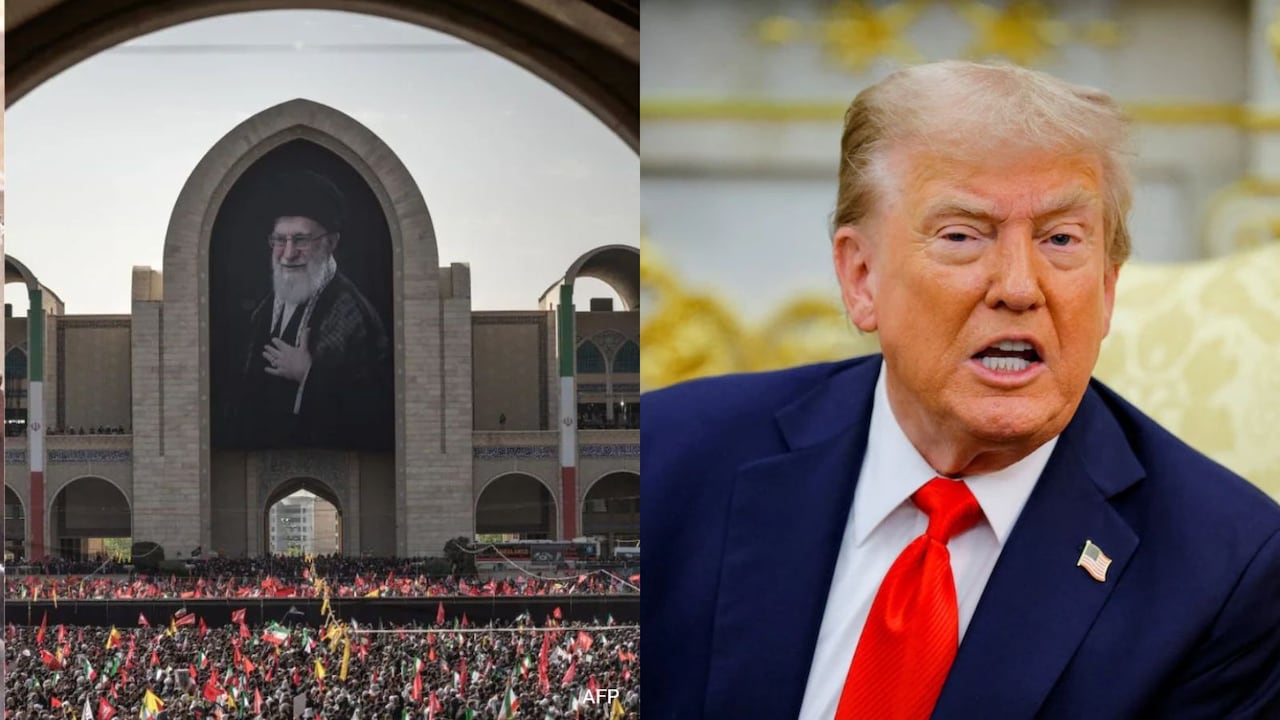
As the Iranian leadership gathers for the funeral of Ayatollah Ali Khamenei, a provocative claim from Donald Trump has sparked a sharp rebuke from Tehran.
The optics of the scene were stark: Iranian leaders, including the sons of the late Ayatollah Ali Khamenei, gathered in public for a delayed, multi-day funeral procession. It was a moment of national mourning following the February 28 strikes that claimed the life of the Supreme Leader. Yet, the solemnity was shattered by a high-stakes provocation from Washington. Donald Trump claimed he possessed the capability to eliminate the remaining Iranian leadership in "one shot" while they were assembled, a statement that has sent diplomatic tensions soaring.
Tehran’s response was swift and stinging. Through its embassy in Armenia, Iran hit back at the US President, famously asserting that while Washington might be capable of taking lives, it could never extinguish the ideals that form the backbone of the Islamic Republic. The rebuke went deeper, accusing the United States—which just marked its 250th Independence Day—of lacking "civilisation, history, and honour."
A High-Stakes War of Words
Trump’s comments, which also included expressions of skepticism regarding the sincerity of the massive funeral turnout, have done little to de-escalate the volatile regional climate. The "one shot" threat serves as a grim reminder of the fragility of the status quo in the Middle East. By questioning the legitimacy of the grief displayed at the funeral, the US President has invited a direct ideological confrontation, framing the dispute not just as a geopolitical standoff, but as a clash between nations with vastly different historical narratives.
For its part, Tehran’s "no history" reply is a calculated attempt to seize the moral high ground. By positioning the United States as a young, transient power devoid of the deep cultural heritage that Iran prides itself on, the Iranian leadership is attempting to consolidate domestic support even as its senior ranks face an existential threat.
Why it matters
This exchange signals a dangerous shift in the rhetoric between Washington and Tehran. When political discourse descends into public threats of mass assassination during a period of mourning, the room for back-channel diplomacy narrows significantly. For global observers, this pattern indicates that the current US administration is opting for a "maximum pressure" approach that ignores traditional diplomatic protocols.
The danger here is miscalculation. As the funeral proceedings conclude, the Iranian leadership remains in a state of transition following the deaths of key family members, with the notable exception of Mojtaba Khamenei. This leaves the country’s power structure in flux, making it highly reactive to external provocation. Whether this rhetoric is merely posturing or the precursor to a more aggressive strategic shift remains the primary concern for the international business and diplomatic community.
Arjun Mehta reports on government, policy and Parliament for PoliticalPedia, in English and Hindi.