Tehran’s Sharp "No History" Reply to Trump’s "One Shot" Threat Amid Khamenei Funeral
Iran's "No History" Reply To Trump's "One Shot" Threat Amid Khamenei Funeral
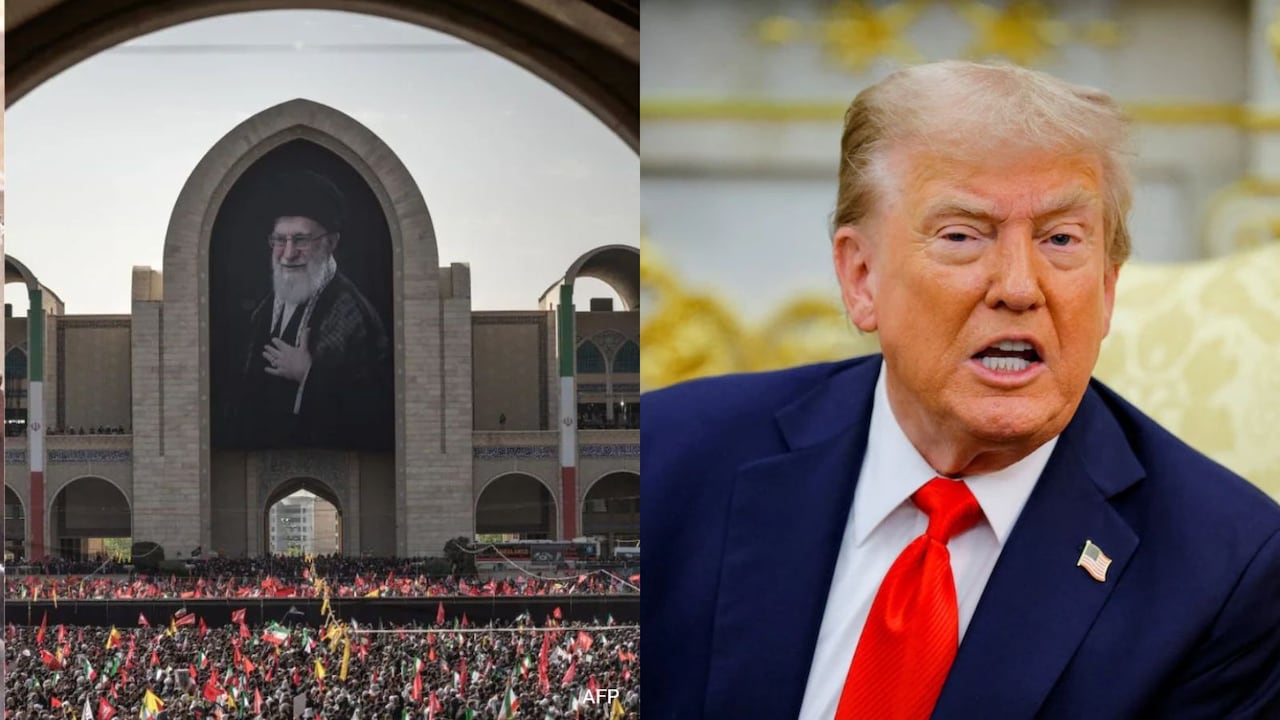
As thousands gather for the late Supreme Leader’s funeral, a war of words erupts between Tehran and Washington, underscoring the volatile state of Iran-US relations.
The streets of Tehran are currently a sea of black, filled with mourners and high-ranking officials attending the days-long funeral of the late Supreme Leader, Ayatollah Ali Khamenei. Yet, the solemnity of the occasion has been punctured by a blunt, chilling remark from Washington. US President Donald Trump, observing the high-profile gathering of Iran’s elite, suggested in a recent interview that the United States possesses the capability to eliminate the country’s entire surviving leadership "all in one shot."
A Diplomatic War of Words
The response from Tehran was immediate and scathing. Using the Iranian Embassy in Armenia as its mouthpiece, the regime hit back with a stinging rebuke, asserting that the United States is a nation that lacks "civilisation, history, or honour." The statement framed the funeral not merely as a mourning ritual, but as an ideological rallying point. "People can be killed, but ideals cannot," the embassy posted on X, comparing the death of Khamenei to a broken perfume bottle whose scent has only spread further across the region.
Trump’s comments, which came shortly after the US celebrated its 250th Independence Day, appeared to be a calculated signal of military dominance. He questioned the sincerity of the massive crowds in Tehran, openly wondering if the grief on display was "fake tears." While the US President claimed to have the tactical opportunity to strike the entire leadership while they were gathered in one place, he maintained that he had held back to preserve an open door for diplomatic negotiations.
The Context of the Strike
The current funeral rites follow the death of Ayatollah Khamenei on February 28, who was killed alongside members of his family during a joint US-Israeli airstrike. The event has become a focal point for global observers, as it brings the remaining Iranian political and military hierarchy into the public sphere—a rare security vulnerability that Trump’s remarks have now put under a harsh, international spotlight.
Why it Matters
This exchange exposes the brittle state of US-Iran relations in the wake of the February 28 strikes. By publicly musing about a "one shot" decapitation strike, the US President is employing a high-stakes psychological tactic, likely aimed at demonstrating that the Iranian leadership is under constant surveillance. However, for Tehran, this rhetoric serves as a convenient tool to galvanise domestic support and frame the US as a reckless aggressor.
The pattern is clear: diplomacy is currently being conducted through threats rather than back-channel talks. As the funeral processions continue, the risk of miscalculation remains high. Both sides are playing to different galleries—Trump to his domestic base and regional allies, and Tehran to its population—leaving the actual space for a substantive, de-escalating dialogue narrower than ever.
Arjun Mehta reports on government, policy and Parliament for PoliticalPedia, in English and Hindi.