Tamil Nadu’s Liquor Policy: Why 717 Shops Are Shut but Business Remains Open
Shut but open | T.N.’s closure of liquor shops
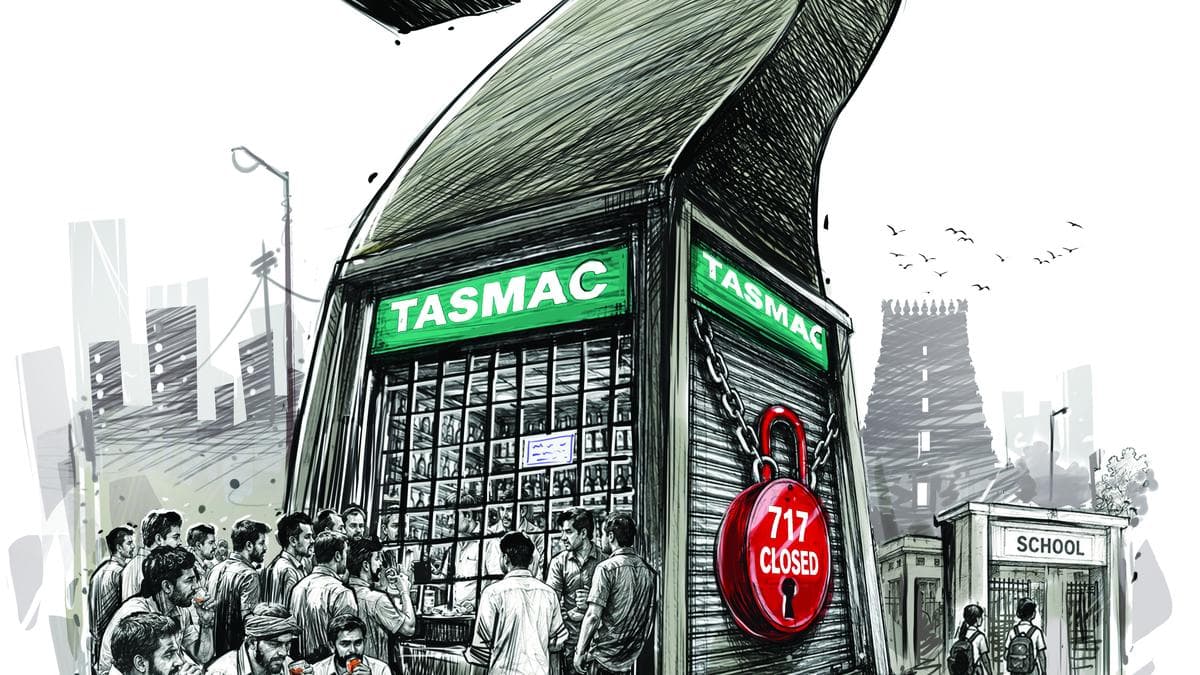
Despite the closure of 717 retail outlets by the State government, residents report that the public nuisance caused by alcohol consumption remains largely unchanged.
The Illusion of Prohibition
When Tamil Nadu Chief Minister C. Joseph Vijay ordered the closure of 717 liquor shops situated near schools and places of worship on May 12, the move was framed as a major step toward public welfare. Within a month, the shutters had indeed come down on these specific Tasmac outlets. However, for many residents across the state, the victory appears largely symbolic. Rather than a reduction in access, the closure has simply triggered a migration of customers to the next nearest government-run store, leaving the underlying issues of public nuisance and dependency on excise revenue firmly intact.
A Cycle of Political Promises
The recent exercise is merely the latest chapter in a long-standing political tradition in Tamil Nadu. The strategy of closing select outlets to appease public sentiment has been utilized by successive administrations for years. In 2016, former Chief Minister Jayalalithaa initiated a phased prohibition, closing 500 shops, a move followed by her successor, Edappadi K. Palaniswami, who shuttered another 500 the following year. By 2023, Electricity and Prohibition Minister V. Senthil Balaji announced the closure of an additional 500 outlets. Industry observers argue that while these closures generate headlines during holiday seasons—much like debates over whether liquor stores should remain open or closed during Christmas, Easter, or other public holidays—they fail to address the state's structural reliance on alcohol sales.
Ground Reality vs. Policy
On-the-ground assessments reveal a disconnect between government orders and community needs. In Chennai’s Velachery area, for instance, residents of Balakrishna Nagar have spent years petitioning for the removal of Tasmac Shop No. 928. Despite its proximity to residential hubs and the local mass transit station, the shop remains a point of contention. Locals point out that until the government addresses the specific locations that cause daily distress, broad, cosmetic closures will do little to satisfy public grievances. Critics argue that the current administration's actions mirror those of its predecessors: prioritizing a "shut" status on paper while ensuring that the overall commercial network remains "open" and profitable elsewhere.
The Broader Context
The struggle to balance public health with the state's fiscal dependence on liquor is a recurring theme in Indian policy. While other states grapple with shifting operational hours during festivals like Easter or Christmas, Tamil Nadu’s challenge is uniquely tied to the government’s direct control over the retail trade. As the Tamilaga Vettri Kazhagam (TVK) government moves forward, the persistent demand from citizens suggests that until a more comprehensive policy is formulated, the closure of hundreds of shops will be viewed as a temporary adjustment rather than a meaningful reform. For now, the migration of tipplers from one outlet to the next serves as a reminder that demand remains robust, regardless of how many shutters are pulled down.
The PoliticalPedia Editorial Desk brings verified, sourced political news and analysis from across India.