Supreme Court Revokes Bail: Three Former GRP Officers Arrested in Mumbai Extortion Case
Three dismissed GRP personnel arrested in Mumbai railway station extortion case after Supreme Court cancels bail
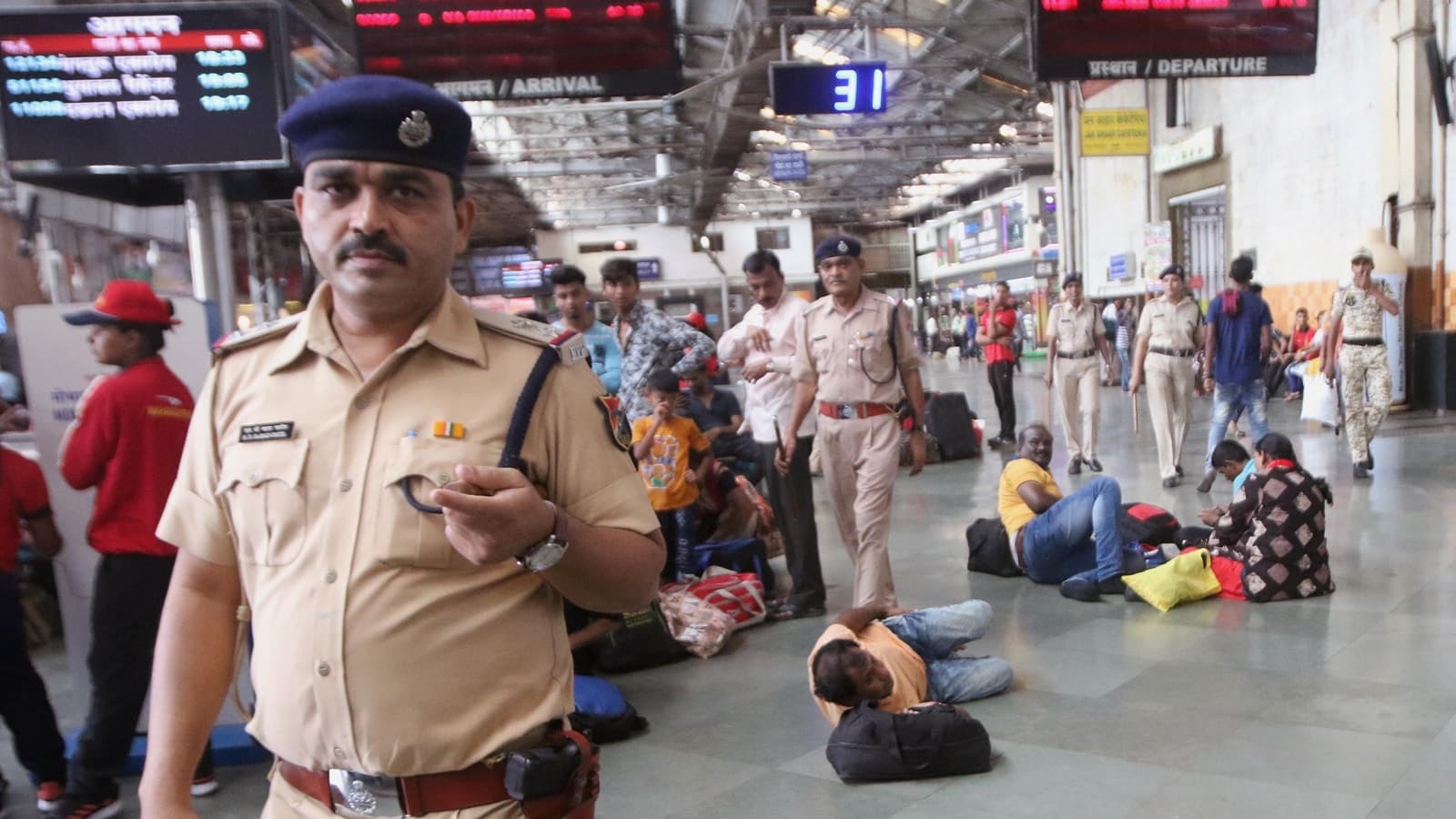
The Supreme Court has paved the way for justice by cancelling the anticipatory bail of three former police personnel accused of intimidating and extorting a traveller at a busy Mumbai railway hub.
The Crime Branch of the Government Railway Police (GRP) has taken three dismissed officers into custody following a stern rebuke from the Supreme Court. The arrests mark a significant turning point in a case involving allegations of severe misconduct by law enforcement. The accused—identified as former Assistant Sub-Inspector Lalit Ramchandra Jagtap and head constables Rahul Datta Bhosale and Anil Sitaram Rathod—were formerly stationed at the Mumbai Central railway station before their dismissal from service earlier this year.
The case dates back to August 10, 2025, when the complainant, a Rajasthan-based jeweller named Kamalkumar Soni, was passing through the Mumbai Central station to board the Duronto Express. According to the police records, the three accused intercepted Soni, his eight-year-old daughter, and a relative on platform 5. During a search of their belongings, the officers discovered a 14-gram gold piece and cash amounting to over ₹31,000. Despite the victim explaining the source of these items, he alleged that he was coerced into a secluded room, physically intimidated, and threatened with legal action unless he complied with their demands.
A Question of Accountability
The legal battle over the accused officers' freedom saw conflicting judicial interpretations. While a sessions court initially denied the trio pre-arrest bail due to the gravity of the extortion allegations, the Bombay High Court later granted them relief. The High Court had cited the lack of visible distress in CCTV footage and a delay in filing the FIR as primary reasons for its decision. However, the state government challenged this stance, arguing that such "uniformed excesses" against citizens could not be tolerated.
The Supreme Court’s intervention provided a sharp critique of the alleged abuse of authority. Justices Sanjay Kumar and K. Vinod Chandran set aside the High Court’s order, noting that the lower court had failed to adequately account for the vulnerability of the victims—particularly the presence of a minor child—and the fact that the officers had operated outside the bounds of standard procedure. "When law enforcers turn extortionists, the citizen looks askance and is left in a dilemma," the bench observed, emphasizing that the absence of CCTV coverage in the room where the incident occurred did not exonerate the accused.
Impact of the Ruling
Following the Supreme Court’s decision to cancel the bail, the GRP Crime Branch moved swiftly to execute the arrests. The accused, who were previously dismissed following a departmental inquiry, are now facing the judicial process under police custody. For the public, this case highlights a growing concern regarding the conduct of personnel at major transport hubs, where citizens are often at their most vulnerable. The return of the gold ornament without any formal documentation, coupled with the retention of the cash, remains a focal point for investigators building the case against the former officers.
As the legal proceedings continue, the arrest of these three individuals sends a forceful signal regarding police accountability. The incident serves as a stark reminder of the thin line between duty and power, and the judiciary’s role in ensuring that those entrusted with public safety do not exploit their positions for personal gain. With the investigation now under the purview of the GRP Crime Branch, the case is expected to proceed with heightened scrutiny, addressing the systemic failure that allowed such an incident to occur in the first place.
The PoliticalPedia Editorial Desk brings verified, sourced political news and analysis from across India.